The Most Enchantingly Gorgeous Natural Wonders in the World
1. Mount Everest ~ Formidable Challenge For Climbers:
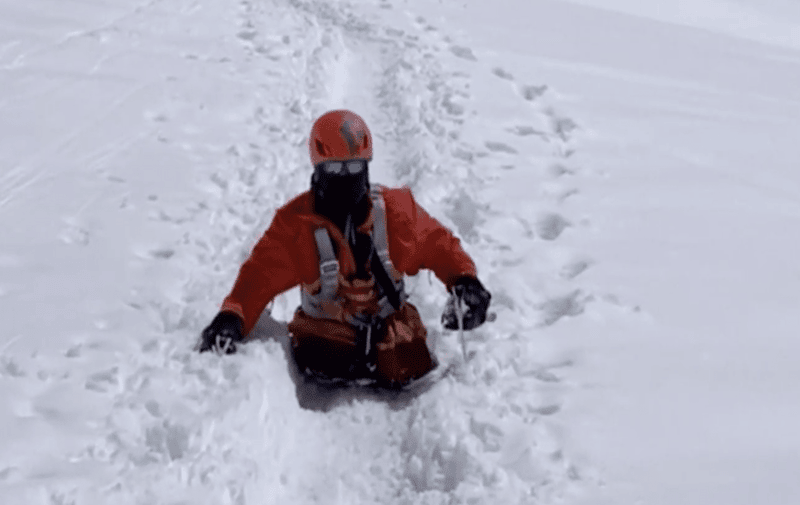
Mount Everest, with a summit elevation of 29,029 feet (8,848 meters), is the tallest mountain in the world. It is situated at the boundary of Tibet, China, and Nepal in the Himalayan mountain range. While there are other mountains with extremely steep slopes, Mount Everest has the title of being the world's highest peak. Often referred to as the world's tallest peak, Mount Everest is thought to be the highest point on Earth. The lowest point in the water is the Challenger Deep, which is located off the Mariana Islands. There would be more than 1.3 miles (2 km) of water covering Mount Everest if it were within the tunnel. The simplest approach to visiting Mount Everest is to take a 1-hour flight from Kathmandu that will offer you a bird's-eye perspective of the magnificent peak. A different perspective of the mountain may be had by hiking across the Himalayas to reach other vistas. While the majority of individuals do not have a very high likelihood of climbing Mount Everest, there is a greater chance of walking to base camp and the surrounding national park. The Himalayas are a stunning series of mountains, and even just hiking across them would be an incredible experience. It will be an exciting journey to hike to Everest base camp.
More Easy Way Around ~
Taking a guided flight around Mount Everest is a more straightforward approach to exploring the mountain. More tourists have access to this aerial perspective of this magnificent peak. The answer is straightforward yet uncertain: when it's not snowing. The months of October and November, when the dry season begins, are the ideal times to visit Mount Everest. As the dry season comes to a close, February through April is the next best time to visit Everest. Severe temperatures have the potential to freeze systems and interfere with cameras. Having protective gear on hand for any photography equipment is essential.
2. The Sahara Desert~ The Otherworldly Landscape
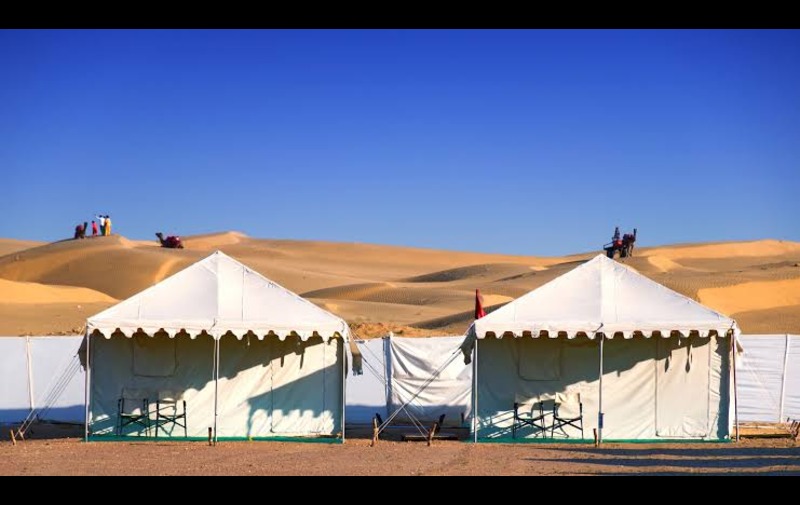
The Sahara Desert was officially declared as one of the 7 Natural Wonders of Africa on February 11, 2013, in Arusha, Tanzania. Votes were cast by experts from around the world who noted the key statistical significance. Voters noted that the Sahara Desert is so much more than sand with many key facets of nature calling her home. Recognized as the largest desert in the world.
Largest hot desert in the world
Covers 11 countries and accounts for 3,500,00 square miles (9,000,000 sq km)
Dunes as high as 600 feet (180 meters)
Home to several features which could be considered “wonders” themselves
Antarctica and the Arctic are technically deserts and larger than the Sahara. The Sahara Desert covers over 3,600,000 square miles (9,400,00- sq km). In comparison, this is approximately the size of the United States or China. This makes the Sahara the largest sandy or hot desert in the world The boundaries of the Sahara Desert stretch from the Red Sea on the east, the Atlantic Ocean on the west, the valley of the Niger River on the south, to the Mediterranean Sea on the north. The desert encompasses, at least in part, the countries of Algeria, Chad, Egypt, Libya, Mali, Mauritania, Morocco, Niger, Western Sahara, Sudan, and Tunisia. The Nile River runs through the Sahara Desert throughout the year, but all other rivers only exist seasonally. Grasslands may be found in the northern and southern parts of the desert, but the center region is extremely arid. The geography of the desert includes tremendous dunes and dune fields which may be described as a sea of sand. Additionally, there are unusual and unique landforms, stone plateaus, salt flats, gravel plains, and arid valleys.
3. Ring Of Fire, Pacific Ocean: Seek Out For the Seismic Activities :
Most of Earth’s volcanoes and earthquakes occur in regions that skirt the Pacific Ocean, known as the Ring of Fire. It’s not a ring, though, but more of a horseshoe-shaped swath – 24,900 miles (40,000 km) long – dotted with seismically active locations. If you could view it from space, the Ring of Fire would appear as a strip that runs up the western coasts of South America and North America, continuing across the Alaskan Aleutian Islands to Russia’s Kamchatka Peninsula. Then, it heads south, off the coast of Eastern Asia, passing through Japan. In Southeast Asia, it jogs eastward through the Indonesian islands of Sumatra and Java, past Papua New Guinea, then southward again to New Zealand.
What causes the earthquake activities within the Ring of Fire?
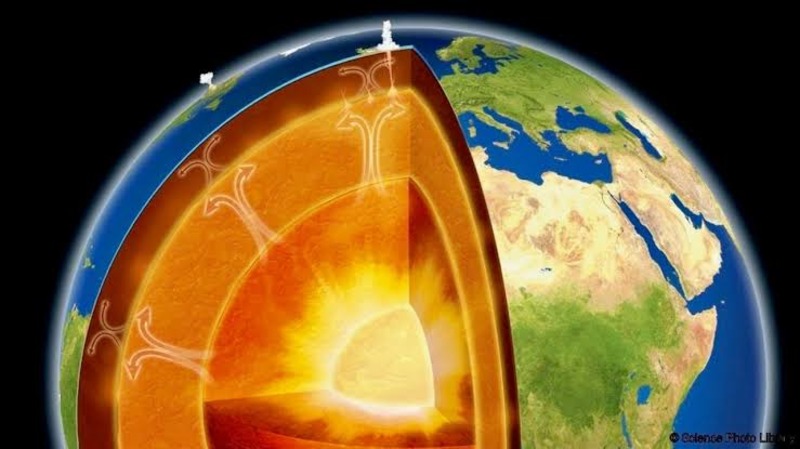
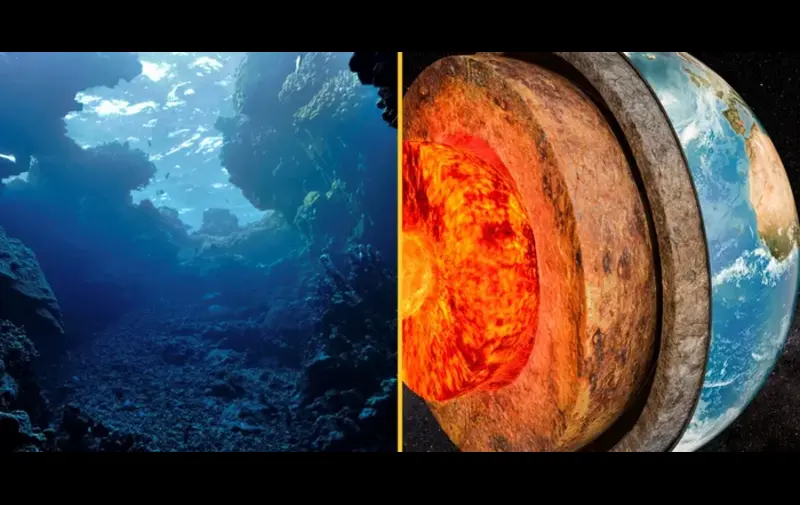
Most frequently, tectonic plate boundaries are the sites of volcanoes and earthquakes. These plates are crustal layers of the Earth that float on molten rock in the mantle of the planet, moving extremely slowly. The Ring of Fire is not a single geological feature. It's a collection of distinct neighboring landforms brought about by the collisions of many tectonic plates. The heavier plate descends beneath the lighter plate where the two plates meet, creating a subduction zone where the heavier plate melts into the Earth's molten mantle. Seismic activity is being caused by many plates along the Ring of Fire. Subduction zones are created when plates collide in most places. There is one exception: the plates are grinding against one another laterally across a portion of western North America. Tension is created by this and sometimes it releases as earthquakes.) In the deepest regions of the ocean, there are also some of these subduction zones. The Marianas Trench is located in a subduction zone. At its deepest known point, it is 36,037 feet (10,9
84 m) below sea level, or 6.8 miles (11 km). Earthquakes occur when the stress from a bending plate relaxes. Volcanoes are formed when molten rock can seep through the crust in certain places. The majority of these seismic events take place underwater.
The Ring of Fire's importance ~ Thermal Energy Sources:
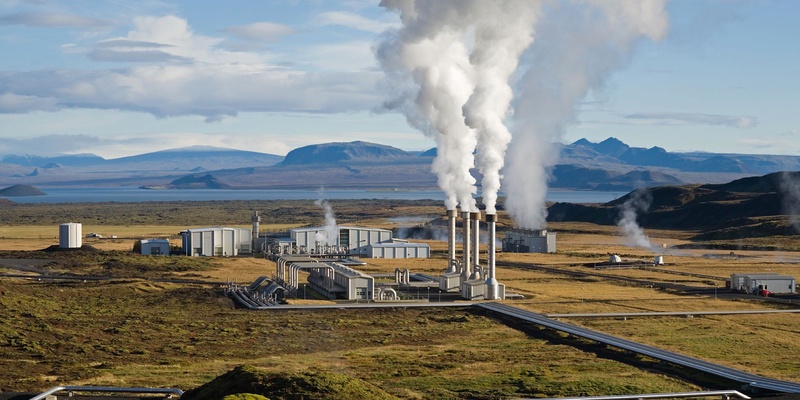
Research reveals that World’s largest geothermal energy resources more than 40% are stored in the Pacific Ring of Fire. Active plate boundaries with volcanism and frequent earthquakes are strongly linked to geothermal resources. Because the area is highly active in terms of plate tectonics, a significant amount of heat has been stored there that may be utilized as geothermal resources. Up to 2015, over 13 GW of power generation has been put in place across several nations using geothermal resources; of those, more than 6 GW were located in the Ring of Fire. Geothermal energy resources can be used directly or for the production of electricity.
4. The Mariana Trench ~ Plunging Nearly 7 Miles Down to Earth :
The Mariana Trench is the deepest known sea trench on Earth, situated primarily to the east and south of the Mariana Islands in the western North Pacific Ocean. It is a component of the subduction zones or places where two nearby tectonic plates clash and push one beneath the other, that make up the western Pacific system of oceanic trenches. The Mariana Trench is an arcing depression that is more than 1,580 miles (2,540 km) long and has a mean width of 43 miles (69 km). Challenger Deep, a tiny, steeply walled valley on the floor of the main trench southwest of Guam, is where the lowest depths are attained.
For the first time, travelers can join an expedition to the deepest spot in the ocean ~
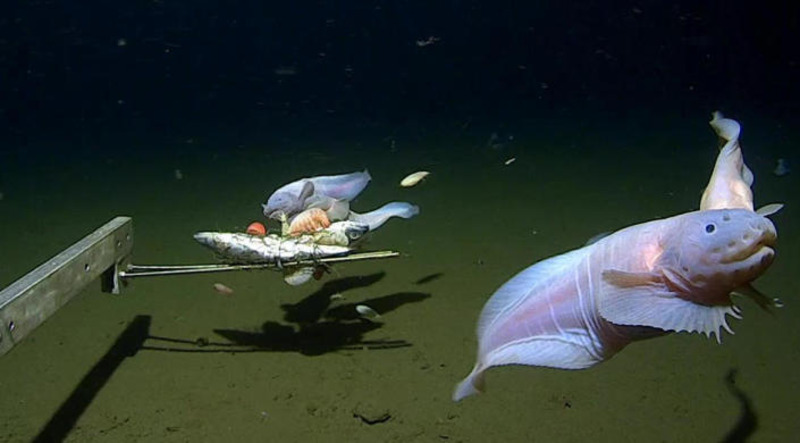
There was a period when only a chosen few people were thought to be able to climb the top peak on Earth. Let's go back to the present day. Logistically speaking, it's not too difficult to organize, even if it's still a costly and occasionally fatal undertaking. Mount Everest has been scaled by more than 4,000 explorers, according to the British Mountaineering Council. So what can an adventurous amateur explorer who is passionate about anything exceptional and uncommon do? Naturally, head in the other direction to Challenger Deep. At 10,928 meters (35,853 feet) below the surface, it is commonly considered to be the lowest point in the world's seas. Travel agency EYOS Expeditions and private underwater diving business Caladan Oceanic have partnered to provide the general public with a once-in-a-lifetime opportunity to dive to the bottom of the Marianas Trench in the western Pacific Ocean as part of a future expedition. The 90mm-thick titanium sphere protects the submersible's passengers, according to Eyos Expeditions, which is traveling alongside Caladan Oceanic. They "experience no pressure changes or physiological stresses at all." The interior of the submarine is calm, serene, and incredibly soothing, and the business continues. The submarine is equipped with three viewports, two cozy seats, and surround-sound high-definition cameras. It might take up to 14 hours for each dive! It takes more than four hours to descend. Upon reaching the bottom, the team may have the opportunity to shoot some of the planet's most remarkable creatures.
Following that, they'll start their four-hour climb back to the surface. Only seven persons have ever reached the Mariana Trench's bottom; James Cameron, a Hollywood filmmaker, was one of them in 2012. Participants will get a thorough shipboard and sub-orientation as part of the pre-dive preparations, and there is no official pre-departure training necessary. Eyos Expeditions' founding partner Rob McCallum declared, "This is the most exclusive destination on earth!"
'There’s a whole world out there, right outside your window. You’d be a fool to miss it.'—Charlotte Eriksson











.jpg)
.jpg)
(1).jpeg)

.jpg)
 (1).jpeg)
 (1).jpeg)
.jpeg)
.jpeg)
.jpeg)
.jpeg)
 (1).jpeg)






































































































































.jpg)
.jpg)
.jpg)
.jpg)
.jpg)
.jpg)
.jpeg)
.jpg)
 (1).jpeg)
.png)
 (1).jpeg)
 (1).jpeg)
.jpeg)

.jpeg)
.jpeg)
.jpg)
 (1).jpeg)
.jpeg)
.png)
.jpg)
.jpg)






















































































































































.jpg)
.jpeg)
.jpg)
(1).jpeg)
.jpg)
(1).jpeg)
.jpeg)
.jpg)
.jpg)
(1).jpeg)
.jpg)
.jpg)
.jpg)
.jpg)
 (1).jpeg)
.jpeg)
.jpg)
.jpg)
.jpg)
.jpg)
.jpg)
.jpg)
 (1).jpeg)
.jpg)
.jpg)
.jpeg)
.jpg)
.jpg)
.jpg)
.jpg)
.jpg)
.jpg)
.jpg)
.jpg)
.jpg)
.jpg)
.jpg)

.jpg)
.png)
.jpg)
.jpg)




.jfif)











































































































































.jpg)
(1).jpg)
.jpg)
(2).jpeg)
.jpg)
 (1).jpeg)
.jpeg)
 (1).jpeg)
.jpg)
 (1).jpeg)
.jpg)
.jpeg)
 (1).jpeg)
.jpg)
 (1).jpeg)
 (1).jpeg)
.jpeg)
.jpg)
.jpg)
.jpg)
.jpg)




























































































































.jpg)
.jpg)
(1).jpeg)
(1).jpeg)
(1).jpeg)
.png)
.jpg)
.jpg)
.jpg)
.jpg)
.jpg)
.jpg)
.jpg)
.jpg)
 (1).jpeg)
 (1).jpeg)
.jpg)
.jpg)
.jpg)