"Dream, Dream, Dream! Conduct these dreams into thoughts, and then transform them into action."
- Dr. A. P. J. Abdul Kalam
"Dream, Dream, Dream! Conduct these dreams into thoughts, and then transform them into action."
- Dr. A. P. J. Abdul Kalam
17 Dec 2025
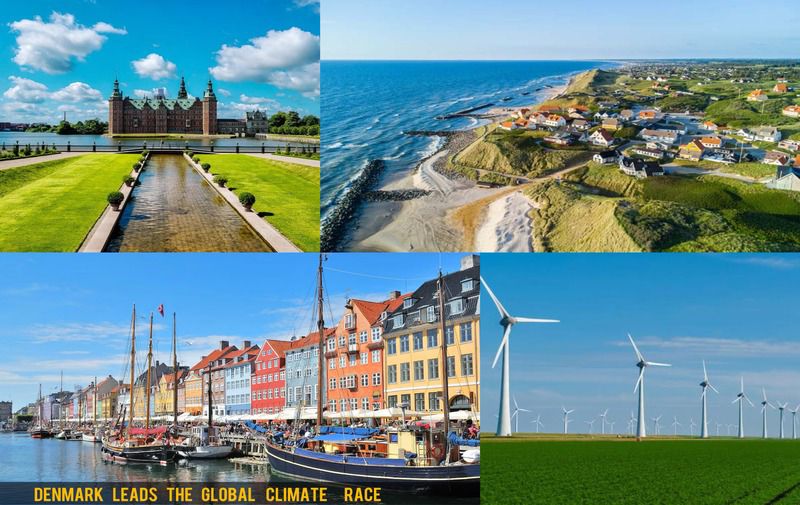
In November 2025, Denmark made headlines at COP30 by announcing one of the most ambitious national climate targets in the world. The Scandinavian nation committed to cutting its greenhouse gas emissions by 82–85% by 2035 compared to 1990 levels, surpassing similar goals set by other leading countries, including the UK and members of the European Union. This target reflects Denmark’s dedication to long-term planning and political will, showcasing the country as a global leader in climate action. The announcement sends a powerful message to the international community: deep decarbonization is achievable without sacrificing economic competitiveness or social cohesion.
Denmark’s new climate goal builds on its existing trajectory toward a 70% reduction in emissions by 2030. The country has already implemented policies and strategies that integrate renewable energy, energy efficiency, and sustainable transport. The current progress demonstrates that Denmark’s ambitious targets are grounded in practical achievements, not just aspirational promises. Citizens across the nation have increasingly embraced renewable energy solutions, from wind turbines to solar power, reflecting a societal commitment to sustainability. This public participation provides the connection behind the numbers, showing how collective action can drive meaningful climate results.
While the 82–85% emission reduction by 2035 is aggressive, Denmark has carefully designed its approach to integrate economic growth with climate action. The country plans to allocate around 4 billion Danish kroner (620 million USD) annually to fund climate initiatives. This funding will support renewable energy infrastructure, green technology innovation, and initiatives to help industries transition to low-carbon practices. Denmark’s approach demonstrates that decarbonization and economic competitiveness can go hand in hand, ensuring that environmental goals do not undermine jobs or economic stability.
Denmark is also accelerating its journey to carbon neutrality, aiming to achieve net-zero emissions by 2040, five years ahead of its previous plans. This makes Denmark one of the first countries globally to set such an ambitious timeline. The accelerated path to net-zero is supported by a combination of renewable energy expansion, electrification of transport, energy efficiency in buildings and industry, and nature-based solutions such as afforestation. For ordinary citizens, this means cleaner air, sustainable urban development, and a healthier environment for future generations, highlighting the human-centered benefits of such policies.
Financial commitment is a key component of Denmark’s climate strategy. By dedicating approximately 620 million USD annually, the government ensures that its ambitious goals are feasible. This investment signals to both domestic stakeholders and international partners that Denmark is serious about implementing actionable climate solutions. The funding also creates opportunities for businesses and innovators to develop green technologies, fostering economic growth while contributing to global climate efforts. For families and communities, this translates into the creation of green jobs and industries, making climate action a tangible benefit rather than an abstract ideal.
Denmark’s announcement at COP30 positions it as a model for other nations, proving that ambitious climate action can be integrated into national planning and economic development. The country demonstrates that leadership in climate policy requires a combination of bold targets, strategic financing, and long-term societal engagement. By aiming for reductions beyond most peer countries, Denmark challenges global leaders to reconsider the scale and pace of climate action. While Denmark’s goals are bold, they also serve as a reminder of the challenges facing global climate policy. Reducing emissions by more than 80% within a decade requires technological innovation, behavioral changes, and consistent political commitment. Denmark’s strategy illustrates that with adequate planning and financing, ambitious targets are attainable. For the international community, this move sets a benchmark, showing that rapid climate action is possible and providing a blueprint for other nations seeking to balance economic growth with environmental stewardship.
In a world grappling with climate urgency, Denmark provides a roadmap showing that ambition, planning, and citizen engagement can drive real and lasting change.

Romanticizing life and shaping stories from everything I see through my journalistic lens. Also, I love sports on the side.