"Dream, Dream, Dream! Conduct these dreams into thoughts, and then transform them into action."
- Dr. A. P. J. Abdul Kalam
"Dream, Dream, Dream! Conduct these dreams into thoughts, and then transform them into action."
- Dr. A. P. J. Abdul Kalam
5 Jan 2026
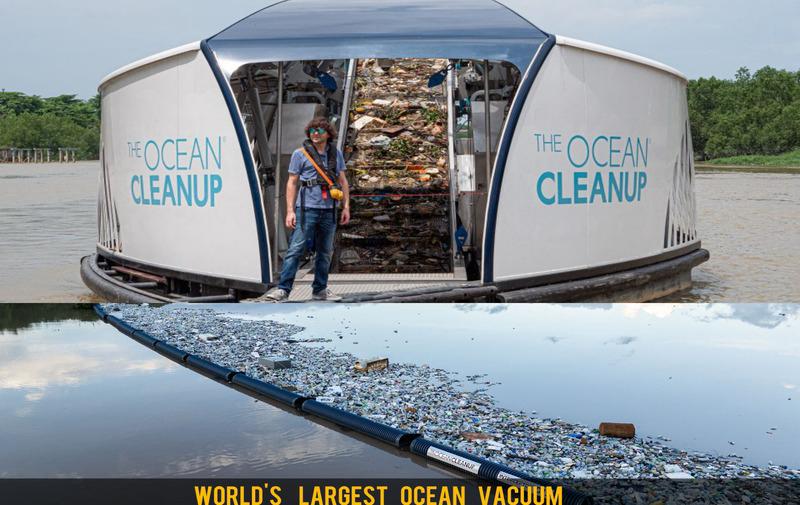
In the vast blue expanse of the Pacific Ocean, where plastic waste once drifted endlessly, a silent revolution is underway. A 600-meter-long floating system, often described as the world’s largest “ocean vacuum cleaner,” is collecting plastic at a scale never attempted before. Developed by Dutch engineers under The Ocean Cleanup project, this technology represents one of the most ambitious environmental engineering efforts of the modern era, proving that innovation and nature can work together to heal the planet.
The Birth of an Idea from a Young Mind
The Ocean Cleanup was founded in 2013 by Boyan Slat, a Dutch inventor who was just a teenager when he first questioned why plastic was being cleaned from beaches but not from the ocean itself. His simple yet powerful question sparked a decade-long journey of research, testing, failures, and breakthroughs. What began as a bold student idea has grown into a globally recognized nonprofit organization based in the Netherlands, focused on extracting plastic pollution from oceans and rivers before it causes irreversible damage.
How the World’s Largest Ocean Vacuum Works
Unlike traditional machines, The Ocean Cleanup’s system does not actively suck plastic from the sea. Instead, it works passively, harnessing the natural movement of the ocean. The core of the system is a massive U-shaped floating barrier that drifts with ocean currents, acting like an artificial coastline. As plastic moves faster than the barrier due to wind and wave action, it naturally gathers inside the curved structure. This approach avoids disturbing marine life and requires no fuel to operate. Solar-powered systems handle monitoring and navigation, ensuring minimal environmental impact. The collected debris accumulates in a central retention zone, from where ships periodically transport it back to land for recycling into new products.
From Ghost Nets to Microplastics
One of the most remarkable aspects of the system is its ability to capture plastic of all sizes. Large abandoned fishing nets, known as ghost nets, are among the deadliest threats to marine animals, trapping turtles, dolphins, and fish for decades. At the same time, tiny microplastics pose invisible dangers by entering the food chain and ultimately reaching human bodies. By removing both visible and microscopic plastic, The Ocean Cleanup helps prevent long-term ecological and health consequences. Each piece of plastic collected represents a small victory for marine ecosystems struggling to survive in polluted waters.
Targeting the Great Pacific Garbage Patch
A major focus of the project is the Great Pacific Garbage Patch, a massive accumulation of plastic trapped by ocean currents between Hawaii and California. Often misunderstood as a floating island, it is actually a vast soup of debris spread across millions of square kilometers. The Ocean Cleanup has deployed its ocean systems in these gyres, where plastic naturally concentrates. The organization aims to launch ten or more systems, some extending up to two kilometers in length. According to their projections, this fleet could remove up to 50 percent of the debris in the Great Pacific Garbage Patch within five years of full deployment.
Cleaning Rivers Before Plastic Reaches the Sea
While cleaning oceans is critical, stopping plastic at its source is equally important. Research published by The Ocean Cleanup suggests that just 1 percent of the world’s rivers are responsible for nearly 80 percent of ocean plastic pollution. Acting on this data, the organization has developed river-based interception systems. These systems use floating barriers and extraction devices anchored in rivers and river mouths. They are already operational in countries such as Indonesia, Guatemala, and the United States. By capturing waste before it reaches the ocean, these river systems dramatically reduce future pollution and complement the ocean cleanup efforts. As of last year, 2025, The Ocean Cleanup has removed over 30 million kilograms of trash from rivers and the Great Pacific Garbage Patch.
A Vision for Cleaner Oceans by 2040
The long-term goal of The Ocean Cleanup is ambitious but clear: to remove a significant portion of ocean plastic by 2040. While the challenge remains enormous, the progress achieved so far shows that meaningful change is possible. In an age often defined by environmental despair, this floating “ocean vacuum” offers something rare and powerful that is hope backed by action.

Romanticizing life and shaping stories from everything I see through my journalistic lens. Also, I love sports on the side.