A New Market Opens: India–New Zealand FTA to Boost Trade, Jobs, and Mobility
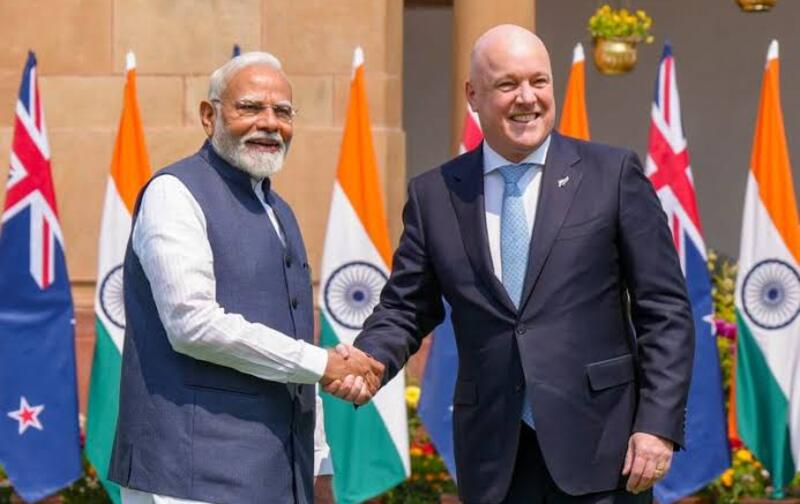
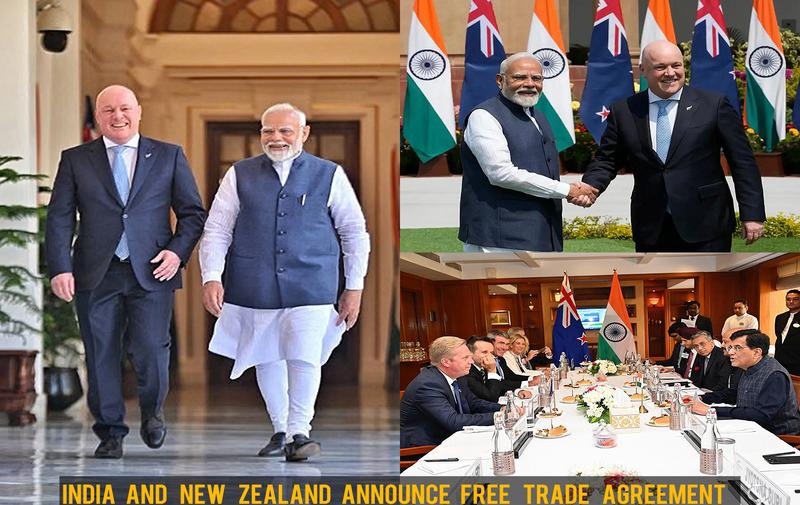
India and New Zealand have officially concluded negotiations on a Free Trade Agreement (FTA), marking a major milestone in their bilateral relationship. Announced jointly by Prime Minister Narendra Modi and New Zealand Prime Minister Christopher Luxon, the agreement is being described as historic, ambitious, and mutually beneficial. Finalized in just nine months after talks resumed in March 2025, the pact reflects strong political will on both sides to deepen economic engagement and unlock new opportunities for businesses and people. The FTA is expected to be formally signed in the first half of 2026 and is projected to double bilateral trade to USD 5 billion within the next five years, while attracting investments worth nearly USD 20 billion over a 15-year period.What Is a Free Trade Agreement (FTA)?A Free Trade Agreement, or FTA, is a deal between two or more countries to make trade easiA New Market Opens: India–New Zealand FTA to Boost Trade, Jobs, and Mobilityer and cheaper. Under an FTA, countries agree to reduce or remove taxes called tariffs on goods and services they buy from each other. This helps businesses sell products at lower prices and reach new markets. FTAs also support smoother movement of services, investments, and sometimes workers between countries. In simple words, an FTA helps countries do business with each other more easily, boosts trade, creates jobs, and strengthens economic ties while still protecting important domestic sectors.Faster Talks, Bigger AmbitionsTrade negotiations between India and New Zealand had remained stalled for nearly a decade before being revived earlier this year. Momentum picked up following Prime Minister Luxon’s visit to India in March 2025, after which both governments committed to an accelerated timeline. The agreement’s conclusion within nine months is being seen as rare in global trade diplomacy, especially at a time when protectionism is rising across many economies. Prime Minister Modi, speaking after the announcement, said the swift conclusion of the FTA reflected a shared ambition to strengthen economic ties and deliver tangible benefits to citizens of both countries. The External Affairs Ministry echoed this sentiment, calling the agreement a platform for deeper strategic cooperation beyond trade.What the Agreement CoversThe India–New Zealand FTA focuses on goods, services, investment, and labor mobility. Under the deal, India will gain tariff-free access to New Zealand’s market, while New Zealand will eliminate or reduce tariffs on 95 percent of its exports to India. These include products such as timber, fruits, wool, wine, and industrial raw materials. At the same time, India has carefully safeguarded sensitive domestic sectors. No concessions have been made on imports of dairy products, onions, sugar, spices, edible oils, rubber, and other farm commodities. This was a key political and economic priority, given the importance of agriculture and dairy livelihoods in India.A Lifeline for Indian ExportersThe agreement comes at a crucial moment for Indian exporters, many of whom are facing pressure due to high tariffs imposed by the United States on Indian goods. By opening up tariff-free access to New Zealand and strengthening India’s footprint in the Oceania region, the FTA offers an important avenue for diversification. Labor-intensive sectors such as apparel, leather, textiles, footwear, rubber products, and home décor are expected to benefit significantly. In addition, the agreement is likely to boost exports of automobiles, auto components, machinery, electronic goods, electrical equipment, and pharmaceuticals. For India’s MSMEs, the FTA offers a chance to integrate into new supply chains and access a stable, high-income market.Services and Mobility at the CoreOne of the standout features of the India–New Zealand FTA is its strong emphasis on services and workforce mobility. New Zealand has offered its most ambitious services package to date, covering 118 services sectors and granting Most Favored Nation treatment in 139 sub-sectors. These include information technology, professional services, education, telecommunications, tourism, and construction. India, in turn, has offered market access in more than 100 service sectors. This mutual openness is expected to significantly expand trade in services, which already forms a strong pillar of India’s global economic engagement.New Doors for Indian Professionals and StudentsThe human dimension of the agreement is particularly evident in its mobility provisions. New Zealand has committed to issuing up to 5,000 temporary employment visas annually for Indian professionals, with stays of up to three years. These visas will cover skilled occupations such as IT, engineering, healthcare, education, and construction, as well as AYUSH practitioners, yoga instructors, Indian chefs, and music teachers. In addition, the FTA includes generous provisions for Indian students. Post-study work visas of up to three years will be available for STEM graduates, while doctoral scholars can stay for up to four years, with no numerical caps. A further 1,000 working holiday visas per year will also be granted, encouraging youth mobility and cultural exchange.What New Zealand GainsFor New Zealand, the agreement opens doors to one of the world’s largest and fastest-growing consumer markets. With India’s economy projected to reach USD 7 trillion by 2030, the FTA offers New Zealand exporters long-term growth opportunities. Wellington is keen to expand exports of fresh fruit, wool, wine, and value-added products, while also securing clearer regulatory pathways and market access in India. The deal also positions New Zealand firms to tap into India’s expanding infrastructure, services, and technology sectors, supported by stronger investment protections under the agreement.A Forward-Looking PartnershipThe India–New Zealand Free Trade Agreement represents more than a commercial pact. It signals trust, shared values, and a long-term partnership between two democratic nations. By balancing market access with domestic safeguards and placing people at the heart of economic cooperation, the agreement sets a strong foundation for a future-ready relationship that benefits businesses and citizens on both sides.












.jpeg)
.jpg)
















.jpg)

















.jpg)
 (1).jpeg)
.jpg)