Will the Inner Development Goals assist us in building a future that is more sustainable?
The idea of Inner Development Goals (IDG) arises as a novel means of conveying the importance of individual development to collective sustainability and systemic change at a time when emphasis is frequently placed on external variables and mechanical solutions. In contrast to traditional objectives that prioritize monetary gains above all else, the IDGs address integrated development, which includes social, emotional, psychological, and spiritual well-being in order to better prepare us for the extraordinary challenges of our time.
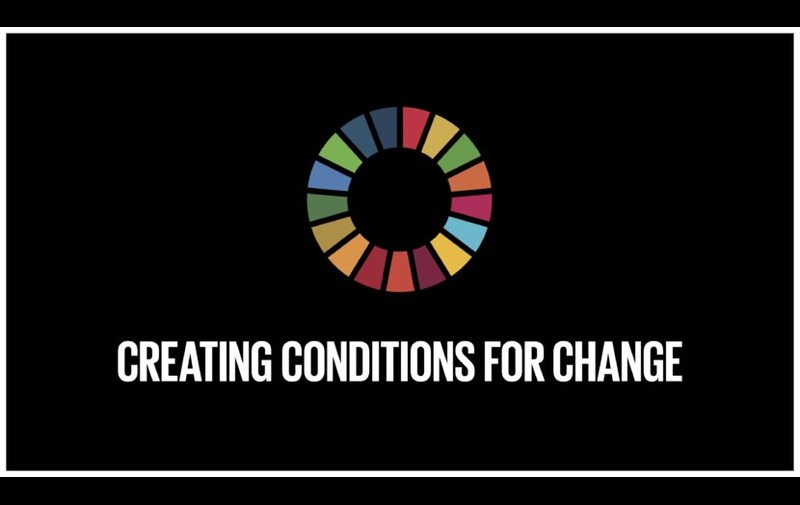
With the arrival of the twenty-first century came a sharp realization of the complex problems that the world community is facing. Acknowledging the urgent requirement for a unified and all-encompassing plan, the UN unveiled Agenda 2030 in 2015. A comprehensive set of 17 Sustainable Development Goals (SDGs)—goals for a future in which everyone has fair access to opportunities and the health of our planet is safeguarded and restored—lays the foundation of the agenda.
Cultivating Change and Formulating Sensible Goals ~
Addressing our global challenges necessitates a change in the underlying mindsets that originally caused them. It requires an innovative approach to identify, rectify and reshape the fundamental origins of these issues – human behaviour. Fortunately, modern research shows that the inner abilities we need to face and overcome these complex challenges can be developed. This was the starting point for the Inner Development Goals initiative.
Many Economists formerly believed that the loss of biodiversity, the breakdown of ecosystems, and the climate catastrophe were the primary environmental problems facing the planet. Gus Speth, a former dean of Yale's School of Forestry & Environmental Studies, distinguished a distinct trio: indifference, avarice, and selfishness. He continues, "And in order to address those, we need a spiritual and cultural transformation." Although proponents of the Inner Development Goals may be in agreement, they will also include this: They believe that we are also contributing to the issue. They point out that we would rather keep our money than share it. Furthermore, our interests take precedence over everyone else's. Inadequate economic output, unfavorable business conditions, governmental corruption, little capital investment, etc. When issues are resolved, prosperity for everybody will blossom! It’s that transformation to which the Inner Development Goals are geared. The movement is built around five core ‘dimensions’. First, a different way of ‘being’ and ‘thinking’. Then, in turn, new modes of ‘relating’, ‘collaborating’, and ‘acting’.
Being: Developing and strengthening our inner life and our connection to our body, mind, and emotions enables us to be conscious, purposeful, and non-reactive in the face of complexity.
Thinking: Making sense of the world as a linked whole, assessing information, and adopting many viewpoints are all crucial cognitive abilities for making informed decisions.
Relationships: Building more equitable and sustainable systems and communities for everyone depends on our ability to value, care for, and feel a connection to others—whether they are our neighbors, the next generation, or the biosphere.
Working together: In order to address common issues, we must improve our capacity to incorporate, accommodate, and interact with stakeholders who possess varying values, aptitudes, and capabilities.
Acting: Characteristics like bravery and optimism enable us to achieve actual agency and disrupt ingrained behaviors come up with innovative ideas and persevere through challenging times.
There is a subset of related abilities and traits associated with each dimension. Thus, "collaborating" promotes the growth of co-creation, a "inclusive mindset," trust, and mobilization abilities in addition to communication skills (beginning with the "ability to really listen to others").
Futher Substantiation~
Personal development and progress are not new ideas in human history; in fact, historical civilizations and faiths have long acknowledged the value of them. While cultural and belief-based practices and interpretations vary, personal development, moral behavior, and inner growth have been cross-cultural and enduring parts of human life for millennia. What has gone wrong with the way we currently relate to these basic ideas? Has the time and significance devoted to introspection and personal growth been affected by the fast-paced nature of today's world? The most crucial question is: How can we use these ideas again to meet modern issues and improve wellbeing and human flourishing? The larger history of psychological methods like humanistic, transpersonal, and positive psychology, as well as personal growth movements, which have been studying human well-being and inner development since the Industrial Revolution, starts to provide answers to these important concerns. A particularly insightful viewpoint that has played a significant role in defining the IDG effort comes from the cultural, historical, and philosophical foundations of Nordic nations ( The Nordic nations are a physical and cultural region in Northern Europe and the North Atlantic. They are often referred to as the Nordics or Norden, which means "the North". It consists of the autonomous regions of Greenland and the Faroe Islands as well as the sovereign states of Denmark, Finland, Iceland, Norway, and Sweden.) , which are well-known for their distinctive approaches to welfare, education, and government. Only a few decades separated the Nordic nations' transformation from impoverished, agrarian, and autocratic cultures in the 1860s to prosperous, industrialized democracies. The encouragement of personal growth in the state-sponsored program was responsible for this amazing turnaround.
The Road Ahead ~
There will be obstacles in the way since the dynamic nature of global ecological crises requires constant innovation and adaptation. Through their emphasis on the mutually beneficial link between personal development and society advancement, the IDGs provide a fresh outlook on the route towards ecological sustainability. The obstacles that mankind faces serve as an opportunity to reconsider, reinvent, and reconstruct; to think about the kind of people we should be in this next phase of human civilization. Throughout this voyage, the IDGs act as a compass, pointing in the direction of a future in which social advancement is driven by professional as well as private domains. Nor can exterior systemic changes wait until the inner work is finished; inner growth cannot be a post-task to be undertaken after all other duties have been finished. They are not mutually exclusive and should not be viewed as opposing demands. Moreover, it is ideal to think of inner development as an ongoing, group process of inquiry, growth, and learning by action in a supportive environment rather than as a solo or isolated endeavor. In order to ensure that our external accomplishments are firmly established in inner knowledge, compassion, and resilience, we must cultivate our inner capacities in order to hope to conquer the plethora of problems that lie ahead of us.








.jpg)
.jpg)



















.jpg)
 (1).jpeg)
.jpeg)
.jpeg)