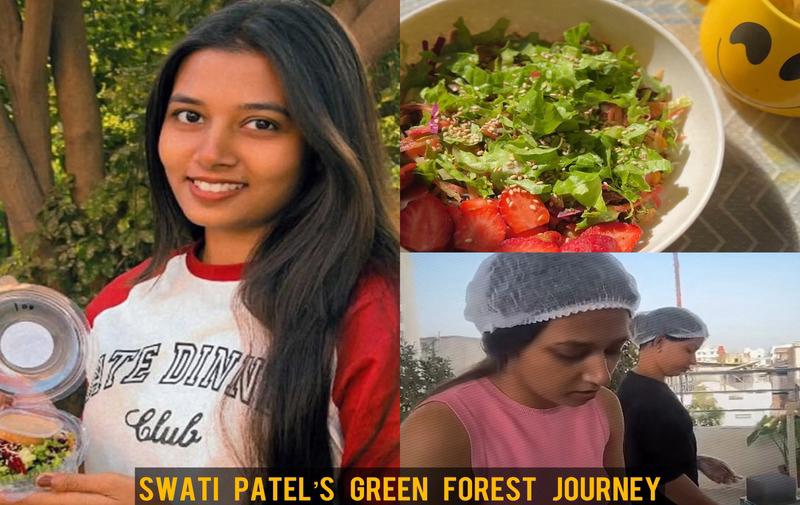
She Quit Amazon to Sell Salads: The Startup Story of Green Forest
Swati Patel, a 25-year-old from Jaipur, took a bold step in August 2025 by quitting her corporate job at Amazon and Revolut to start her own venture. With just Rs 10,000 in personal savings, she launched Green Forest, a healthy food brand dedicated to providing fresh, nutritious, and exotic salads at affordable prices. Swati’s journey is rooted in a simple yet powerful belief: salads should be healthy, fresh, and not overpriced. What started as a personal passion for making salads soon turned into a small but thriving business.Early Beginnings and Entrepreneurial SpiritHailing from Madhya Pradesh, Swati completed her B.Com in Indore before pursuing an MBA at Jain University, Bengaluru. Her professional journey began in Jaipur, where she took technical support roles at Amazon and Revolut. Yet, the entrepreneurial bug never left her. Swati had previously dabbled in two startups – a resin art brand creating wall clocks and DenimPaglu, which handcrafted embroidery on old denims. While these ventures were creatively fulfilling, neither scaled. However, each experience taught her lessons in perseverance, customer engagement, and operational management, all of which laid the groundwork for Green Forest.The Birth of Green ForestGreen Forest’s idea was inspired by Swati’s love for cooking and healthy food. She experimented with salads and homemade dressings daily, sharing them with friends, who encouraged her to commercialize her creations. With Rakshabandhan 2025 as a turning point, Swati quit her corporate job and returned to Jaipur determined to bring her salad startup to life. She invested Rs 2,000–3,000 in fresh vegetables and Rs 5,000–6,000 in raw ingredients such as moong dal, chana, rajma, and dressings. The remaining funds went into packaging and branding. Her first market trials involved distributing free samples at GT Central and corporate offices, facing rejections but persisting with determination.A Taste of SuccessThe breakthrough came at Patrika Gate, Jaipur, where Swati and her sister sold ten boxes of exotic salads in just five minutes. Encouraged, they doubled their supply the next day, selling out again. Soon, Green Forest expanded to online platforms like Swiggy and Zomato. Today, every salad is prepared and packaged by Swati and her sister, with dressings made without mayonnaise, garlic, onion, or artificial sauces. Their focus on quality and freshness has helped the startup build a loyal customer base and grow organically. Green Forest’s marketing strategy is unconventional. The startup relies heavily on organic, content-led promotion centered around Swati’s journey as a founder. In addition, they set up stalls outside pickleball courts and fitness clubs and engage with women’s groups hosting small get-togethers, boosting visibility and fostering community support. This human connection has not only expanded their reach but has also created a strong sense of authenticity around the brand.Affordable and Healthy: The Unit EconomicsGreen Forest’s pricing model is designed to keep salads accessible. Smaller portions (200 grams) are priced at Rs 50, medium portions (350 grams) at Rs 100, while heavier salads containing brown rice or quinoa cost just Rs 249. This approach aligns with Swati’s philosophy of offering health without a premium price tag, making nutritious eating available to a wide audience. Since its launch, Green Forest has witnessed impressive growth. In September 2025, the startup fulfilled around 10 orders per day, gradually scaling to 120 orders daily. By the end of the first three months, Green Forest had completed over 5,000 orders, generating approximately Rs 3 lakh in revenue. Even during October’s Diwali break, when order volume dipped to 1,500, the overall growth trajectory remained strong, reflecting the demand for healthy, fresh, and convenient food options.Family and Community SupportSwati’s journey is intertwined with personal sacrifices and family support. Her sister plays an active role in operations, helping with preparation and distribution. Swati also credits her parents’ encouragement, particularly when she decided to quit her corporate job to pursue her passion full-time. Beyond family, the local community, including small women’s groups, has supported Green Forest by hosting events and promoting the brand organically. For Swati Patel, Green Forest is more than a business; it’s a platform to promote healthy eating habits while creating sustainable entrepreneurship opportunities. She envisions expanding her product range, experimenting with new exotic salads, and reaching more customers across Jaipur and eventually other cities. A Story of Passion, and ProgressSwati Patel’s journey from a corporate employee to a thriving entrepreneur reflects resilience and the power of following one’s passion. With just Rs 10,000 and an idea fueled by love for healthy food, she created Green Forest, proving that innovation and determination can turn dreams into reality. Her story resonates with young entrepreneurs across India, emphasizing that success is not only measured in revenue but also in the value delivered to customers and the community. Green Forest’s rise highlights the intersection of health, entrepreneurship, and community engagement. Swati Patel’s vision of affordable exotic salads has not only brought financial success but also inspired a movement towards healthier lifestyles. In a short span, she has transformed a simple idea into a thriving venture, reminding us that passion combined with perseverance can create lasting impact.










 (1).jpeg)