
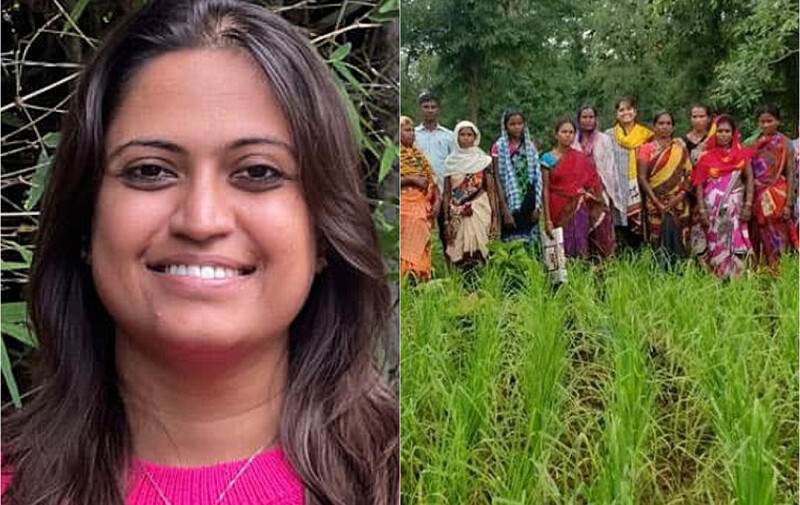
From Walking for Water to Leading Change: Neeraja Kudrimoti’s Climate Journey
“Climate is intangible… you can’t really work on it.” The words stayed with Neeraja Kudrimoti long after they were spoken. For someone who had seen ponds dry, forests shrink, and women walk farther each year just to fetch water, climate change was anything but abstract. It was visible, lived, and deeply personal. Years later, standing in villages across India, she would quietly challenge that idea not through arguments but through action.A Journey Rooted in PurposeToday, as Associate Director for Climate Action at Transform Rural India, Neeraja has spent over 15 years working across seven states, engaging more than 30,000 women households. But her journey did not begin in rural India. Named after the courageous Neerja Bhanot, she grew up in a home shaped by strong values. Her mother, a radiologist and an early feminist voice, introduced her to both science and sensitivity, taking her into nature and teaching her to observe ecosystems and the communities living in harmony with them.After her mother’s passing, life took a conventional turn. Neeraja entered the corporate world, working at a multinational company. But something felt incomplete. In 2012, she took what she calls a “leap in the dark,” leaving stability behind to join rural development work in Chhattisgarh. It was there, working closely with indigenous communities, that she understood a powerful truth: lasting change does not come from outside solutions but from within communities.Climate Through a Different LensFor Neeraja, climate is not just about rising temperatures or global policies—it is about livelihoods, water, food, and dignity. In villages across Maharashtra, Jharkhand, Bihar, and beyond, she saw how climate variability shapes everyday decisions. What to grow. What to eat. Whether to migrate. Everything was connected. Women, in particular, were at the centre of this reality. They were the first to feel the impact of water scarcity, soil degradation, and forest loss. Yet, they were rarely part of decision-making spaces. This gap became the focus of her work, bringing women from the margins to the centre of climate action.From Millets to MovementsOne of the most powerful examples of this approach is her work on millet revival. Once considered traditional crops, millets had gradually disappeared after the Green Revolution, replaced by water-intensive crops like paddy. But for indigenous communities, millets were never just crops; they were culture, nutrition, and resilience. Through small pilot projects with women farmers, Neeraja helped revive millet cultivation. Over time, these efforts grew into a larger movement, eventually being adopted by state systems. Initiatives like a Millet Café demonstrated how traditional knowledge could be transformed into sustainable economic models. Millets became more than food; they became a symbol of climate resilience and local empowerment.When Women Lead, Change FollowsIn village after village, Neeraja witnessed the same pattern. When women were given space to participate, solutions became more practical, inclusive, and sustainable. In Pidhapal village of Chhattisgarh, women-led planning resulted in a community-driven water conservation model. Through interventions like contour trenches, the village now conserves over 609,000 cubic metres of water annually while generating employment for dozens of families. But beyond numbers, the real change was in confidence. Women who once hesitated to speak were now leading discussions, influencing Gram Panchayat decisions, and shaping the future of their communities.What makes Neeraja’s work deeply human is her ability to listen. During her field visits, women shared insights that rarely appear in policy documents. “If the land itself doesn’t survive, what will we do with schemes?” one woman asked.Another reflected, “Water may reach our homes, but who is thinking about the Earth’s water needs?" These voices reveal a deeper understanding of sustainability, one rooted not in theory but in lived experience.The Barriers That Still ExistDespite progress, challenges remain. Women continue to face systemic barriers in climate decision-making. Land ownership is often in men’s names, limiting access to resources. Technical committees remain male-dominated. Cultural practices sometimes reduce women’s roles to symbolic representation. Even climate information and training often fail to reach them directly. These gaps highlight an important truth: while women are central to climate resilience, systems have yet to fully recognise their leadership.Building Change from the Ground UpNeeraja believes that real climate action must be built on three pillars: community ownership, responsive governance, and collaborative ecosystems. At the heart of this approach are local institutions like Panchayati Raj bodies, which have the power to translate ideas into action. Through what she describes as the “Samaj-Sarkar-Bazaar” framework, her work connects communities, government systems, and markets, ensuring that solutions are not only sustainable but also scalable. Technology, too, plays a role not as a replacement for people but as a tool to strengthen planning, data, and communication.A Story of Quiet TransformationPerhaps the most powerful part of Neeraja’s journey is its humility. She does not position herself as a leader driving change but as a co-traveller walking alongside communities. And in that partnership lies the real transformation. Women who once walked miles for water are now shaping policies. Communities that were seen as beneficiaries are now decision-makers. Systems that once dismissed climate as intangible are now beginning to understand its everyday impact. As climate challenges grow, Neeraja’s work offers a clear message: solutions must come from the ground up. They must include the voices of those who live closest to the problem. The question is no longer whether change is possible. It is whether we are willing to listen, support, and act in time.