
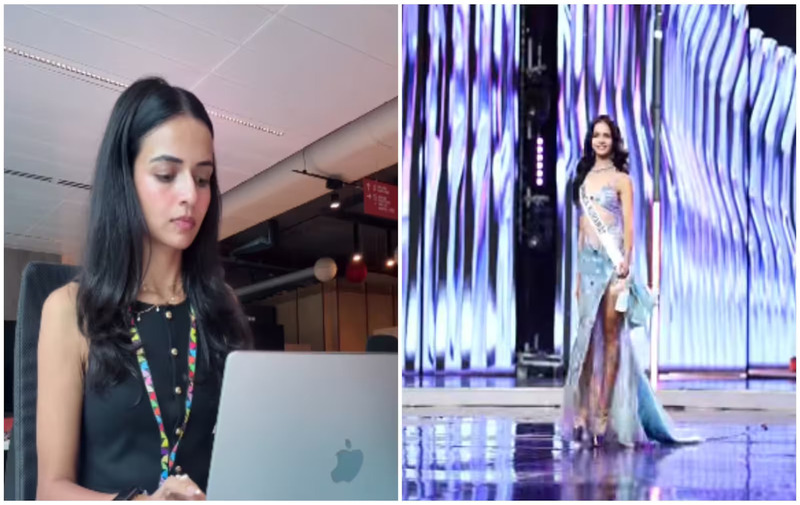
She Codes, She Competes, She Inspires: Umanga Kumawat’s Journey from Google to the Pageant Stage
What happens when a Google engineer steps onto a national beauty pageant stage? For Umanga Kumawat, the answer is simple: she does both.The Madhya Pradesh representative finished among the Top 20 at Miss Universe India 2026, but the pageant experience did not mean putting her technology career on hold. Soon after the competition, Kumawat was back at her workplace, Google’s Bengaluru campus, juggling meetings, workouts, coffee breaks and deadlines.Her recent one-minute “day in my life” reel offered a glimpse into this lesser-seen side of her life.A Google Workday, Her WayKumawat’s day begins around 9.30 am, with the familiar question of what to wear. She chooses a black top with bright red trousers and heads to the Google campus. Before settling into work, she makes time for fitness. Around 10.30 am, she hits the treadmill, followed by stretches and leg lifts. By 12.30 pm, it is time to switch gears.With her laptop and notebook beside her, Kumawat gets down to work, reviewing documents and handling her professional responsibilities. Lunch at the Google cafeteria brings another break. While the spread includes biryani, fruits and desserts, she opts for noodle soup with greens.The afternoon continues with more work, a quieter workspace overlooking the campus and, eventually, a coffee break before she heads home. It is an ordinary workday — but one that reflects an extraordinary balancing act.The Pageant Journey She Never ExpectedKumawat’s journey into pageantry is particularly striking because she says she initially struggled with stage fright. The Hindu reports that the engineer, who graduated from IIITM Gwalior, joined Google through campus placement in 2022 and went on to build her career as a cloud engineer in Bengaluru.Then came an entirely different challenge: walking a national pageant stage in high heels, under bright lights and in front of cameras. She has described the transformation as something she is proud of—from being shy and uncomfortable on stage to confidently walking in six-inch heels on national television.For Kumawat, the experience was not about choosing between two identities. It was about discovering another side of herself.When Different Dreams Come TogetherHer journey also received support from her workplace. Her team and manager encouraged her, while a senior leader in her division reached out to express support. Today, Kumawat’s story offers a refreshing reminder that ambition does not always have to follow a single path.And perhaps that is the most inspiring part of her journey, she did not have to leave one dream behind to pursue another.













.jpeg)
(1).jpeg)
(1).jpeg)
 (1).jpeg)
 (1).jpeg)