Sunita Williams Signs Off: 27 Years, Zero Gravity, Infinite Impact
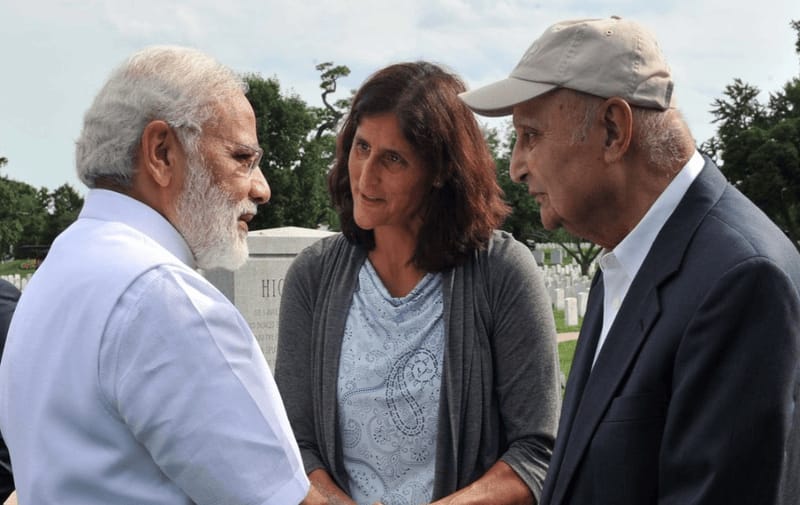
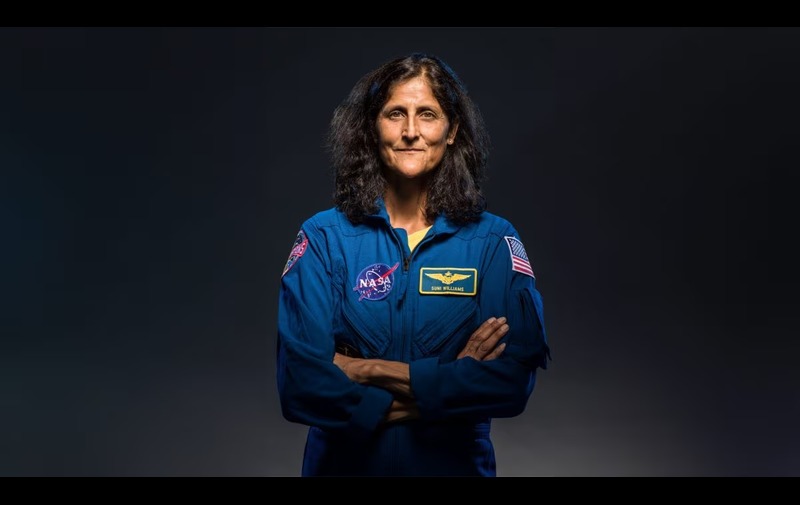
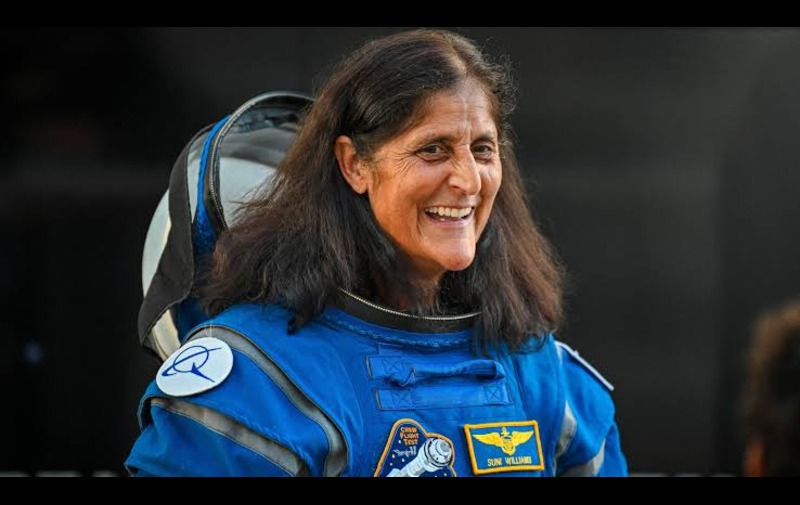
On a quiet evening in America, a young girl once looked up at the sky and wondered what lay beyond the stars. That curiosity never left her. Decades later, Sunita Lyn “Suni” Williams would float above Earth, looking down at the same planet from the window of the International Space Station. Her journey from Euclid, Ohio, to outer space is not just a story of science and success; it is a story of discipline, heritage, sacrifice, and resilience. Born on September 19, 1965, and raised in Needham, Massachusetts, Williams grew up in a home shaped by knowledge and multicultural pride. Her father, Deepak Pandya, an Indian-American neuroanatomist from Gujarat, and her Slovene-American mother, Bonnie Pandya, encouraged curiosity and learning. That blend of cultures stayed with her all her life, quite literally following her into space. Image Source : The TribuneFrom Uniform to Wings: A Navy Life of GritBefore she ever wore a NASA patch, Sunita Williams wore the uniform of the United States Navy. After graduating from the U.S. Naval Academy in 1987, she chose one of the toughest paths: naval aviation. Becoming a helicopter pilot is no easy task, and Williams thrived in demanding conditions, flying missions across the Mediterranean, Red Sea, and Persian Gulf during major military operations.She flew through storms, war zones, and humanitarian missions, including relief operations after Hurricane Andrew. Over time, she logged more than 3,000 flight hours in over 30 different aircraft. These years built not just technical skill but mental toughness, something that would later define her space career. When NASA selected her as part of Astronaut Group 17 in 1998, she was already trained to handle pressure where mistakes could cost lives. Image Source : IssuuA New Home Above EarthSunita Williams first went to space in December 2006 aboard Space Shuttle Discovery. What was supposed to be a mission turned into a life-changing chapter. She joined Expedition 14 and later Expedition 15, spending 192 continuous days in space, a record for a woman at that time. Life aboard the International Space Station is far from glamorous. It is cramped, exhausting, and relentless. Yet Williams embraced it fully. She conducted experiments, repaired equipment, and stepped outside the station for spacewalks that tested both strength and focus. Floating 400 kilometers above Earth, with nothing but a suit between life and vacuum, she became one of the world’s most experienced spacewalkers. Image Source : BritannicaBreaking Records, Quietly Making HistoryRecords followed Williams, though she rarely chased them. She completed nine spacewalks, ( A spacewalk is when an astronaut leaves their spacecraft or space station and works outside in space.) totaling 62 hours and 6 minutes making her the woman with the most spacewalk time in history and placing her fourth overall among all astronauts. She also logged more than 608 days in space, second only to one NASA astronaut in cumulative time. But perhaps her most human achievement came in 2007, when she ran a marathon while orbiting Earth. Strapped to a treadmill aboard the ISS, Sunita Williams completed the Boston Marathon in 4 hours and 24 minutes. As Earth spun beneath her, she ran not for medals but for connection, staying linked to life back home. Williams never forgot where she came from. She carried the Slovenian flag, a samosa, and a Carniolan sausage into space—small symbols with big meaning. These gestures reminded the world that astronauts are not just scientists; they are sons, daughters, sisters, and citizens of many cultures. Her Indian roots made her especially admired in India, where she became a symbol of global possibility. To many young Indians, she was proof that heritage is not a limitation; it is a strength.Image Source : NewsBytesThe Mission That Tested EverythingDuring the Boeing Crew Flight Test, Williams once again stepped into history as the first woman to fly on an orbital spacecraft test flight. What was meant to be an eight-day mission turned into a nine-month challenge due to technical problems aboard the ISS. Being “stuck in space” is not an adventure movie plot; it is a psychological and physical test. Yet Williams endured with calm professionalism. That extended mission tied her for one of the longest single spaceflights by an American. It also showed the world what true commitment looks like when things go wrong. Image Source : USA TodayThe Final Chapter, Not the EndAfter 27 years with NASA, Sunita Williams retired on December 27, 2025. Her farewell was not loud, but it was powerful. NASA described her career as one that laid the foundation for future Moon and Mars missions. In January 2026, while visiting India, she spoke not as a legend but as a learner sharing lessons from space and life with young minds. Her retirement marks the end of an extraordinary chapter, but not the end of her influence. She shows that greatness is built slowly, through years of training, setbacks, long nights, and silent determination. She reminds us that even in the most advanced machines, human courage remains the most important fuel. As she steps away from spaceflight, her legacy continues to orbit Earth in classrooms, in dreams, and in every child who looks up at the night sky and dares to believe. Sunita Williams didn’t just go to space. She made space more human Image Source : NewsBytes