
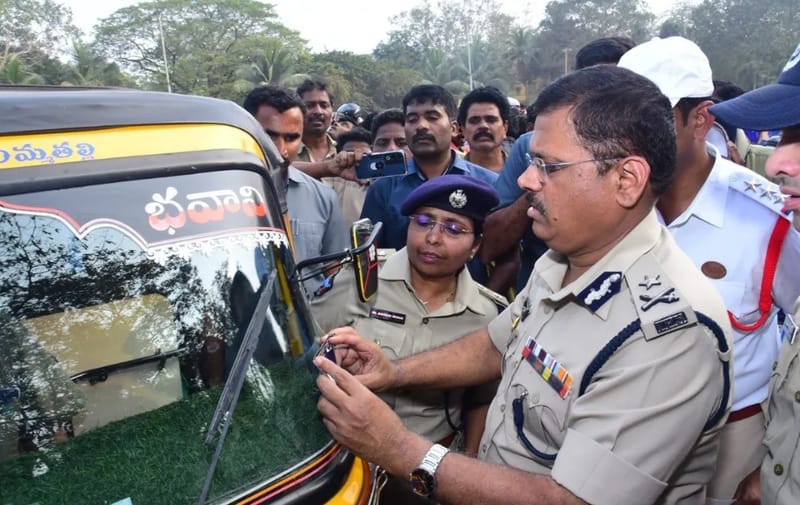
One Scan to Safety: How a Student’s Simple QR Code Is Quietly Transforming Every Ride in Andhra Pradesh
In a country where millions step out every day relying on public transport, safety often remains an unspoken concern. It is something passengers think about but rarely have control over. But sometimes, change does not arrive through massive policies or expensive technology it begins with a simple idea. For G Srinivas Reddy, a final-year engineering student from Mohan Babu University, that idea has now moved far beyond a classroom project and into the real world, where it is making journeys safer, one scan at a time.A Question That Sparked an InnovationLike many engineering students, Srinivas could have chosen a routine final-year project. But instead of focusing on complexity, he focused on a question rooted in everyday life: what can a passenger do when they feel unsafe during a ride? This question is deeply relevant in India, where transport systems are vast, diverse, and often unpredictable. While technology has improved convenience through ride-hailing apps, safety remains inconsistent—especially in local transport like autorickshaws and independent rental vehicles. Srinivas’s idea was not about reinventing transport, but about strengthening trust within it.A Simple Scan with Powerful ImpactAt the heart of his innovation lies a QR code-based real-time traveller protection system. Installed inside vehicles, usually behind the driver’s seat, the QR code allows passengers to instantly access critical information with a quick scan using their smartphones. Within seconds, passengers can view verified details such as the driver’s identity, vehicle registration, and trip-related information. But what truly sets this system apart is what happens behind the scenes. The moment the QR code is scanned, the journey’s live location is automatically shared with the police control room and nearby patrol teams. Without requiring any additional effort from the passenger, the ride becomes actively monitored. This subtle yet powerful shift transforms a passive journey into a protected one.Turning an Idea into RealityWhat makes this innovation truly remarkable is not just the technology, but how it was implemented. Srinivas developed the system through his startup, SAS Electronics LLP, and worked closely with local authorities to refine it. The Andhra Pradesh Police, particularly in the NTR district, recognised the potential of this solution. With guidance from senior officials and collaboration with law enforcement, the project quickly evolved from a student initiative into a public safety tool. Its official launch by S V Rajasekhar Babu marked a significant milestone, showing trust in a young innovator’s vision. It also highlighted a growing trend where academic institutions are no longer isolated spaces of learning but active contributors to real-world problem-solving.Why This Matters on Indian RoadsIndia’s transport ecosystem is unique. While metro cities have access to app-based ride tracking, a large section of the population still depends on informal or semi-formal transport systems. These often lack built-in safety features, leaving passengers vulnerable. This QR code system bridges that gap. By embedding safety directly into the vehicle rather than relying solely on apps, it ensures that anyone with a smartphone regardless of how they booked their ride can access a layer of protection. Whether it is an autorickshaw, a rental cab, or even vehicles operating through platforms like Uber, Ola, or Rapido, the system creates a consistent safety experience. For passengers, especially women, children, and elderly travellers, this can make a significant emotional difference. It is not just about safety—it is about peace of mind.Speed, Accountability, and TrustOne of the biggest challenges in emergency situations is response time. Srinivas’s system addresses this directly. If a passenger senses danger be it unsafe driving, suspicious behaviour, or any emergency—authorities already have access to the vehicle’s live location. This enables quicker intervention, potentially preventing incidents before they escalate. The system also introduces a feedback mechanism. Passengers can rate their experience, creating a transparent environment where drivers are encouraged to maintain high standards. Poor ratings can trigger alerts, while consistent good behaviour can be rewarded. In this way, the system does not just monitor it builds accountability on both sides.A Small Code, A Big FutureWhat makes this system truly powerful is its simplicity. There are no heavy installations or expensive hardware—just a QR code, a smartphone, and a connected network. Yet, the impact is far-reaching. It increases transparency, builds trust, and strengthens the safety net for millions of passengers. It also opens doors for future innovations in transport safety and data integration. Srinivas is already working on expanding his ideas into vehicle data management systems, showing that one meaningful project can evolve into an entire ecosystem of solutions. In the end, this story is not just about technology or policing. It is about what happens when a young mind decides to build something that matters. It is about how a small idea, driven by purpose, can quietly change lives. Because sometimes, making a journey safer does not require a revolution just a single scan.