Meet Nikhamoni Bora: The Trailblazer Who Became Northeast India's First Certified Female Sailor and Windsurfing Champion
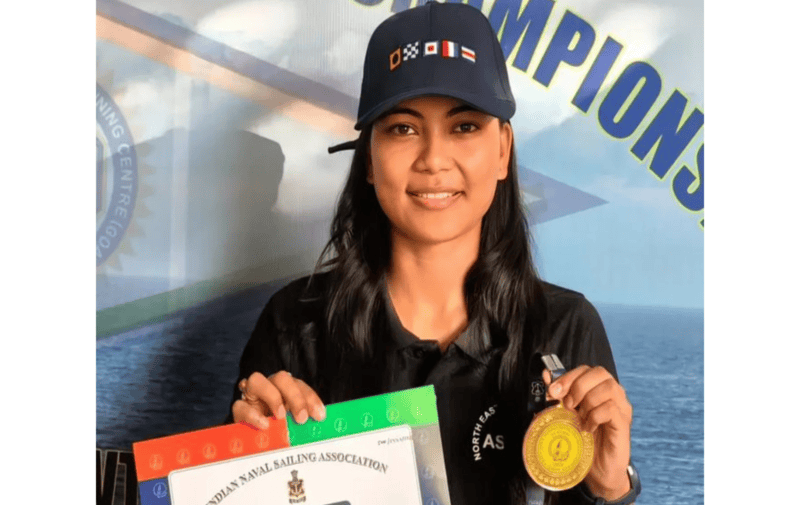
While most sporting dreams from Assam are associated with athletics or boxing, Nikhamoni Bora has charted a completely different course—one powered by wind and waves.The 25-year-old athlete from Sarupathar in Assam's Golaghat district has become Northeast India's first certified female sailor and competitive windsurfer, creating history in a sport that is still finding its footing in India. Her remarkable rise is not only putting Assam on the country's sailing map but also inspiring countless young women to explore unconventional sporting careers.Armed with determination and a passion for adventure, Nikhamoni is proving that no dream is too distant when courage sets the sail.From Rifle Shooting to Riding the WavesNikhamoni's sporting journey began far away from the sea. As a student, she participated in rifle shooting and weightlifting, but it was during her time in the National Cadet Corps (NCC) that her life took an unexpected turn. Encouraged by her Commanding Officer, she was introduced to the world of sailing, a sport she had never imagined pursuing. She soon earned her Level 1 and Level 2 sailing certifications from the Yachting Association of India before expanding her expertise into windsurfing and kiteboarding. Today, she competes in iQFOiL, the Olympic windsurfing discipline that combines speed, balance and precision. Equipped with a hydrofoil beneath the board, athletes literally glide above the water, reaching speeds of over 65 km/h, making it one of the fastest and most demanding water sports in the world.A Champion Making WavesNikhamoni's dedication quickly translated into podium finishes. Between December 2023 and April 2024, she captured two gold medals and one bronze medal in national windsurfing competitions, establishing herself as one of India's rising stars in the sport.Her achievements earned her a place in the India Book of Records for the most windsurfing tournament victories by a female. Assam Chief Minister Himanta Biswa Sarma also applauded her success, celebrating her as one of the state's young women breaking new barriers in Indian sport.Training for Olympic DreamsDespite representing a state with limited infrastructure for water sports, Nikhamoni has refused to let geography define her ambitions. Since Assam offers mostly inland lake training, she shifted much of her preparation to Morjim in North Goa, where better coastal conditions allow her to train in Olympic-level windsurfing.Supported by Cairn Vedanta, she continues to sharpen her skills with one clear goal in mind—to represent India at the Olympic Games. Her role models remain fellow Assamese sporting icons Hima Das and Lovlina Borgohain, whose journeys inspired her to believe that athletes from the Northeast can shine on the world's biggest stages.She is equally passionate about opening doors for young girls who may never have considered water sports as a career. In Assam, she actively mentors aspiring athletes through kayaking and canoeing camps, encouraging them to embrace adventure and challenge stereotypes.Having overcome societal expectations that urged her to pursue a more conventional career, she now hopes her own journey will encourage more families to support daughters who dare to dream differently. As she often says, she still has “miles to go.”