Pradyot Voleti Turned Bamboo Hoops into Big Dreams : How One Man Is Rewriting India’s Basketball Story
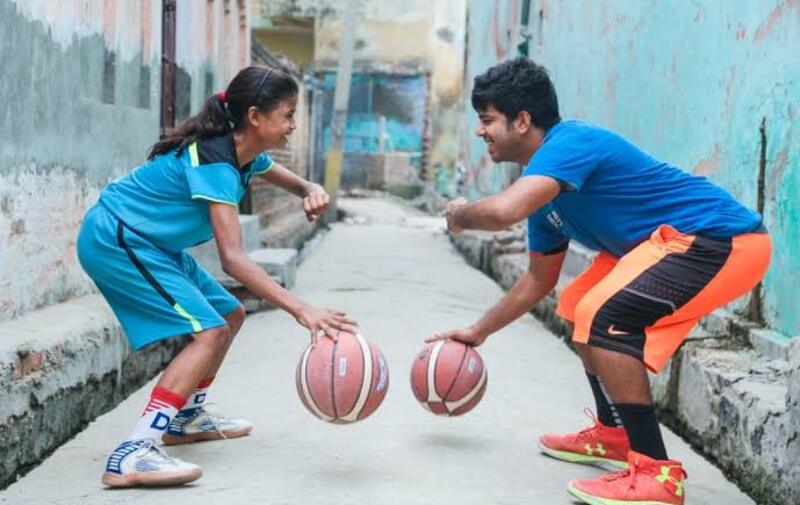
In a country where cricket dominates headlines and playgrounds, it takes extraordinary vision to nurture another sport from the grassroots. Pradyot Voleti is one such visionary who chose an unconventional path, turning his lifelong love for basketball into a mission that is changing lives. What began with just four children, two bamboo poles, and a makeshift hoop in a village in Uttar Pradesh has now grown into the Dribble Academy Foundation, impacting over 3,000 children across multiple villages. His journey is not just about sport; it is about hope, opportunity, and rewriting destinies.From Player to Purpose-Driven MentorBasketball has always been central to Pradyot’s life. From his early days representing Mayo College, Ajmer, to playing at the Under-19 level for Delhi, the game shaped his identity. Even as he pursued higher education in Mumbai and later a Master’s degree in clinical psychology in Delhi, basketball remained his constant companion. But unlike many who drift away from sports due to career pressures, Pradyot chose to dive deeper. Instead of following a conventional career path, he asked a simple yet powerful question: how can basketball be used to change lives in India?Learning from the Best to Build the FutureDetermined to elevate his understanding, Pradyot immersed himself in learning. He spent countless hours studying basketball drills and training methods, using digital platforms to refine his knowledge. His journey took a significant turn in 2014 when he trained at the Elev8 Sports Institute in Florida. There, he learned from globally renowned trainers like Ganon Baker and Cody Toppert, gaining insights into professional-level coaching and player development. His exposure extended to observing top college basketball programs like Stanford University and the University of Connecticut, as well as working with the Northern Arizona Suns in the NBA G-League system. These experiences gave him a global perspective, which he later brought back to India with a clear mission.Building Something from NothingArmed with knowledge and determination, Pradyot returned to India to create something meaningful. In 2015, he laid the foundation for what would become the Dribble Academy Foundation. The early days were humble—just a dirt court in Gejha village, a basic hoop, and a handful of children. Among them were his driver’s daughters, symbolizing how deeply rooted his mission was in community upliftment. What he lacked in infrastructure, he made up for with passion and consistency. Slowly, word spread, and more children joined, drawn not just by the sport but by the sense of belonging and possibility it offered.Beyond Basketball: A Holistic ApproachWhat sets the Dribble Academy Foundation apart is its holistic vision. While basketball is the medium, the goal is much larger. Children are not only trained in the sport but also equipped with essential life skills such as English communication, digital literacy, public speaking, and the arts. This integrated approach ensures that students are prepared for opportunities beyond the court. It recognizes that true development is not limited to physical ability but includes emotional strength, confidence, and intellectual growth.The impact of Pradyot’s work is best seen in the stories of the children themselves. Many come from underprivileged backgrounds, where access to quality education and sports facilities is limited. Through DAF, these children have found a pathway to a better future. Several have represented India at international platforms like the Jr. NBA World Championship in Orlando, while others have secured full sports scholarships at prestigious universities. Most of them are first-generation college-goers, breaking cycles of limitation and opening doors for their families. It is about parents who begin to see new possibilities for their children. It is about young girls in rural India stepping onto a basketball court and discovering confidence, strength, and independence. Keeping the Spirit of Sport Alive in IndiaIn a nation where infrastructure and awareness for sports like basketball are still developing, individuals like Pradyot Voleti play a vital role in keeping the spirit alive. They challenge norms, build ecosystems from scratch, and prove that talent exists everywhere it only needs the right platform. By focusing on rural and semi-urban areas, DAF is tapping into a vast, often overlooked pool of potential, creating a new generation of athletes who can compete at national and global levels.A Vision for the FutureLooking ahead, the goal is ambitious yet inspiring to empower rural children through basketball. It is a vision that goes beyond numbers, aiming to create a movement where sport becomes a tool for social transformation. With each passing year, the foundation moves closer to this dream, fueled by dedication, transparency, and measurable impact. In the end, this is not just a story about basketball. It is about courage, purpose, and the power of one individual to spark change. Through his work, Pradyot Voleti has shown that sports can be a bridge to education, equality, and empowerment. His journey reminds us that sometimes, all it takes to change lives is a ball, a hoop, and the belief that every child deserves a chance to dream.


 (1).jpeg)