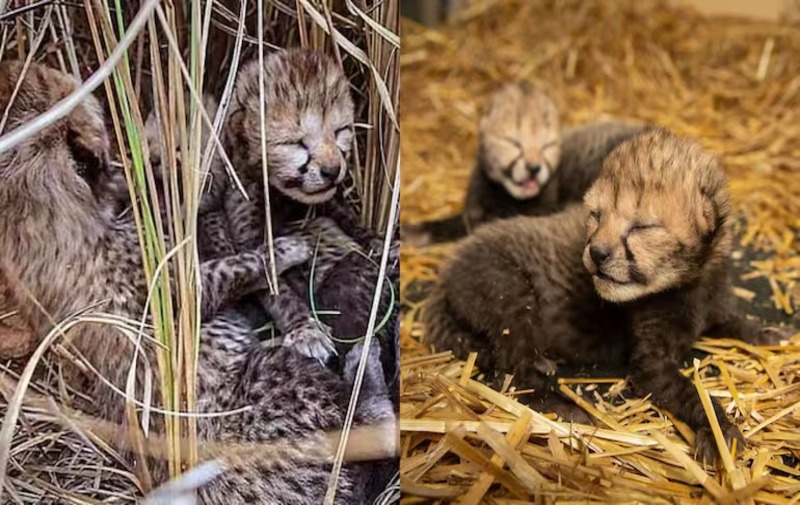
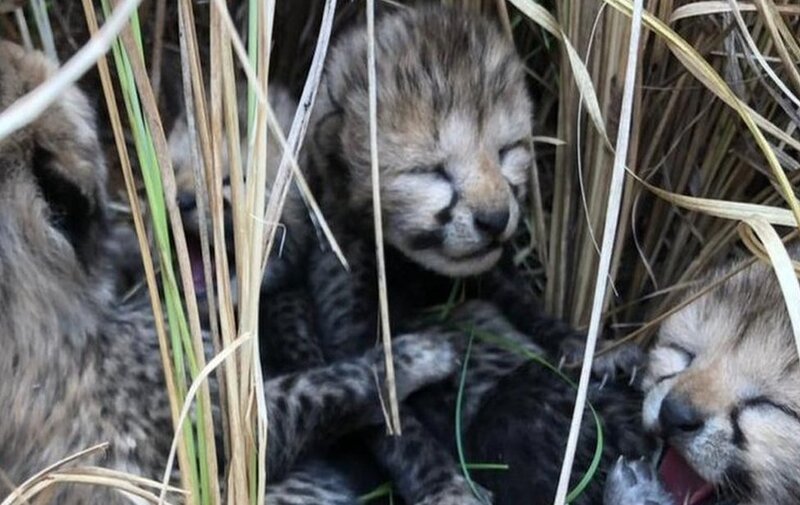
A New Beginning in Kuno: Wild Birth of Four Cheetah Cubs Signals Hope for India’s Lost Species
In the quiet grasslands of Kuno, where the wind moves gently through dry leaves and the rhythm of the forest hums softly, something extraordinary has happened. A female cheetah has given birth to four cubs in the wild. It is a moment that carries more than just biological significance. It carries emotion, history, and the promise of restoration. For a country that once lost its cheetahs to extinction, this is not just a birth; it is a return.The Return of a Lost LegacyIndia’s relationship with the cheetah has been both ancient and tragic. Once roaming freely across the subcontinent, the species was declared extinct in India in 1952, a loss that symbolized the consequences of overhunting and habitat decline. Decades later, the nation decided to rewrite that story. The cheetah reintroduction program was launched as an ambitious effort to bring the world’s fastest land animal back to Indian soil. Under the leadership of the National Tiger Conservation Authority, cheetahs were translocated from African countries to carefully selected habitats like Kuno National Park. The goal was clear but challenging: not just to reintroduce the species, but to ensure that it survives, adapts, and eventually thrives.A Birth That Signals BelongingThe birth of four cubs in the wild is a powerful indicator that this vision is beginning to take shape. Unlike births in controlled or captive environments, wild births represent something far deeper. They show that the animals are adapting to their surroundings, finding food, feeling secure, and behaving naturally. For conservationists, this is the ultimate validation. It means that Kuno’s ecosystem, its prey base, vegetation, and climate is slowly becoming suitable for sustaining a cheetah population. It also suggests that the animals are not just surviving, but beginning to reclaim their place in the wild.The Silent Work Behind the SuccessWhile the birth may seem like a sudden moment of joy, it is the result of years of careful planning, scientific research, and relentless effort. Wildlife experts, forest officials, veterinarians, and local communities have all played a role in making this possible. From tracking the health of the animals to managing their habitat and ensuring minimal human disturbance, every detail has been crucial. The journey has not been without challenges. There have been concerns about climate adaptation, prey availability, and even initial losses. But each step, each lesson, has contributed to refining the approach. This birth, therefore, is not just about one cheetah family—it is about the collective dedication of people who believed in bringing back a species against all odds.Kuno: A Landscape of PossibilitiesNestled in the heart of Madhya Pradesh, Kuno National Park has emerged as a symbol of India’s conservation ambitions. Once known primarily for its potential as a habitat for Asiatic lions, Kuno has now found a new identity as the home of India’s cheetah revival project. Its open grasslands, interspersed with forest patches, provide an ideal environment for cheetahs, which thrive in such terrains. But beyond its geography, Kuno represents something more—a willingness to adapt, to experiment, and to invest in the future of biodiversity.Challenges That Still Lie AheadWhile the birth of the cubs is a significant milestone, the journey is far from complete. The survival of these cubs will depend on multiple factors: availability of prey, protection from predators, and the ability to navigate their environment. Conservationists will continue to monitor their progress closely, ensuring that the conditions remain favorable. Scaling up the population will also require sustained effort, including potential future translocations and habitat expansion. Success, in this case, will not be measured by a single event but by the long-term establishment of a stable and self-sustaining cheetah population in India. India’s cheetah reintroduction program is still unfolding, but moments like these remind us why it began. Because sometimes, the return of a single species can reignite a nation’s connection with its natural heritage. And in the heart of Kuno, that connection has just grown stronger.