
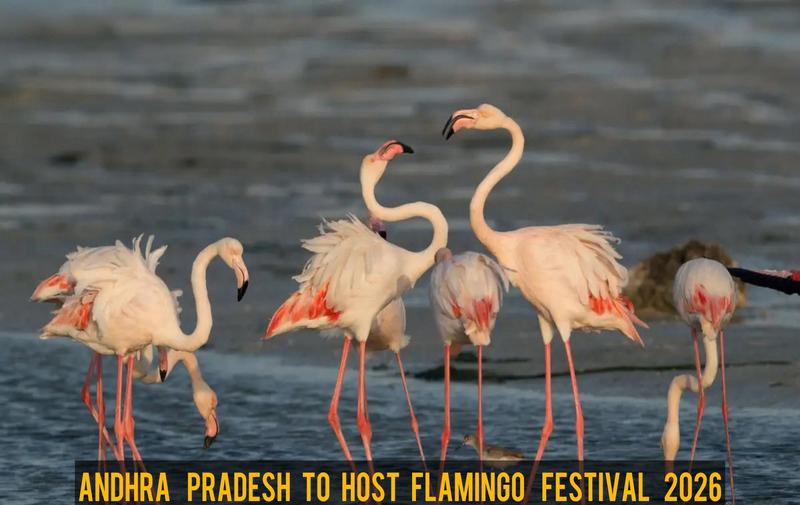
A Splash of Pink on India’s Wetlands: Flamingo Festival Returns to Pulicat
Andhra Pradesh is all set to host the Flamingo Festival 2026 at Pulicat Lake, marking the annual arrival of greater flamingos and other migratory birds. Scheduled for 10 and 11 January, the festival transforms the scenic lake into a vibrant hub of activity, blending wildlife appreciation with cultural festivities. The event is designed to draw tourists, bird enthusiasts, and families from across India and beyond, while promoting awareness of wetland conservation and eco-tourism initiatives in the region. Pulicat Lake, spanning 759 square kilometers across Andhra Pradesh and Tamil Nadu, serves as India’s second-largest brackish water lagoon and a Ramsar site of international importance. In Andhra Pradesh, about 250 square kilometers of the lake lie in the Tirupati district, supporting the livelihoods of over 40,000 fisherfolk who depend on its rich fish, prawn, and crab populations.The Arrival of the FlamingosThe Flamingo Festival coincides with the peak migratory season, when flocks of greater flamingos (Phoenicopterus roseus) descend upon the shallow, nutrient-rich waters of Pulicat Lake. Migrating from breeding grounds in the Rann of Kutch in Gujarat and as far as Central Asia, these birds find Pulicat an ideal habitat for feeding and breeding. The lake’s unique ecosystem, fed by freshwater inflows from the Swarnamukhi and Kalangi rivers and the Bay of Bengal, teems with small fish, prawns, crustaceans, and blue-green algae. They sustain the flamingos and give their plumage its signature pink hue through carotenoid pigments. The migratory birds play an ecological role as well. Flamingos and other species aerate lake sediments while foraging, help control algae blooms, and support the overall health of the brackish water ecosystem. Their seasonal arrival not only draws birdwatchers and tourists but also emphasizes the importance of preserving Pulicat Lake’s fragile ecology.Festival Highlights First organized in the early 2000s, the Flamingo Festival has grown into a celebrated annual event. This year, themed “A Celebration of Nature, Culture & Biodiversity,” the festival promises a lively mix of activities, including bird-watching tours, cultural performances of local folk dances and music, boat rides across the lake, and exhibitions on avian ecology. Visitors will also experience handicraft stalls from surrounding villages and awareness sessions on wildlife conservation. The event is expected to attract over 10,000 participants, including ornithologists, photographers, and families. For local communities in Sullurupeta, Nelapattu, and nearby areas, the festival provides a boost to the economy, fostering tourism while connecting people with the lake’s natural heritage. Officials, including Tirupati Collector S. Venkateswar and Superintendent of Police Subbarayudu, are coordinating efforts to manage crowds and ensure visitor safety, reflecting a growing commitment to sustainable tourism that respects both people and nature.Pulicat Lake: Ecological SignificancePulicat Lake is a critical habitat not only for flamingos but also for over 80 species of birds, including pelicans and painted storks. The Flamingo Festival serves as a platform to celebrate this interdependence and rally public support for ecological restoration. Recognizing the lake’s significance, the Andhra Pradesh government under Chief Minister N. Chandrababu Naidu has proposed ambitious development plans. In coordination with the Union Agriculture Minister Shivraj Singh Chouhan, the state seeks central funding for lake restoration, including infrastructure for fisheries and eco-tourism. Key measures include desilting the lake’s mouth to restore tidal inflows, maintaining salinity balance, and facilitating fish migration routes.Bridging Culture, Conservation, and TourismThe Flamingo Festival 2026 is more than a spectacle of pink feathers and migratory flocks. It represents a harmonious blend of culture, conservation, and community engagement. By attracting tourists, providing economic opportunities, and raising awareness of environmental challenges, the festival strengthens the bond between people and nature. As visitors set to gather at Pulicat’s islands and lakefronts to witness flamingos feeding and nesting, they engage with centuries of ecological history and local traditions. The festival reminds us that wetlands like Pulicat are living systems where human and wildlife needs coexist, and that thoughtful stewardship is essential for sustaining both.