Once Near Extinction, World's Heaviest Insect Makes a Remarkable Comeback
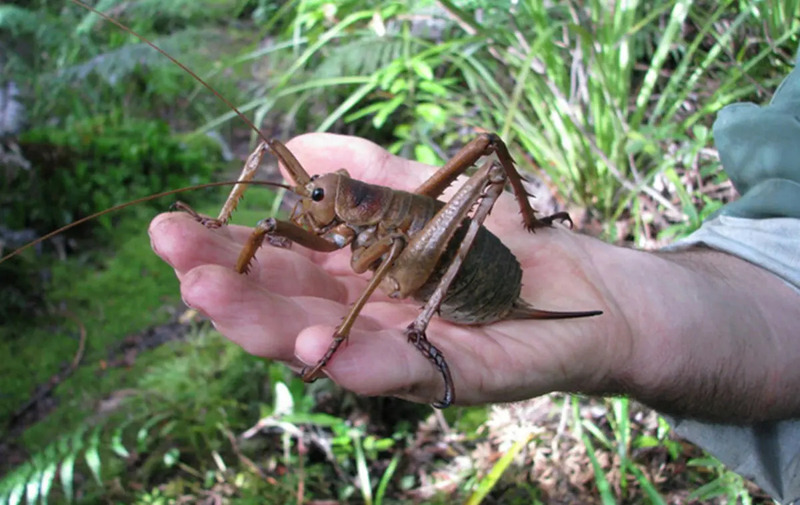
A tiny island refuge, dedicated conservationists and 15 years of patience have helped achieve a remarkable wildlife comeback. The wetapunga, the world’s heaviest insect, is once again thriving in the wild in New Zealand after coming dangerously close to extinction.More than 11,000 of these giant insects have been released into safe habitats, marking a major milestone in a conservation programme that offers fresh hope for threatened species.Meet the World's Heaviest InsectNative to New Zealand, the wetapunga is a giant weta species known for its impressive size. Females can grow up to 10 centimetres long and weigh around 70 grams, roughly the weight of a small mouse.Despite their unusual appearance, these insects play a role in their natural ecosystems. However, their survival came under serious threat during the 20th century.Once widespread across Northland and Auckland, wetapunga populations declined sharply because of habitat loss and introduced predators, including rats and cats. By the 1990s, the species was classified as endangered, with its remaining wild population surviving on Te Hauturu-o-Toi, also known as Little Barrier Island.15 Years of Care Bring New HopeRecognising the urgent need to protect the species, conservation teams led by Auckland Zoo and Butterfly Creek launched a captive breeding programme in 2010. Since wetapunga numbers were too low for direct relocation, conservationists first focused on raising them in protected conditions. The young insects, known as nymphs, were carefully hand-reared on a diet that included fresh leaves, fish protein and leaf litter.Once ready, they were transferred to predator-free offshore islands where they could establish new populations.The results have been extraordinary. Across 45 relocation efforts, more than 11,000 wetapunga have been released at 10 new wild sites.From Survival to Self-Sustaining PopulationsAccording to research published in the New Zealand Journal of Zoology, the programme has achieved something conservationists had long hoped for: self-sustaining wild populations.Even more encouragingly, fourth- and fifth-generation wetapunga have now been born naturally in the wild, showing that the insects are reproducing and establishing themselves beyond human care. Dr Chris Green, an honorary researcher at New Zealand’s Department of Conservation, described the results as extraordinary, highlighting how rare it is to report such success for threatened species.The achievement has also led to an important change in the insect’s conservation status. New Zealand’s Department of Conservation has upgraded the wetapunga from “nationally endangered” to “nationally increasing”. The wetapunga’s journey demonstrates what sustained scientific effort, careful planning and collaboration can achieve. From surviving on a single island to establishing new populations across multiple habitats, this remarkable insect is proof that even species on the brink can get a second chance.
.jpg)
.jpg)
.jpg)