
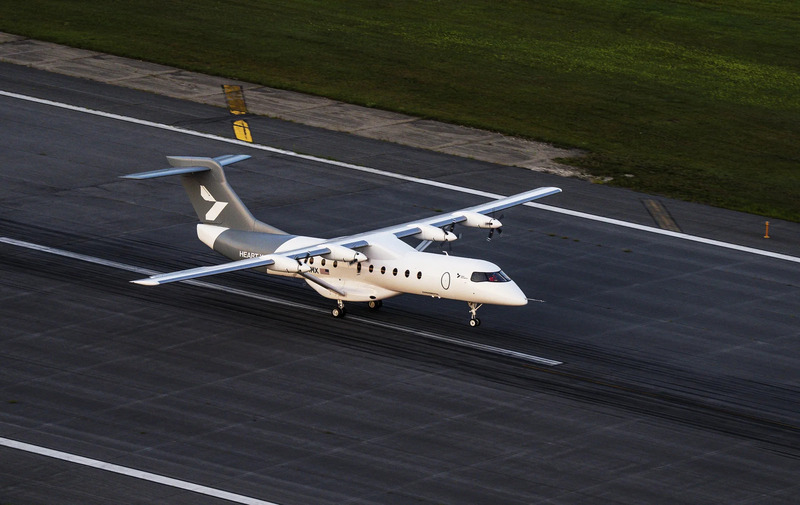
The Skies Are Going Electric: World’s Largest Battery-Powered Aircraft Takes Flight
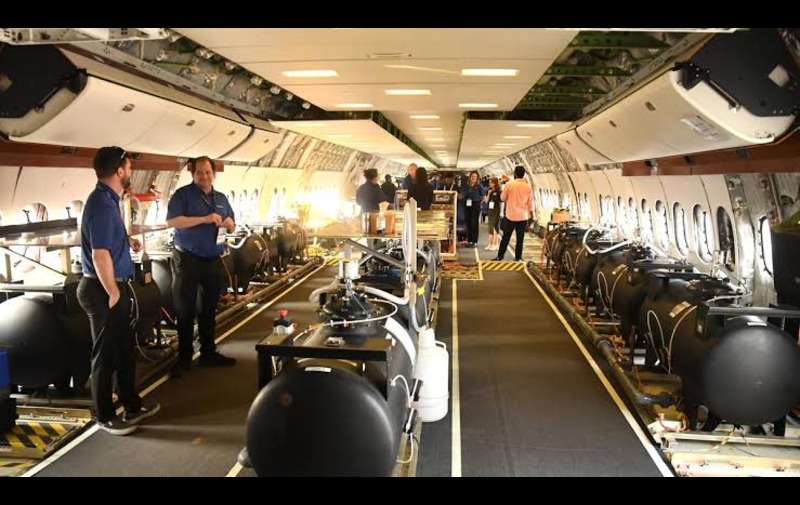
The future of flying has just taken a significant step forward. The X1, developed by Swedish-founded Heart Aerospace, has successfully completed its maiden flight, becoming the world’s largest fully battery-powered aircraft to fly. The 30-seat demonstrator remained airborne for 27 minutes during an early test at Plattsburgh International Airport in New York.Powered entirely by batteries, the aircraft climbed to around 1,100 feet, with only a pilot onboard. While the X1 may not carry passengers commercially, its mission is important: to prove that battery-electric propulsion can work at the scale of an aircraft resembling a small commercial airliner.A 25,000-Pound Aircraft Running on BatteriesThe numbers behind the X1 make the achievement even more striking. The aircraft weighs more than 25,000 pounds, has a wingspan of 106 feet and stretches 76 feet from nose to tail. Its battery-electric propulsion system can produce more than 1 megawatt of power.According to Heart Aerospace, the 27-minute demonstration flight consumed electricity costing approximately $5. That figure does not represent the aircraft’s complete operating cost—it excludes expenses such as maintenance, insurance, airport charges, crew and battery degradation—but it offers an intriguing glimpse of what electric propulsion could eventually mean for aviation economics.Why This Matters for the FutureHeart Aerospace sees the X1 as a technology testbed for its planned ES-30, a hybrid-electric regional aircraft expected to enter service around 2031. The company estimates that the ES-30 could be up to 40% cheaper to operate than comparable conventional regional aircraft. Airlines including United Airlines, Air Canada and JSX have already expressed interest in the planned aircraft.The potential benefits extend beyond economics. Electric propulsion could help reduce emissions on short regional routes while reducing airlines’ exposure to fluctuating fossil-fuel prices.The Battery ChallengeThere is still a major hurdle: battery weight. Unlike aviation fuel, batteries do not become significantly lighter as an aircraft flies. Carrying more batteries provides more energy but also adds weight, creating a difficult engineering trade-off.The X1 currently has a battery-only range of roughly 125 miles, highlighting why fully electric passenger flights are still some distance away.A Hybrid Path to the SkiesHeart Aerospace’s answer is hybrid-electric technology. The planned ES-30 is expected to use battery power for part of its journey, while a combustion engine can act as a range extender when additional distance is needed. With this system, the aircraft is expected to have a range approaching 500 miles.The X1’s first flight therefore represents more than a record. It is a real-world demonstration that the aviation industry can begin exploring a different way to power aircraft. The age of fully electric long-haul flight may still be far away—but for shorter journeys, the future has already begun to take off.

.jpg)













.jpg)
.jpg)








(1).jpg)