When India Saluted Itself: The World’s Largest Khadi Flag in the Rann of Kutch
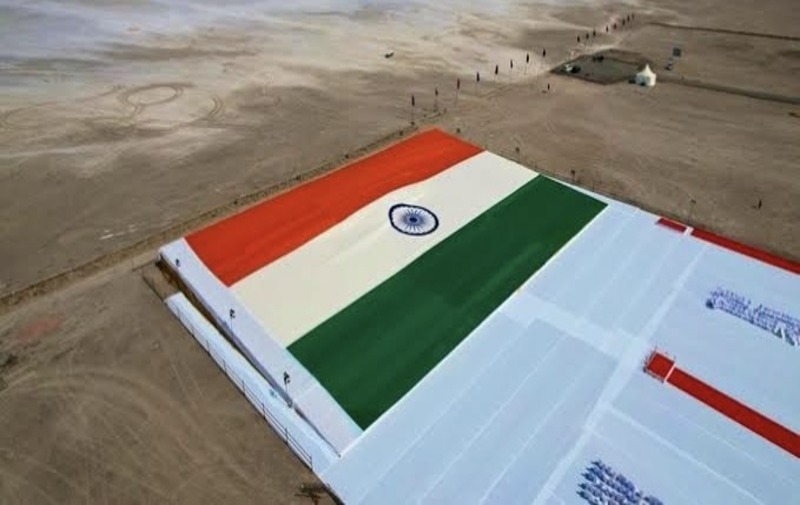
At Dhordo in Gujarat’s Rann of Kutch, where silence usually stretches as far as the horizon, January 26, 2026 unfolded with a rare kind of thunder—not of sound, but of emotion. Against the dazzling white salt desert, the world’s largest national flag made entirely of Khadi rose with full military honours, transforming the landscape into a moving canvas of saffron, white, and green. The moment was historic, but more than that, it was deeply human. On the occasion of India’s 77th Republic Day, this grand display became a powerful reminder that the nation’s strength lies not only in its borders and institutions but also in its people, traditions, and values woven together over generations.Khadi: Cloth That Carries a Nation’s SoulKhadi is not just fabric; it is memory. It is the legacy of Mahatma Gandhi, who turned a simple hand-spun cloth into a weapon of freedom, dignity, and self-reliance. The monumental tricolour displayed in the Rann of Kutch carried that same philosophy forward: Swadeshi in spirit, national in scale, and global in impact. Organised by the Khadi and Village Industries Commission (KVIC) under the Ministry of Micro, Small and Medium Enterprises, the display symbolised India’s journey from colonial dependence to Atmanirbhar Bharat. Illuminated under the open sky, the Khadi flag stood as a visual declaration that indigenous strength still anchors modern India.The monumental national flag measures 225ft long, 150ft wide and weight approx 1000kg.Salute from the Frontlines of the NationWhat made the moment even more powerful was the presence of the Indian Army and the Border Security Force. In a border district that has long stood guard over the nation’s western frontier, soldiers installed and saluted the Khadi tricolour with full military honours. This was not merely ceremonial. It was symbolic of the bond between India’s soldiers and its citizens—between those who protect the nation and those who keep its traditions alive. The program was dedicated to the brave soldiers of “Operation Sindoor,” adding a layer of contemporary sacrifice to the historical weight of the occasion.Artisans Across India, United by a Single FlagWhile the flag stood tall in Kutch, its heartbeat echoed across the country. Khadi artisans from different states sent video messages saluting the monumental tricolour, creating a rare moment of nationwide participation. For these artisans, many of whom sustain their livelihoods through village industries, the flag was personal. Their hands, skills, and stories were stitched into its fabric. The display reaffirmed that national pride is not manufactured in factories alone but crafted patiently in homes, villages, and small workshops across India.Remembering the Bhuj EarthquakeJanuary 26, 2026 also marked 25 years since the devastating Bhuj earthquake of 2001. In a land that once witnessed unimaginable destruction, the Republic Day celebration became a reflection on resilience. Kutch’s journey from rubble to renewal was quietly woven into the day’s narrative. As citizens remembered those lost in the tragedy, the towering Khadi tricolour stood as a testament to India’s ability to rebuild stronger, wiser, and more united than before.More Than a Flag, A Living RepublicAs the sun set over the Rann of Kutch, the Khadi tricolour continued to glow not just with light but with meaning. It reflected soldiers standing guard, artisans at their looms, families who sacrifice in silence, and communities that rise after disaster. On the 77th Republic Day, India did not merely unfurl a record-breaking flag. It unfurled a story of unity in diversity, strength in self-reliance, and humanity at the heart of nationhood.
.jpeg)
.jpg)