Breaking Free: Challenging Gender Stereotypes and Embracing Cultural Diversity
Girls' self-esteem, ambition, and expectations are the first victims of gender stereotypes. Therefore, eradicating clichés and their associated behaviors should be a priority for any society and should begin in schools I believe. Some initiatives advocate introducing female role models by exploring various cultures and lifestyles around the globe.
What Is a Gender Stereotype and What Consequences Does It Have ~
According to the Office of the High Commissioner for Human Rights (OHCHR), a gender stereotype "is a generalized view or preconception about attributes, or characteristics that are or ought to be possessed by women and men or the roles that are or should be performed by men and women". A gender stereotype is therefore harmful when it limits the capacity of women and men to develop their personal attributes or professional skills and to make decisions about their lives and plans. Gender stereotypes affect girls around the world regardless of their country's level of development and are encouraged by society at large, from parents to teachers. This is one of the main conclusions of the WHO/John Hopkins University Global Early Adolescent Study. Although some may consider this trivial, it has very detrimental consequences for girls from a very early age reducing their aspirations and limiting their career options.
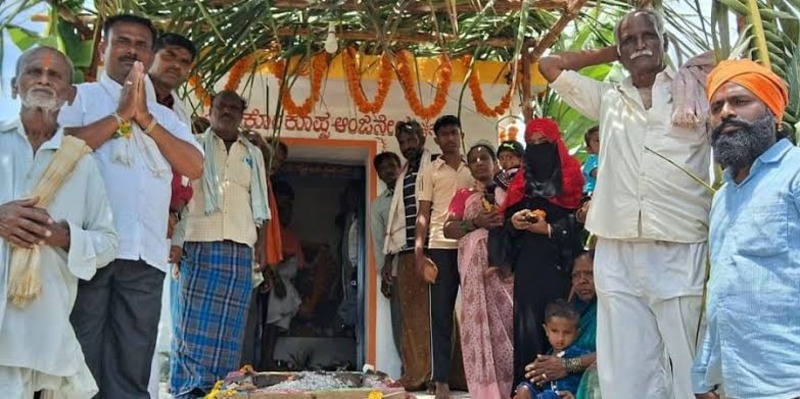
Eastern nations, particularly those on the Indian subcontinent, evolved from an agrarian-feudalistic civilization ( Feudalism, also known as the feudal system, was a combination of legal, economic, military, cultural, and political customs that flourished in the medieval period). These areas have historically valued the commercialization of means of production. Feudalism allows men and those in authority to openly take product and excess from direct producers. Such cultures subjugate those who are economically disadvantaged and/or physically weak, from serfs to women and children, resulting in uneven economic relations and social reproduction and preparing the way for oppressively gendered hierarchies. Historically, this patriarchal hegemony may be witnessed in the Middle East, where fathers, brothers, or spouses have paramount control over women. ~ This ideological paradigm throws all caring obligations on women's shoulders, resulting in an unequal cycle of societal division.
Understanding The Role of Culture in Gender Stereotyping ~
It is obvious that a gendered approach to care is rooted in economic power dynamics, supported by the imposition of prejudiced belief systems, restrictive mindsets, and traditions as understood by stakeholders - in other words, those in power. In terms of economic development, such a social reproduction method has a devastating impact. Disempowering women by devaluing their labor, whether it is care or household work, has serious consequences for development, general quality of life, and hence sustainability.
Important Notion To be Read ~ "Neither boys nor girls are born sexist, there is something that we as a society do to them to make them reach that point," says Miriam Gonzalez, founder of 'Inspiring Girls in Spain.
Getting Some Insights from Mexican Culture and Norms of Living~
''it is the women in our lives that have influenced our love for Mexican food and traditions.''
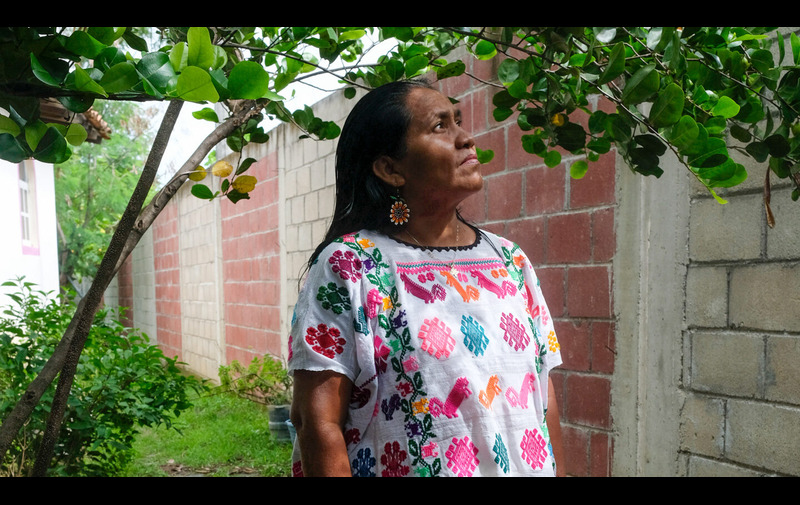
Mothers are the major characters in most Mexican households; they are revered and honored by spouses, children, and, eventually, their own children's families. In many circumstances, they become the greatest nightmare for a daughter-in-law since the husbands appear to listen to the mother rather than the wife. As wonderful as that sounds, I don't believe it's anything to be particularly proud of! Another interesting information I discovered was that females account for more than 51% of the Mexican population. I am filled with pride as I see more and more Mexican women being recognized for their contributions to science, politics, technology, cuisine, business, and general leadership. The nicest aspect is that the accolades come from both Mexican and foreign sources.
Previously, male chefs received the majority of acclaim, prizes, and tributes in the culinary industry. Male chefs opened new restaurants, appeared in front of cameras, and earned all of the credit. However, if you ask these chefs where they get their inspiration, recipes, and direction, the vast majority would mention their moms, grandmoms, or other inspiring ladies.
“Women hold the key to our traditions and food culture”.
Throughout the centuries, it was our moms, grandparents, and great-grandmothers who preserved and passed down traditions, including recipes, from generation to generation. Women make every occasion memorable by bringing amazing cuisine and tales to the table. Women have inspired a new generation of cooks, chefs, and scholars who wish to rediscover and better appreciate Mexican cuisine. Women have increasingly taken the limelight in the worldwide arena, showcasing Mexican food and culture.
The importance of conserving and passing down cultural and gastronomical traditions can no longer be neglected. Women in Mexico have been performing for generations, which makes all Mexicans proud of their culture and cuisine.
Prominent Hispanic women throughout history have paved the path for current prominent personalities.~
'Rigoberta Menchú'
Rigoberta Menchú is a Nobel winner from Guatemala. She is an outspoken advocate for indigenous people's rights. Her work earned her the Nobel Peace Prize in 1992. Her voice has propelled her to the forefront of Central American human rights activism. In 2002, Menchú was a prominent speaker at the World Social Forum. She founded the Nobel Women's Initiative in 2006 with five other Nobel laureates to promote women's rights, peace, and equality.
Famous quote by her: “Peace cannot exist without justice, justice cannot exist without fairness, fairness cannot exist without development, development cannot exist without democracy, democracy cannot exist without respect for the identity and worth of cultures and peoples.”
Another one we can count on ~
Alexandria Ocasio-Cortez, also known as AOC, is a 31-year-old American politician, economist, and activist. She is a Progressive Democrat and the youngest Congresswoman to ever be elected. She has represented New York’s 14th District since November 6th, 2018. Alexandria Ocasio-Cortez is of Puerto Rican ancestry and is considered a rising star in U.S. politics. She has a degree in International Relations and Economics from Boston University and has more than 8 million followers on Instagram. She’s influential and has inspired many young girls to follow a career in politics so that they can have an impact and create change.
A famous quote by her: “Change takes courage.”
.
.
Stemming from a patriarchal mindset, caregiving responsibilities to the young and old alike are presumed to be mainly a woman’s job. All across the world, women spend disproportionately more time doing care work with little to no remuneration. I believe the tides are turning, and we all play an important part in ensuring that women receive fair acknowledgment for their contributions. We should all get inspired and continue to work together as a 'community', including men and women, to deliver the finest of our nation to the world!








.png)
.jpg)









.jpg)
.jfif)







.jpg)
 (1).jpeg)