India Sweeps Compound Archery Team Gold at 2026 Asian Games
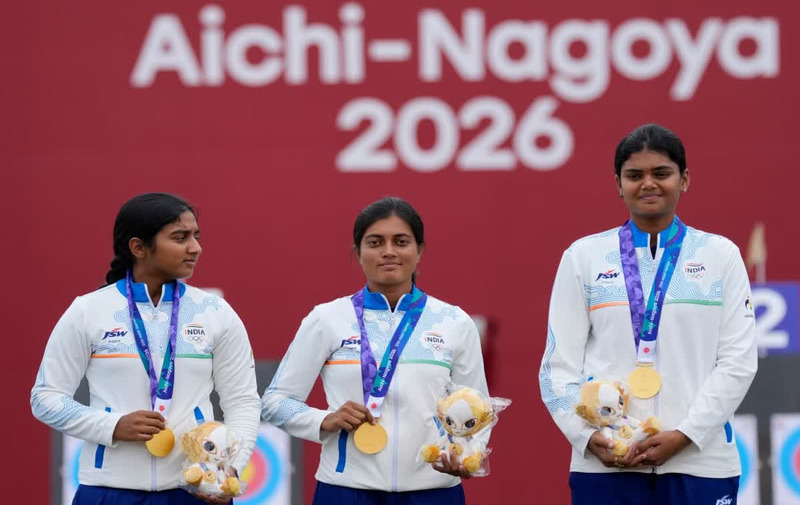
India’s compound archers delivered a remarkable run of performances in Aichi-Nagoya on Wednesday, sweeping all three team gold medals at the 2026 Asian Games.The women’s team of Jyothi Surekha Vennam, Prithika Pradeep and Chikitha Thaniparthi defeated China 238-234 in the final to retain the title India won at the Hangzhou Games.The victory also saw India equal the world and Asian record of 238 points set by South Korea in 2014.A Thrilling Fight Against ChinaThe women’s final followed a tense semi-final against South Korea. India edged past the Korean team 234-233 after the scores were level at 175 midway through the contest.With the pressure mounting, India moved one point ahead before crucial shots from Chikitha and Prithika, along with a nine from Jyothi, helped seal the narrow victory. In the final, however, the Indian trio found another level and maintained their composure to beat China by four points.For Jyothi, the gold added another chapter to an extraordinary Asian Games record. The 30-year-old has been part of all four medal-winning Indian women's compound team contingents since the event was introduced in 2014.India won bronze in 2014, silver in 2018 and gold in both 2023 and 2026.More Gold for IndiaThe celebrations continued in the mixed team event. Chikita Thaniparthi and Sahil Jadhav held their nerve against Korea in a dramatic final. The two teams were locked at 157 after four series, forcing a shoot-off. The Indian pair prevailed to secure another gold medal.The victory also confirmed their berth for the 2028 Los Angeles Olympics, where the mixed compound event is set to make its Olympic debut. India completed the sweep with the men’s team title. Sahil Jadhav, Kushal Dalal and Thirumuru Ganesh Mani Ratnam produced a strong comeback to defeat China 238-237 and add the third compound team gold of the day.A Golden Day for Indian ArcheryThree finals. Three victories. India’s compound archers once again showed their consistency under pressure, turning close contests into golden finishes. The haul also pushed India to ninth position in the overall Asian Games standings.After the women’s 4x400m relay team won a historic gold on Tuesday, India’s archers delivered another golden day—keeping the country’s medal campaign moving forward with confidence.



.jpg)