"Dream, Dream, Dream! Conduct these dreams into thoughts, and then transform them into action."
- Dr. A. P. J. Abdul Kalam
"Dream, Dream, Dream! Conduct these dreams into thoughts, and then transform them into action."
- Dr. A. P. J. Abdul Kalam
16 Apr 2026
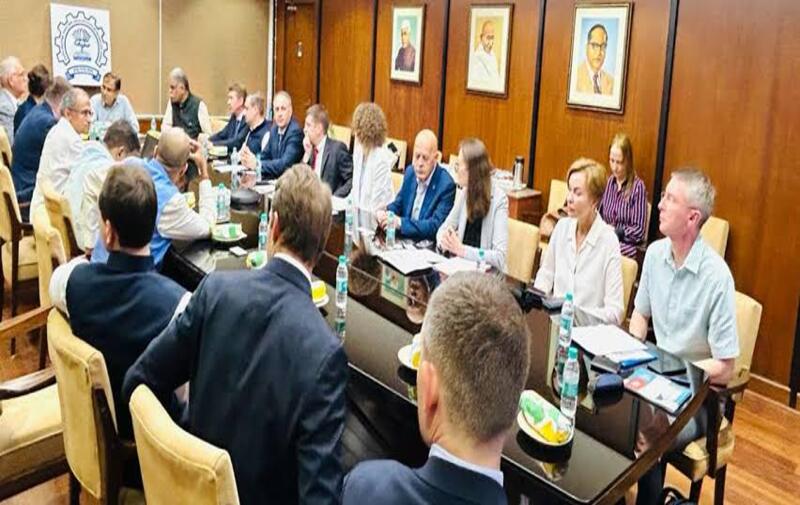
On a quiet morning at the campus of the Indian Institute of Technology Bombay, a group of young engineers and researchers gathered not for an ordinary lecture but for something far more significant. They were stepping into a future where science meets strategy, and learning could directly influence the energy security of a nation. This moment marked the beginning of a pilot nuclear training program launched in collaboration with Russia’s state nuclear agency Rosatom. While the program may appear academic on the surface, it represents a deeper shift in how India is preparing itself for the next era of energy and technological advancement.
A Strategic Partnership Beyond Borders
India and Russia have long shared strong ties in defence and energy cooperation. This new initiative builds on that relationship, focusing on knowledge-sharing and capacity-building in one of the most complex and critical fields—nuclear science. Conducted by Rosatom’s subsidiary, the JSC Engineering and Technology Center, the program brings together a unique blend of expertise. Alongside IIT Bombay’s academic strength, contributions from industry partners ensure that learning goes beyond theory and into real-world application. The collaboration reflects a growing global trend where nations work together not just to build infrastructure but to build human capital, the skilled professionals who will operate, manage, and innovate within these systems.
Learning Through Technology: Simulators and Digital Twins
What sets this training program apart is its use of advanced tools like simulators and digital twin technologies. These are not just buzzwords but powerful learning platforms that allow participants to experience the functioning of nuclear power plants in a controlled, virtual environment. A digital twin is essentially a virtual replica of a real system. In this case, it allows trainees to understand the operations of a nuclear reactor without being physically present at one. This approach enhances safety, improves understanding, and prepares professionals for real-world challenges. For a young engineer sitting in a classroom in Mumbai, this means being able to “operate” a nuclear plant, troubleshoot issues, and understand complex systems all before stepping into an actual facility.
Meeting India’s Growing Energy Ambitions
India’s energy needs are expanding rapidly. As the country moves towards cleaner and more sustainable sources of power, nuclear energy is expected to play a crucial role. The government has set an ambitious target to increase nuclear power capacity from 8.8 gigawatts to 100 gigawatts by 2047. Achieving this goal will require more than just building reactors. It will demand a highly skilled workforce capable of managing advanced technologies safely and efficiently. This is where the importance of such training programs becomes clear. Currently, India produces only a limited number of nuclear specialists each year, far below the demand. This gap poses a challenge to the country’s long-term energy plans. By introducing specialised training initiatives, India is taking a proactive step towards bridging this gap.
From Classrooms to Reactors: Building Real-World Impact
The training program is not designed to remain confined within the walls of IIT Bombay. Its impact is expected to extend across India’s nuclear ecosystem, including both public and private sector organisations. As participants complete their training, they will carry with them not just knowledge, but practical skills that can be applied in real-world settings. This includes understanding safety protocols, operational efficiency, and technological innovation—key elements in running nuclear power plants.
Such initiatives also open doors for further collaboration in research, training, and technology deployment, creating a ripple effect across the sector. The success of such projects depends not only on infrastructure but also on the people who operate them. In the end, this story is not just about reactors or technology. It is about preparation, vision, and the belief that the future can be built through knowledge. And in classrooms like those at IIT Bombay, that future is already taking shape.
Romanticizing life and shaping stories from everything I see through my journalistic lens. Also, I love sports on the side.