"Dream, Dream, Dream! Conduct these dreams into thoughts, and then transform them into action."
- Dr. A. P. J. Abdul Kalam
"Dream, Dream, Dream! Conduct these dreams into thoughts, and then transform them into action."
- Dr. A. P. J. Abdul Kalam
20 Jan 2026
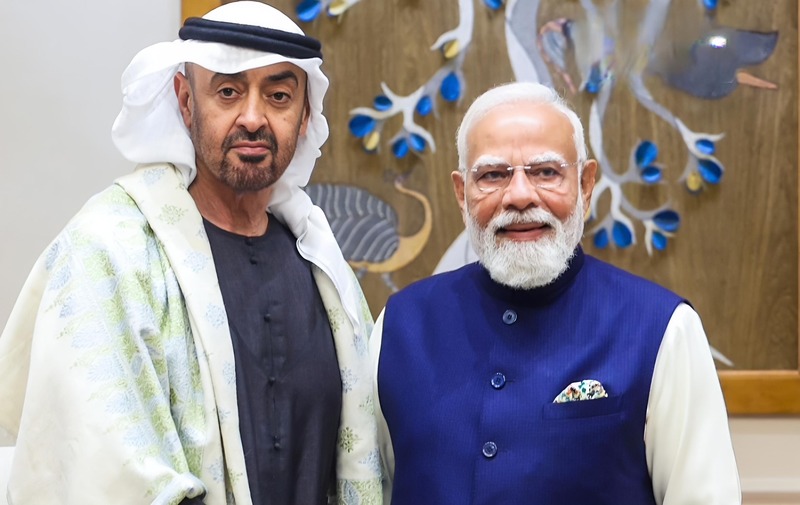
Diplomacy is often conducted behind closed doors, but sometimes its strongest messages are sent through simple human gestures. When Prime Minister Narendra Modi personally went to the airport in Delhi to welcome UAE President Sheikh Mohamed bin Zayed Al Nahyan, it was more than protocol. The hug shared between the two leaders, later posted by PM Modi on X with the words “to welcome my brother,” reflected a relationship that goes beyond formal agreements.
The two leaders travelling together in the same car from the airport further underlined the closeness between New Delhi and Abu Dhabi. In a world where geopolitics is increasingly complex and transactional, such moments of warmth carry deep symbolic value. They signal trust, personal rapport, and continuity, qualities that have defined India-UAE relations over the past decade.
Although Sheikh Mohamed’s visit lasted only three hours, its impact was substantial. Held at the invitation of Prime Minister Modi, the visit built upon the strong momentum created by recent high-level engagements between the two nations. These included the visit of Abu Dhabi Crown Prince Sheikh Khaled bin Mohamed bin Zayed Al Nahyan in September 2024 and the visit of Dubai Crown Prince Sheikh Hamdan bin Mohammed bin Rashid Al Maktoum in April 2025. This was Sheikh Mohamed bin Zayed Al Nahyan’s third official visit to India since becoming UAE President and his fifth visit in the last ten years. The frequency of these interactions highlights the priority both countries place on their strategic partnership and the desire to keep dialogue active, even during periods of regional uncertainty.
During the meeting, India and the UAE set an ambitious roadmap for cooperation in key growth sectors. One of the most significant outcomes was the agreement to double bilateral trade to over USD 200 billion by 2032. This target reflects confidence in the Comprehensive Economic Partnership Agreement and places special emphasis on MSMEs, digital trade corridors, and improved market access. Defence cooperation also took a major step forward. A Letter of Intent was signed to establish a Strategic Defence Partnership, covering advanced defence technologies, cyber security, special operations, training, and counter-terrorism. This signals a shift from traditional defence ties to deeper collaboration in emerging and sensitive domains. In the energy sector, an LNG supply agreement between HPCL and ADNOC Gas was finalised, strengthening India’s energy security. Both sides also discussed expanding cooperation in civil nuclear energy and space, indicating a forward-looking approach that aligns with India’s technological ambitions and the UAE’s innovation-driven vision.
In their respective posts on X, both leaders emphasised mutual respect and shared goals. Sheikh Mohamed bin Zayed Al Nahyan said he was pleased to meet PM Modi and reaffirmed his commitment to sustainable development and economic growth through bilateral cooperation. PM Modi, in turn, said it was a pleasure to host the UAE President at 7, Lok Kalyan Marg and that their discussions covered a wide range of issues to strengthen the multifaceted friendship. Beyond the official language, what stood out was the continuity of trust. Over the years, India and the UAE have built a relationship that balances strategic interests with personal understanding between leaders. This allows both sides to engage frankly, act swiftly, and think long-term.
Sheikh Mohamed bin Zayed Al Nahyan’s three-hour visit proved that the depth of diplomacy is not measured by duration. In a short span, India and the UAE reinforced their economic ambitions, strengthened defence ties, addressed regional challenges, and reaffirmed a bond rooted in respect and warmth. As global uncertainties continue to rise, such partnerships offer stability and direction. The images of a Prime Minister welcoming a visiting President as a brother may seem symbolic, but they reflect a deeper reality: a partnership that is strategic in vision and important in the face of change.
Romanticizing life and shaping stories from everything I see through my journalistic lens. Also, I love sports on the side.