"Dream, Dream, Dream! Conduct these dreams into thoughts, and then transform them into action."
- Dr. A. P. J. Abdul Kalam
"Dream, Dream, Dream! Conduct these dreams into thoughts, and then transform them into action."
- Dr. A. P. J. Abdul Kalam
5 Dec 2025
“Healthy soil leads to healthy food, healthy people, and a healthy planet. This is the cycle we must restore.”
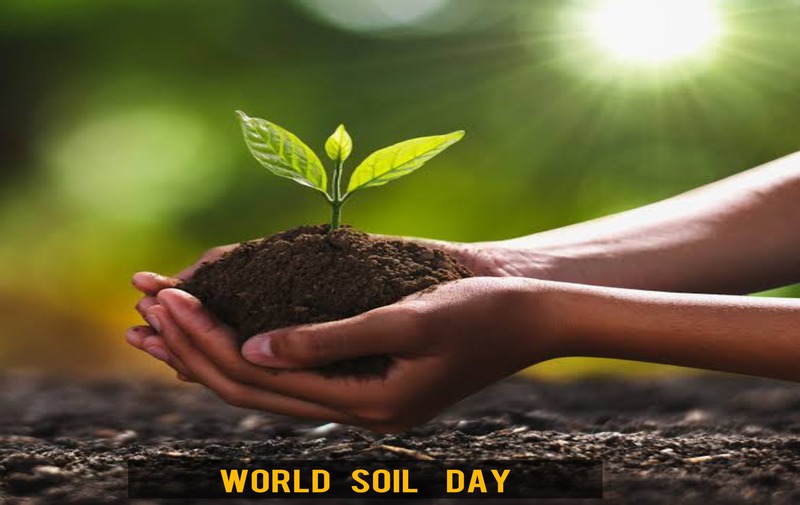
If you scoop up a handful of soil, it may look ordinary, just dust, dirt, or mud. But this “ordinary” soil is the foundation of human survival. It grows almost everything we eat, filters the water we drink, stores carbon that keeps the planet cool, and provides a home to countless organisms that keep ecosystems alive. More than 95% of the food humanity relies on comes from soil, and yet, it remains one of the most overlooked natural resources. World Soil Day, observed every year on December 5, aims to change that. It encourages people everywhere, from farmers to students to city planners, to recognize that the planet’s health begins with the health of its soil.
The idea for an international day dedicated to soil emerged in 2002 when the International Union of Soil Sciences realized that global awareness about soil degradation was dangerously low. With support from the Food and Agriculture Organization (FAO) and strong leadership from the Kingdom of Thailand, the vision began to take shape. After years of advocacy, the United Nations General Assembly officially declared December 5 as World Soil Day in 2013. Since then, countries across the globe have joined hands to promote soil conservation, sustainable agriculture, and community participation. Each year, a new theme reminds the world of a different dimension of soil’s importance.
This year’s theme, “Healthy Soils for Healthy Cities,” shifts the spotlight from rural farms to the soil hidden beneath roads, buildings, and urban infrastructure. When people think of soil, they imagine fields and forests. Rarely do we stop to consider the soil under our cities, even though it influences the lives of millions every day. Urban soil, if left permeable and protected, performs remarkable functions. It absorbs rainfall, reducing the risk of flooding. It cools down cities that are heating up due to climate change. It stores carbon, helping fight global warming. It even filters pollutants that harm human health. But when soil is sealed under concrete and asphalt, it loses its power. Urban areas become hotter, floods become more common, and air quality worsens. The loss of green spaces cuts off the land’s natural ability to breathe. Seeing this shift, World Soil Day 2025 calls on citizens and policymakers to rethink city planning to let soil live, even in concrete jungles.
Healthy soil is formed over centuries. It can take up to 1,000 years to create just a few centimeters of fertile topsoil. Yet modern development, pollution, and unsustainable practices are destroying it much faster than nature can rebuild. Erosion, industrial waste, chemical misuse, and rapid urban expansion have left soils across the world weak and depleted. When soil quality declines, food loses essential nutrients, water becomes harder to filter, and climate change accelerates. According to global estimates, improving soil management could increase food production by nearly 58% a crucial step as the world needs at least 60% more food by 2050.
Save Soil: A Global Movement to Protect Our Planet’s Future
The Save Soil movement, initiated by Indian spiritual leader Sadhguru Jaggi Vasudev, is one of the world’s most influential environmental campaigns focused on preventing large-scale soil degradation. Launched in 2022 by the Isha Foundation, the movement aims to address the alarming decline of fertile soil, a crisis Sadhguru describes as “soil extinction.” To raise global awareness, Sadhguru embarked on a remarkable 100-day motorcycle journey across 26 countries, meeting leaders, experts, and communities. His message was simple yet urgent: without healthy soil, food security, biodiversity, and climate stability are at risk.
Soil is not just a resource; it is a relationship. It is the ground children play on, the space where trees grow, the land that feeds our families, and the earth that generations will inherit. When we protect soil, we protect memories, stories, and futures. Many of us remember planting small seeds as children and watching tiny green shoots pop out of the soil. That moment of wonder is a reminder of how deeply connected human life is to the earth. And yet, in adulthood, surrounded by concrete and screens, we often forget the quiet power beneath us.
World Soil Day 2025 invites everyone to reconnect with that memory. To bend down, touch the ground, and remember that everything—food, water, oxygen, climate—depends on the soil’s strength.
Celebrating World Soil Day With Heart and Hope
Celebrating World Soil Day is not just about acknowledging the ground beneath us; it is about honoring the silent life-giver that supports every meal we eat and every breath we take. This day can be celebrated with simple yet deeply meaningful actions: planting a sapling with your children, touching the soil with gratitude, starting a small garden on your balcony, or spending a quiet moment in a park reconnecting with nature. Schools, families, and communities can come together to clean green spaces, create awareness, and share stories of how the earth has nurtured them. Even taking a pledge to reduce waste, protect plants, or support sustainable farming becomes a powerful act. When we celebrate the day with love and intention, we remind ourselves that caring for the soil is caring for life itself—and that each small action today becomes a gift for generations to come.

Writing about what truly matters, good news and stories to remind the world - it is brighter than we think.