"Dream, Dream, Dream! Conduct these dreams into thoughts, and then transform them into action."
- Dr. A. P. J. Abdul Kalam
"Dream, Dream, Dream! Conduct these dreams into thoughts, and then transform them into action."
- Dr. A. P. J. Abdul Kalam
22 Jan 2026
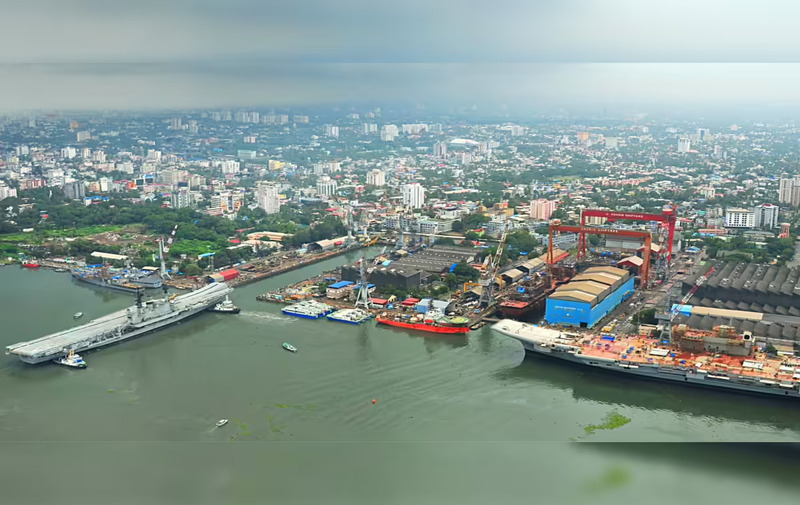
In a quiet yet powerful signal of India’s rising industrial credibility, Germany has acquired a multi-purpose cargo vessel built entirely in India. Constructed at Cochin Shipyard Limited (CSL) in Kochi and delivered to German shipping firm HS Schiffahrts, the vessel represents more than a commercial transaction. It reflects a growing global confidence in India’s manufacturing, engineering precision, and ability to meet stringent international maritime standards. At a time when global supply chains are being reimagined and nations are reassessing industrial partnerships, this delivery stands out as a moment of validation for India’s shipbuilding ecosystem.
The vessel, named MS Heinz, was formally handed over on January 12 through a virtual delivery and acceptance ceremony. Representing their respective organisations, Dr S Harikrishnan, Director (Operations) at Cochin Shipyard Limited, and Heinz Josef Schepers, Director of HS Schiffahrts, signed the delivery protocol. Senior officials from both sides witnessed the occasion, underscoring the importance attached to the milestone. Built entirely at CSL’s Kochi facility, the ship has been designed by Groot Ship Design of the Netherlands, reflecting a seamless collaboration between European design expertise and Indian shipbuilding execution. Once operational, the vessel will be deployed for global commercial operations, carrying the “Made in India” tag across international waters.
With a capacity of 7,000 deadweight tonnes, MS Heinz is a versatile multi-purpose cargo vessel. It is capable of transporting a wide range of cargoes, including project and heavy cargo, steel coils, containers, timber, paper, dry bulk commodities such as coal and grain, and even hazardous materials. This flexibility makes it suitable for diverse trade routes and commercial requirements. Such technical capability does not emerge overnight. It reflects years of accumulated skill, rigorous quality control, and the experience of engineers, designers, welders, and technicians working in sync. Each section of steel, each system installed, and each safety protocol tested at the Kochi yard represents human effort translated into global competitiveness.
Cochin Shipyard Limited, India’s largest central public sector shipyard, has traditionally been known for ship repair, defence vessels, and offshore structures. In recent years, however, CSL has made a strategic push into the global commercial shipbuilding market. The delivery of MS Heinz marks an important milestone in that journey. This vessel is the first ship in the HS EcoFreighter series being built by CSL for the German owner. It signals not just a one-off success, but the beginning of a deeper commercial relationship. For CSL, it strengthens credibility among European shipowners, one of the most demanding markets in global shipping.
The delivery aligns closely with India’s Atmanirbhar Bharat vision, which aims to build domestic capability while integrating with global markets. Unlike inward-looking self-reliance, this project reflects outward-facing confidence where Indian manufacturing competes, complies, and collaborates internationally. Germany’s decision to source a cargo vessel from India sends a strong message. It indicates trust in Indian yards to deliver on time, meet technical specifications, and adhere to global safety and environmental norms. In an industry where reliability and reputation are everything, such trust is hard-earned.
As MS Heinz begins its commercial journey across international waters, it carries more than cargo. It carries the reputation of Indian shipbuilding, the aspirations of a growing industrial economy, and the quiet confidence of a nation learning to compete globally on quality, not just cost. For India, this delivery is not the destination but a marker on a longer voyage. If supported by sustained policy focus, skill development, and global collaboration, such successes can transform India into a major hub for commercial shipbuilding. In that sense, when India builds and Germany buys, the win belongs not just to two companies but to an entire ecosystem finding its place in the world.

Romanticizing life and shaping stories from everything I see through my journalistic lens. Also, I love sports on the side.