"Dream, Dream, Dream! Conduct these dreams into thoughts, and then transform them into action."
- Dr. A. P. J. Abdul Kalam
"Dream, Dream, Dream! Conduct these dreams into thoughts, and then transform them into action."
- Dr. A. P. J. Abdul Kalam
8 Dec 2025
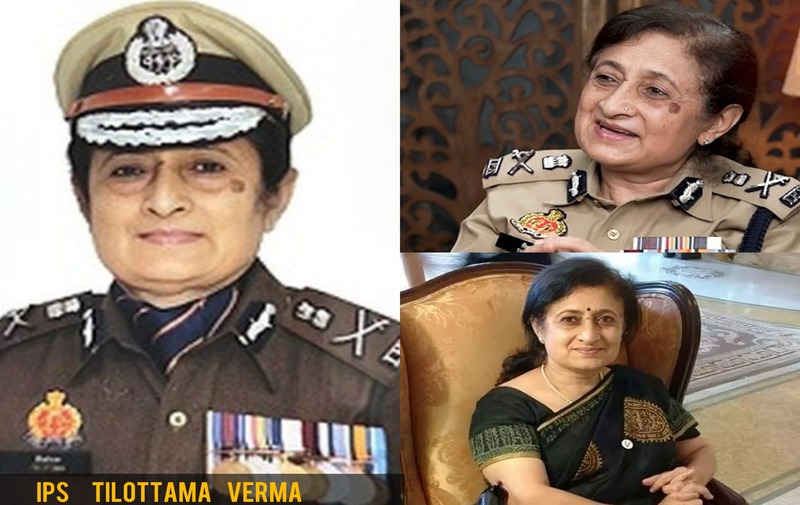
Long before medals, encounters, and national honours came her way, Tilottama Verma’s story began with a child’s quiet sense of pride. As a Class 1 student in a Mall Road school in Shimla, she watched a constable snap to attention every time her father, SP Shimla, arrived to pick her up. At that age, she was too young to understand hierarchy or power, yet old enough to feel the weight of the salute. Wearing her father’s oversized police cap at home, she would look into the mirror and imagine a future where she, too, would command such respect. That innocent spark would one day grow into one of the most inspiring careers in Indian policing.
Born on 2 November 1965 to Rati Ram Varma, a future Director General of Police in Himachal Pradesh, Tilottama Verma did not just inherit a legacy she elevated it. She excelled as a student, earning a gold medal in English Literature and Law, and at just 22, she presented a research paper at the International Court of Justice. When she cleared the UPSC examination and joined the 1990 batch of the Indian Police Service (Uttar Pradesh cadre), she stepped into one of India’s toughest policing landscapes with a rare mix of academic brilliance and emotional depth.
Her career in Uttar Pradesh soon became the stuff of legend. The defining moment arrived in 2002 during her tenure as Senior Superintendent of Police, Hathras. In a high-risk rescue operation, she confronted armed criminals to save two children, one child held in her arm, a weapon in the other. This single moment captured her instinctive bravery and professional precision. It also earned her the distinction of becoming the first woman IPS officer from Uttar Pradesh to receive the President’s Police Medal for Gallantry. In a state where policing challenges are formidable, she emerged as a symbol of grit and fearlessness.
Between 2006 and 2011, Verma served as Deputy Inspector General (Anti-Corruption) in the Central Bureau of Investigation. At a time when corruption cases frequently brushed against political and administrative hierarchies, she became known for her unwavering neutrality. Senior officers and colleagues recall her commitment to ensuring that investigations remained independent, even in politically charged environments. Her tenure stands as an example of what institutional integrity truly looks like in practice.
Her service took a new direction when she took charge as Inspector General of the Wildlife Crime Control Bureau. Here, her impact became international. Under her leadership, several organised trafficking networks, including those linked to tiger poaching, ivory smuggling, and cross-border wildlife crimes, were dismantled. In the final phase of her career, as Director General (Training) at the Uttar Pradesh Police Headquarters, Verma pivoted from enforcement to institution-building. She spearheaded critical reforms in police training, incorporating scientific investigation techniques, forensic awareness, behavioural modules, leadership skills, and gender sensitization programs. Her efforts significantly improved the preparedness of the force ahead of large-scale events like the 2025 Maha Kumbh, ensuring that officers were equipped not just technically, but also psychologically and socially.
Tilottama Verma retired from service on November 30. She leaves behind a legacy defined by professionalism, discipline, and unwavering integrity. Her remarkable tenure has not only strengthened policing standards in Uttar Pradesh but also elevated the state’s law enforcement training ecosystem. Her contributions will continue to inspire generations of officers long after her service comes to a close.

Writing about what truly matters, good news and stories to remind the world - it is brighter than we think.