"Dream, Dream, Dream! Conduct these dreams into thoughts, and then transform them into action."
- Dr. A. P. J. Abdul Kalam
"Dream, Dream, Dream! Conduct these dreams into thoughts, and then transform them into action."
- Dr. A. P. J. Abdul Kalam
22 Jan 2026
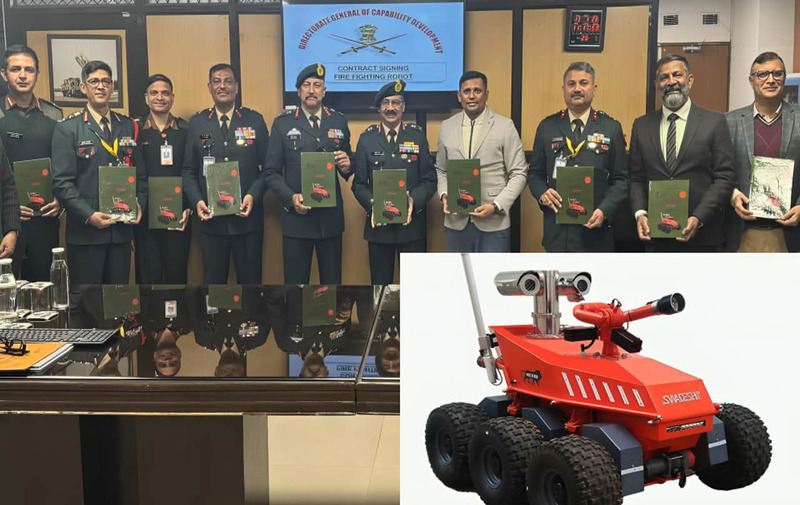
In an ammunition depot, fire is not just fire. It is a ticking threat where a single spark can trigger explosions powerful enough to flatten buildings, destroy critical stockpiles and cost lives within seconds. For decades, Indian Army firefighters have faced this danger head-on, often stepping into smoke-filled, unstable structures knowing the risks. Now, that equation is beginning to change. In a significant move towards safer military infrastructure, the Indian Army has signed a ₹62-crore contract to procure 18 indigenously developed Fire Fighting Robots, known as FF BOTs. These unmanned machines are designed to enter the most dangerous zones first, absorbing the risk that humans traditionally bore.
The agreement was signed on 13 January by the Army’s Directorate of Capability Development with Ahmedabad-based start-up Swadeshi Empresa Pvt Ltd. Induction of the robots is scheduled to begin in the first week of April, with deployments planned across ammunition depots, fuel storage facilities and other high-risk installations in multiple cantonments. While ₹62 crore may seem modest in defence terms, the impact of this procurement goes far beyond numbers. It reflects a conscious shift in thinking: that safeguarding soldiers’ lives is as critical as safeguarding weapons and infrastructure.
The FF BOT is an unmanned ground vehicle engineered to operate where humans are most vulnerable. Intense heat, toxic smoke, collapsing structures and the constant risk of secondary explosions define the environments it is meant to face. These are precisely the conditions that make early firefighting intervention both essential and deadly. Equipped with optical and thermal cameras, the robot transmits live video feeds to operators stationed at a safe distance. Thermal imaging allows it to detect hidden hotspots and smouldering flames even when thick smoke makes human vision useless. This early situational awareness can mean the difference between containing a fire and watching it escalate into a disaster.
In ammunition and armament depots, even a small blaze can trigger catastrophic chain reactions. Explosives stored nearby may detonate, sending shockwaves across large areas and crippling operational readiness. Fires at such facilities are not only a safety issue but also a strategic concern. By deploying FF BOTs at the initial stage of a fire, the Army aims to prevent escalation before human firefighters step in. Officials have stressed that these robots are meant to support, not replace, trained personnel acting as the first line of entry in zones where survival is uncertain.
Developed by Swadeshi Empresa Pvt Ltd, the FF BOT is a product of India’s growing defence start-up ecosystem. Supported by the Army Design Bureau and aligned with the Make in India program, the project highlights how private innovation is increasingly shaping military capabilities. The contract includes a two-year warranty and five years of comprehensive maintenance with on-site support, ensuring the robots are not treated as experimental tools but integrated into long-term emergency response planning. The FF BOT is not untested technology. It has already demonstrated its effectiveness in civilian settings, including during a major fire at the Visakhapatnam refinery. That operation showed how robotic systems can operate in industrial environments where heat, chemicals and structural risks make human access extremely dangerous. This dual-use potential opens doors for broader applications, from power stations and oil refineries to airports and disaster-response zones. It also underscores how military investments in safety technology can benefit civilian infrastructure.
The Indian Army’s decision to deploy FF BOTs reflects a larger evolution in military thinking. Modern warfare and military readiness are no longer defined only by firepower but by resilience, safety and intelligent use of technology. Protecting ammunition depots protects supply chains, readiness and ultimately national security. Showcased at Army House during Vijay Diwas celebrations in December, the robot also symbolises how innovation is being celebrated alongside tradition within the forces. As these robotic firefighters roll into cantonments from April, they will likely never make headlines during routine operations. Every fire contained early, every explosion prevented, and every firefighter who returns home safely will be a quiet testament to their value. In placing robots between fire and soldiers, the Indian Army is sending a clear message about the future of defense: courage will still matter, but so will care for the people who serve.

Romanticizing life and shaping stories from everything I see through my journalistic lens. Also, I love sports on the side.