"Dream, Dream, Dream! Conduct these dreams into thoughts, and then transform them into action."
- Dr. A. P. J. Abdul Kalam
"Dream, Dream, Dream! Conduct these dreams into thoughts, and then transform them into action."
- Dr. A. P. J. Abdul Kalam
5 Dec 2025
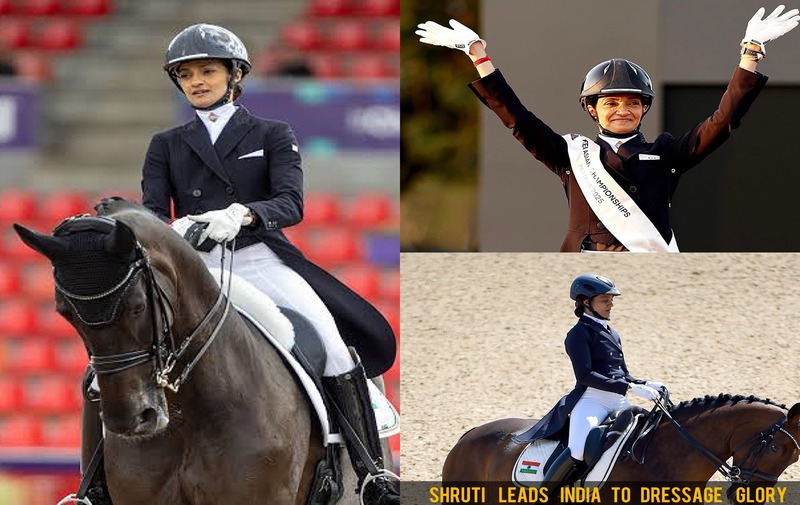
At the 2025 FEI Asian Equestrian Championships in Pattaya, Thailand, Shruti Vora scripted history. Her remarkable haul of three silver medals in Team Dressage, Individual Intermediate I, and Freestyle to Music has positioned India as a serious contender in the continental dressage arena. For a nation that did not participate in the inaugural Asian Dressage Championships in 2019, Vora’s performance symbolizes India’s rapid emergence in high-performance dressage and reflects years of dedication, strategy, and growth in the sport. The success was part of a broader five-medal campaign for India, which also included Ashish Limaye’s individual gold and team silver in eventing. Yet, Vora’s achievements stand apart, representing not just personal triumph but a breakthrough moment for Indian dressage, which had long sought global recognition.
Longevity and Reinvention: Competing at 54
Dressage is unique among sports, where precision, experience, and emotional balance often outweigh raw physical strength. At 54, Vora demonstrates the long competitive lifespan of elite equestrian athletes. Having returned to international competition after a break from 1996 to 2010, her journey underscores reinvention. Past milestones including her 8th-place finish at the 2014 Asian Games and her historic appearance at the 2022 Dressage World Championships alongside Anush Agarwalla prepared her for this continental success. Her career trajectory highlights the discipline and patience required in dressage. Unlike faster-paced sports, victories in this arena emerge from years of consistent practice, deep understanding of equine partners, and mastery of both technique and presentation. Vora’s return and peak performance in her 50s exemplify the sport’s blend of athleticism, artistry, and strategic training.
Dressage: The Art of Horse and Rider Working Together
Dressage is a special sport where a horse and rider perform a series of planned movements with precision and grace. It is not about speed or strength, but about balance, control, and teamwork between the rider and the horse. The rider guides the horse through different steps, turns, and patterns, all done smoothly and in rhythm. Often called horse ballet, dressage shows the beauty of the horse’s movement and the rider’s skill. It takes years of practice, patience, and trust between the horse and rider to perform well. In competitions, routines are often set to music, adding an artistic touch. Dressage is unique because it is both a sport and an art, celebrating the perfect harmony between humans and horses.
Magnanimous: The 13-Year-Old Partner Behind the Medals
A central element of Vora’s achievement is her partnership with Magnanimous, a 13-year-old Oldenburg Gelding. In dressage, the horse is as much an athlete as the rider, requiring intense trust, coordination, and mutual understanding. Magnanimous, trained in Germany the global hub of dressage brought both talent and temperament to the competition. Their collaboration reflects years of meticulous training, travel, and care, emphasizing that success in dressage is inseparable from the bond between horse and rider. Vora’s performance in the Freestyle to Music event was a standout, earning 73.800% India’s highest-ever score at a continental dressage competition. Choreographed to music from Lawrence of Arabia by Langehanenberg, the routine seamlessly combined technical precision and artistic expression. This score, which was 3.65% higher than her Intermediate I result, highlights her mastery of rhythm, balance, and presentation. It also signals India’s growing adoption of global best practices, including Olympic-level choreographers, in equestrian training.
Team Dressage Silver: A Collaborative Triumph
Two days before her individual successes, Vora guided India to a Team Dressage silver in the Prix St. Georges event. Alongside teammates Singh and Pundir, the Indian trio scored a combined total of 204.059, finishing behind China. Vora contributed a personal score of 70.882, demonstrating consistency and leadership within the team dynamic. These results not only added to India’s medal tally but also strengthened the country’s reputation in team dressage, setting a benchmark for future competitions.
Roots, Passion, and Early Training
Born on January 6, 1971, in Kolkata to a Marwari business family, Shruti Vora’s equestrian journey began almost as soon as she could walk. Inspired by her mother, who rode horses, and supported by a family that valued discipline and sport, Vora learned to ride at the Army Riding School in Ballygunge under Kiran and Balbir Singh. Her brother Chandra Sekhar also rode until Class 12, making horses a central part of family life. After marriage in 1997, Vora took a 14-year hiatus from competitive riding, returning in 2009 with renewed vigor. Her training in Europe, under renowned coaches like Jitendarjit Singh Ahluwalia, Reiner Klimke, Anne Jensen-Van Olst, and Patrick Le Rolland, honed her skills in dressage, blending Indian grit with international expertise. Vora’s academic pursuits, including an MBA from EU Business School, and her ability to train in Europe while studying, reflect her extraordinary dedication and discipline.
A Legacy of Indian Dressage Growth
Vora’s triple silver is more than personal glory; it marks a turning point for India’s dressage program. It follows years of steady progress, including team gold at the Hangzhou Asian Games and individual bronze by Anush Agarwalla. These achievements, coupled with Vora’s record-breaking performances, signal India’s readiness to compete at the highest levels. For aspiring riders in India, Vora is a role model showing that age, hiatuses, or limited early exposure need not limit achievement in equestrian sports.
As India celebrates Vora’s triple silver, her achievements pave the way for future generations of equestrians. With continued investment in training, international exposure, and a focus on holistic rider-horse development, India’s presence in Asian and global dressage will only strengthen. Shruti Vora’s legacy is already inspiring, and her story will remain a guiding light for anyone seeking to turn passion into excellence. On the continental stage in Pattaya, she has not only made history but has also laid a foundation for India’s future equestrian champions.
Writing about what truly matters, good news and stories to remind the world - it is brighter than we think.