"Dream, Dream, Dream! Conduct these dreams into thoughts, and then transform them into action."
- Dr. A. P. J. Abdul Kalam
"Dream, Dream, Dream! Conduct these dreams into thoughts, and then transform them into action."
- Dr. A. P. J. Abdul Kalam
13 Mar 2026
As spring spreads colour and warmth across Odisha, one of the state’s most vibrant and beloved festivals, Panchu Dola Melana, begins with great excitement and devotion. Celebrated mainly in Harirajpur village of Khordha district, near Bhubaneswar, the festival arrives just a few days after Dola Purnima, the full-moon celebration associated with Lord Krishna, Radha and the spirit of Holi.
Dola Purnima marks the beginning of joyful festivities where idols of Radha and Krishna are placed on decorated swings and carried through villages. Panchu Dola Melana, which takes place five days after the full moon of the Falgun month, is the grand finale of these celebrations. In 2026, the festivities unfold in the second week of March, bringing devotees and visitors together in an atmosphere filled with colour, music and devotion.
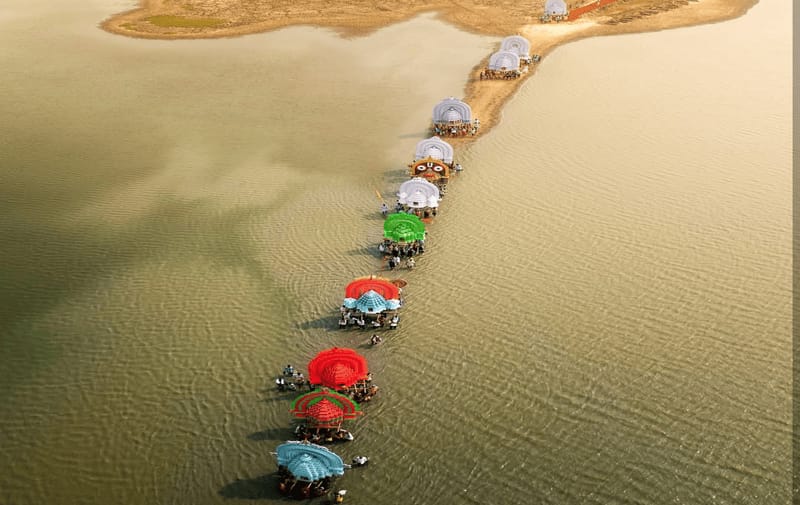
What makes Panchu Dola Melana truly extraordinary is a tradition rarely seen anywhere else. Deities from several nearby villages travel in grand processions to gather at one place, creating a sacred meeting of temples and communities. The celebration revolves around the presiding deity of Harirajpur, Paschimasambhu Somnath Dev, who symbolically invites other temple deities to join the festival. Idols of Lord Shiva, along with Radha and Krishna, arrive in beautifully decorated wooden palanquins known as Dola Biman. These palanquins, designed like miniature temples, are carried by devotees with deep reverence and joy.
As each deity enters the festival ground, the entire atmosphere becomes electric. Devotees greet them with chants, conch shells, drums, and clouds of colourful abira powder. One by one, the palanquins line up, creating a magnificent spiritual assembly that represents unity among villages and temples. In many years, dozens of deities from surrounding areas participate in the gathering, turning the small village into a grand stage of devotion. For devotees, witnessing this rare meeting of divine idols is considered deeply auspicious and spiritually uplifting.
As evening arrives, Panchu Dola Melana transforms from a sacred gathering into a lively cultural festival. The village streets glow with lights, stalls and crowds eager to take part in the celebrations. Traditional Sankirtan groups fill the air with devotional songs, while drums and cymbals create rhythms that echo through the night. Colourful markets appear across the festival grounds, offering sweets, toys, handicrafts and local delicacies. Families wander through the fair, children run around excitedly, and visitors soak in the joyful atmosphere.
One of the most awaited moments of the festival is the night-long procession of the decorated palanquins. Beginning late in the evening and continuing until early morning, devotees walk alongside the palanquins, singing and celebrating together. The night sky then bursts into brilliance with a spectacular fireworks display, a highlight that attracts huge crowds every year. Sparks of colour light up the darkness while cheers rise from the gathering, creating a magical scene that perfectly captures the festive spirit of Panchu Dola Melana.
Panchu Dola Melana is believed to have been celebrated for nearly four centuries, making it one of the region’s most enduring cultural traditions. Over time, what began as a village ritual has grown into a festival that draws thousands of devotees and visitors every year. Beyond the rituals and celebrations, the festival reflects something deeper, the power of community. Villagers prepare for weeks, decorating temples, organising processions and welcoming guests with warmth and hospitality.
During the festivities, devotees offer prayers, share traditional sweets, and gather with family and friends in a spirit of unity and gratitude. The festival becomes a moment where faith, culture and joy come together, reminding people of their shared heritage. For those who witness it, Panchu Dola Melana is more than just a festival. It is a living celebration of Odisha’s traditions, where devotion dances with colour, music fills the air, and an entire community comes alive in the joy of celebration.
Writing about what truly matters, good news and stories to remind the world - it is brighter than we think.