"Dream, Dream, Dream! Conduct these dreams into thoughts, and then transform them into action."
- Dr. A. P. J. Abdul Kalam
"Dream, Dream, Dream! Conduct these dreams into thoughts, and then transform them into action."
- Dr. A. P. J. Abdul Kalam
23 Jan 2026
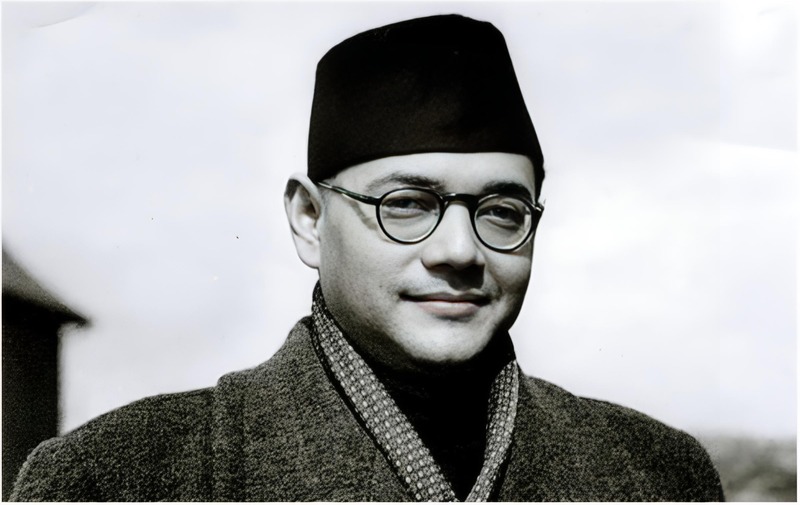
Every year on 23 January, India pauses to remember Subhas Chandra Bose not just as “Netaji,” the charismatic leader, but as a complex human being whose life was driven by one obsession: freedom for India, at any cost. Born on this day in 1897, Bose’s story is not a simple tale of heroism. It is layered with idealism, sacrifice, moral dilemmas, and difficult choices made in the darkest years of world history. On his birthday today, Netaji’s life invites both admiration and reflection.
Subhas Chandra Bose was born into a well-to-do Bengali family in Cuttack, then part of the British Raj. He grew up surrounded by comfort, discipline, and education shaped by British institutions. Yet, even as a young student, Bose felt deeply disturbed by colonial injustice and racial arrogance. His academic brilliance took him to England, where he cleared the Indian Civil Services examination, the most prestigious path available to an Indian under British rule. But Bose made a choice that defined his life: he resigned before joining, declaring that serving an imperial government was incompatible with serving the nation. That single act transformed a promising bureaucrat into a lifelong rebel.

Returning to India in 1921, Bose joined the freedom struggle under the Indian National Congress and emerged as one of its most dynamic leaders. He admired Mahatma Gandhi but differed sharply with him on methods and pace. Bose believed that freedom could not be begged for; it had to be seized. As Congress president in 1938 and again in 1939, Bose pushed for a more aggressive, socialist, and centrally driven vision of India’s future. His discomfort with strict non-violence and his desire for strong leadership alarmed many senior Congress leaders, including Gandhi. The ideological rift widened, leading to his resignation and eventual expulsion from the party. This moment marked Bose’s loneliness in Indian politics—a leader loved by the masses but isolated among elites.

In 1941, under British surveillance, Bose executed a daring escape from India, travelling through Afghanistan and the Soviet Union to Nazi Germany. His aim was singular: seek international support to overthrow British rule. Germany and later Japan offered Bose limited support, not out of love for Indian freedom, but for their own wartime interests. Bose accepted this uncomfortable reality, believing that the enemy of my enemy could become a tool for liberation. In Southeast Asia, with Japanese backing, he reorganized the Indian National Army (INA) and declared the Provisional Government of Free India. His rallying cry, “Give me blood, and I will give you freedom,” ignited hope among thousands of Indian prisoners of war and civilians.

The Indian National Army (INA), or Azad Hind Fauj, was formed to overthrow British rule through armed struggle, reflecting Netaji Subhas Chandra Bose’s belief that freedom required action, not appeals. Revived under his leadership in 1943, the INA united Indian prisoners of war and expatriates with a powerful national purpose. With the inspiring call of “Dilli Chalo,” Bose transformed the INA into a symbol of courage, discipline, and sacrifice. Though militarily defeated, the INA’s legacy lived on, as its trials shook British authority and accelerated India’s journey toward independence.

Bose was deeply influenced by Indian spirituality. The Bhagavad Gita, Swami Vivekananda’s teachings, and the idea of disciplined service shaped his worldview. Unlike many socialist leaders of his time, Bose was not an atheist. He believed spirituality and nationalism could coexist. Yet, his political philosophy evolved controversially. During the 1930s and the war years, Bose expressed admiration for authoritarian systems in Italy and Germany, believing that a strong centralised state could rebuild India after independence. He spoke of a synthesis between socialism and fascism—views that remain deeply troubling today. While he supported women’s empowerment and secularism, his silence on Nazi atrocities and opposition to Jewish refugees seeking asylum in India cast a long ethical shadow over his legacy. On 18 August 1945, Bose died from severe burns after a plane crash in Taiwan. Though official records confirm his death, disbelief and conspiracy theories have persisted for decades, reflecting how deeply people wished for his return.

Netaji was not flawless. He made decisions that invited criticism and discomfort. But he was also a man who gave up comfort, family life, and personal safety for a dream larger than himself. He loved India fiercely and believed its people deserved dignity, strength, and self-respect. Even Gandhi, despite their differences, called him a patriot On his birth anniversary today, Subhas Chandra Bose remains a mirror for India, reminding us that freedom was not won by one path alone and that history’s heroes are often complicated, human, and unfinished stories. Remembering Netaji means remembering courage and also the responsibility to question power, ideology, and the price paid in the pursuit of freedom.

Subhas Chandra Bose teaches today’s youth the power of courage, discipline, and unwavering commitment to a cause larger than oneself. His life reminds young people that comfort should never come before conscience and that leadership demands sacrifice, clarity, and fearlessness in decision-making. Netaji believed in action, self-belief, and national responsibility, values that remain deeply relevant in a world driven by shortcuts and instant success. His birthday can be meaningfully celebrated even today by reading his writings, discussing ideas of nation-building, engaging in community service, promoting unity beyond religion and region, and dedicating one’s skills, big or small, to the progress of India.

| Full Name | Subhas Chandra Bose |
| Popular Title | Netaji (Respected Leader) |
| Date of Birth | 23 January 1897 |
| Place of Birth | Cuttack, Orissa (now Odisha), British India |
| Date of Death | 18 August 1945 |
| Age at Death | 48 years |
| Education | Presidency College, Calcutta; University of Cambridge |
| Major Achievement | Cleared Indian Civil Services (ICS) examination |
| Key Decision | Resigned from ICS in 1921 to join India’s freedom struggle |
| Political Affiliation | Indian National Congress (earlier), Forward Bloc (founder) |
| Ideological Position | Militant nationalism; socialist-authoritarian ideas |
| Congress Presidency | 1938 and 1939 |
| Reason for Exit from Congress | Ideological differences with Gandhian leadership |
| Famous Slogan | “Give me blood, and I will give you freedom” |
| Role in WWII | Allied with Axis powers to fight British rule in India |
| Indian National Army (INA) | Revived and led INA with Japanese support |
| Provisional Government | Head of Azad Hind Government (1943) |
| Spiritual Influences | Bhagavad Gita, Swami Vivekananda |
| View on Governance | Supported strong central authority post-independence |
| Controversies | Alliance with Nazi Germany and Fascist Japan; views on authoritarianism |
| Plane Crash | Died due to third-degree burns after crash in Taiwan |
| Final Rites | Cremated in Taiwan; ashes preserved in Tokyo, Japan |
| Historical Legacy | Celebrated as a hero; debated for ideology and wartime alliances |
Romanticizing life and shaping stories from everything I see through my journalistic lens. Also, I love sports on the side.