"Dream, Dream, Dream! Conduct these dreams into thoughts, and then transform them into action."
- Dr. A. P. J. Abdul Kalam
"Dream, Dream, Dream! Conduct these dreams into thoughts, and then transform them into action."
- Dr. A. P. J. Abdul Kalam
4 Apr 2026
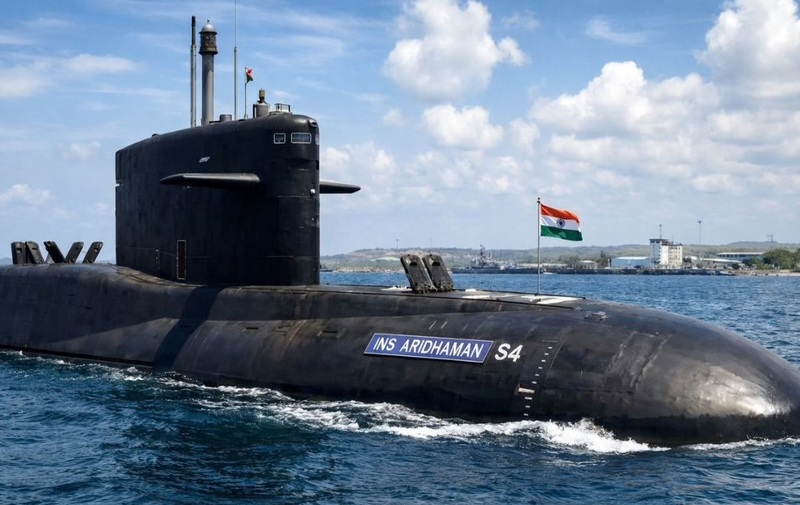
On April 3, 2026, while most of the world carried on with its daily routine, a powerful moment quietly unfolded beneath the surface of India’s defence landscape. India commissioned its third nuclear-powered ballistic missile submarine, INS Aridhaman, marking a significant leap in its strategic capabilities. Unlike grand military parades or public displays of power, this milestone came with silence—fitting for a vessel designed to remain unseen, unheard, and yet always ready. Submarines like INS Aridhaman are not just machines. They are guardians of a nation’s security, operating in the shadows.
India’s nuclear submarine journey has been long, complex, and highly confidential. The commissioning of INS Aridhaman is the third step in a carefully built legacy that began with INS Arihant, which was inducted in 2016. It was followed by INS Arighat, commissioned in August 2024, strengthening India’s underwater deterrence. Now, INS Aridhaman takes that legacy forward—bigger, more advanced, and more powerful than its predecessors. Built under the secretive Advanced Technology Vessel (ATV) project at Visakhapatnam, it reflects years of indigenous research, engineering, and strategic vision.
INS Aridhaman is not just another addition; it is an upgrade in every sense. Weighing around 7,000 tonnes and stretching approximately 130 metres in length, it is designed for endurance and stealth. Powered by an advanced nuclear reactor, it can remain underwater for extended periods, limited only by food supplies and maintenance needs. Its reduced acoustic signature makes it harder for enemy forces to detect, giving it a crucial advantage in modern naval warfare. But what truly defines its power lies in its missile capabilities. With eight vertical launch system tubes—double that of earlier submarines—it can carry a mix of K-15, K-4, and even long-range K-5 ballistic missiles. These weapons allow India to strike targets from vast distances while remaining hidden deep beneath the ocean. In simple terms, INS Aridhaman is not just a submarine. It is a moving, invisible deterrent.
With this commissioning, India further strengthens its Nuclear triad—the ability to launch nuclear weapons from land, air, and sea. This is a critical element of modern defence strategy. While land and air assets can be targeted or tracked, submarines provide survivability. They remain concealed, ensuring that even in the worst-case scenario, a nation retains its ability to respond. This capability acts as a deterrent rather than a weapon of aggression. It sends a clear message: India is prepared, protected, and capable.
By commissioning INS Aridhaman, India reinforces its position among a select group of nations that possess nuclear-powered ballistic missile submarines. This elite list includes countries like the United States, Russia, the United Kingdom, France, and China. Joining and sustaining a presence in this group is not easy. It requires advanced technology, immense resources, and long-term strategic planning. India’s progress in this domain highlights its growing technological independence and defence maturity. At the same time, India is working towards developing nuclear attack submarines (SSNs) and expanding its conventional submarine fleet under long-term projects like Project 75 and Project 76. These developments show a clear direction India is investing heavily in securing its maritime future.
The commissioning of INS Aridhaman on April 3, 2026, is more than a defence milestone. It is a symbol of India’s progress, resilience, and ambition. It reflects how far the nation has come from relying on external support to building advanced strategic assets indigenously. And for every Indian, it is a moment of pride. Because somewhere, deep beneath the ocean, a silent guardian now stands watch, ensuring that the nation sleeps safely above.

Writing about what truly matters, good news and stories to remind the world - it is brighter than we think.