"Dream, Dream, Dream! Conduct these dreams into thoughts, and then transform them into action."
- Dr. A. P. J. Abdul Kalam
"Dream, Dream, Dream! Conduct these dreams into thoughts, and then transform them into action."
- Dr. A. P. J. Abdul Kalam
31 Dec 2025
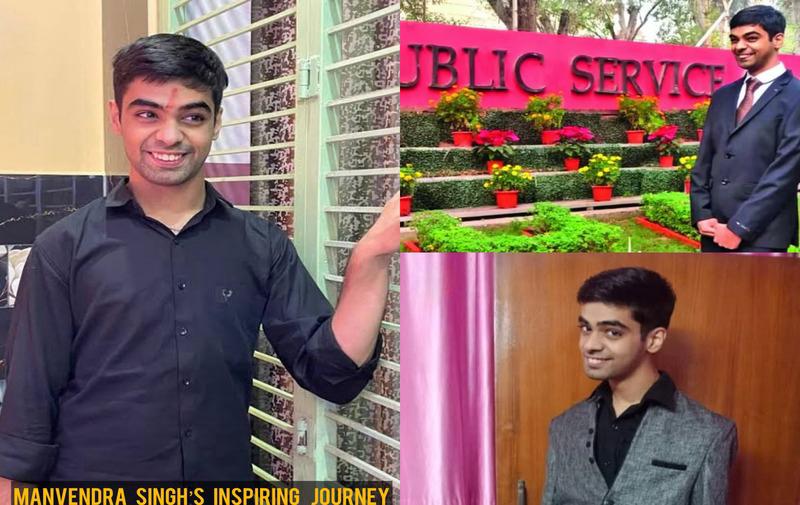
When the Union Public Service Commission announced the results of the Engineering Services Examination (ESE) 2025 on December 17, 24-year-old Manvendra Singh from Bulandshahr etched his name into history by securing All-India Rank 112. His achievement is remarkable not only for the rank but also for the extraordinary journey behind it, one marked by physical challenges, personal loss, and unwavering determination. For Manvendra and his family, this milestone represents the culmination of years of steady effort and resilience.
Living with Cerebral Palsy
Manvendra Singh was diagnosed with cerebral palsy at six months of age, a neurological condition that affects muscle control and movement. By the age of two, he struggled to hold his neck, and as he grew, stiffness developed on the right side of his body, making everyday tasks challenging. Activities that many take for granted, like writing, walking, or even holding objects, required deliberate practice and patience. Despite these limitations, Manvendra’s life became a constant exercise in adaptation, with each small milestone reflecting immense personal effort.
A Mother’s Role and Early Learning
Central to Manvendra’s journey was his mother, Renu Singh, a school principal who guided his early learning with steadfast care. She recalls the painstaking process of teaching him to write. Initially, Manvendra gripped a pencil in his fist, unable to use his fingers effectively. Over time, through repeated effort and persistent practice, he trained his left hand to compensate for the limitations of his right. Renu Singh’s dedication, combined with her understanding of her son’s abilities, laid the foundation for his later academic success.
“Clearing UPSC is a long and difficult process with several stages. From learning how to hold a pencil to mastering complex academic challenges, his journey has been full of physical and societal hurdles since childhood,” she said.
Medical Treatment and Lifelong Persistence
Doctors had cautioned early on that cerebral palsy would continue to affect Manvendra’s coordination and mobility throughout his life. His family embarked on a relentless quest for treatment, consulting over 50 hospitals across India before finding consistent care in New Delhi. Yet medical support alone was not enough. Manvendra’s determination, focus, and discipline were equally crucial. “Along with medical care, his willpower mattered the most,” his mother noted. The combination of medical intervention and personal grit became the backbone of his journey toward academic excellence.
Overcoming Personal Loss
At the age of 17, Manvendra faced a profound personal loss when his father passed away after a prolonged illness. As the eldest child, the responsibility of supporting his family fell upon him. Despite the emotional strain, he remained committed to his education and goals. His mother recalls, “He was sensitive and emotional, and the loss affected him deeply. But over time, he recovered and began supporting the family, taking responsibility with maturity beyond his years.”
Academic Journey and IIT Success
Throughout school, Manvendra maintained an exceptional academic record despite his physical challenges. After completing Class 12, his family suggested a conventional engineering path via the Uttar Pradesh Technical Entrance Examination. However, Manvendra aspired for more. He later cleared the Graduate Aptitude Test in Engineering (GATE) with an All India Rank of 63 and pursued a BTech in Electronics and Electrical Engineering from IIT Patna, graduating in 2024. His time at IIT not only honed his technical knowledge but also strengthened his confidence, preparing him for the rigorous preparation required for the Engineering Services Examination.
Clearing ESE in the First Attempt
After graduation, Manvendra moved to Delhi to join a coaching institute dedicated to ESE preparation. Though both are conducted by UPSC, the Engineering Services Examination (ESE) differs from the Civil Services Examination (CSE) in scope—ESE recruits technical engineers, whereas CSE selects generalist administrators for broader governance. The ESE exam, known for its rigor, tests candidates across three stages—prelims, mains, and interview—requiring sustained mental, academic, and physical endurance. In his very first attempt, Manvendra cleared all stages and secured All India Rank 112. His success stands as a testament to meticulous preparation, focus, and the ability to navigate challenges that would deter many. For Manvendra’s family, the rank is significant, but it is the journey behind it that holds deeper meaning. Every stage of his life, from mastering pencil grip to excelling in IIT and cracking ESE, reflects persistence, adaptability, and courage.
Inspiring a New Perspective
Manvendra Singh’s story resonates far beyond Bulandshahr or the UPSC examination hall. It highlights the possibilities for differently-abled individuals, illustrating how challenges can be transformed into stepping stones with the right combination of support, education, and willpower. His journey inspires students and families, encouraging society to recognize that limitations need not define potential. His achievement is a ray of hope, inspiring countless others to pursue their dreams, regardless of the hurdles they face.

Writing about what truly matters, good news and stories to remind the world - it is brighter than we think.