"Dream, Dream, Dream! Conduct these dreams into thoughts, and then transform them into action."
- Dr. A. P. J. Abdul Kalam
"Dream, Dream, Dream! Conduct these dreams into thoughts, and then transform them into action."
- Dr. A. P. J. Abdul Kalam
16 Jan 2026
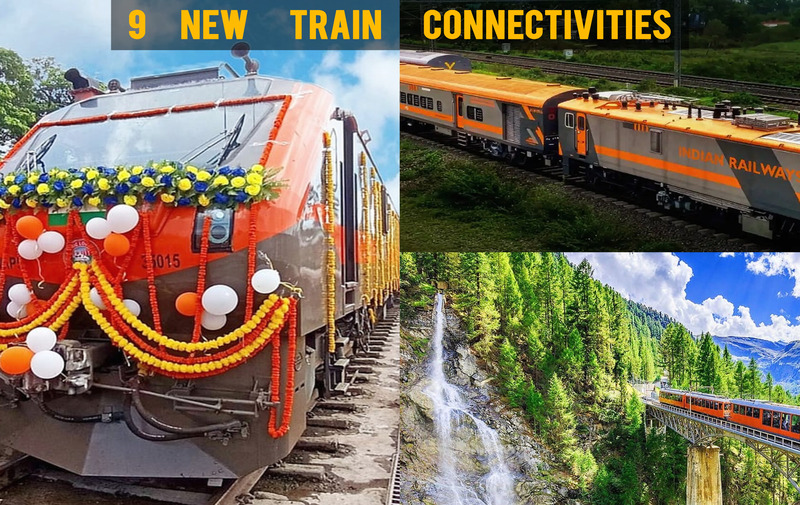
When Indian Railways announced the launch of nine new Amrit Bharat Express trains, it wasn’t just adding services to a timetable, it was quietly extending India’s promise of connection. These trains, built for long-distance, non-AC travel, are designed for the millions who depend on sleeper-class journeys to cross states, cultures, and livelihoods. With routes cutting across nine states and spanning some of the country’s longest corridors, the expansion marks a decisive step toward making affordable travel more reliable, dignified, and far-reaching.
The Amrit Bharat Express was introduced as a modern answer to overcrowded long-distance travel. Unlike premium trains aimed at speed and exclusivity, this category focuses on high-demand routes, longer distances, and passengers who travel not for leisure alone, but for work, education, family, and faith. The nine new services will be flagged off soon, strengthening connectivity between the Northeast, East, North, West, and South regions that often rely most heavily on sleeper-class rail.
Some of the newly announced routes are remarkable not just for where they begin and end, but for what they represent. The New Jalpaiguri–Nagercoil Amrit Bharat Express will run nearly from one end of India to the other, linking North Bengal’s Himalayan foothills with Tamil Nadu’s southernmost railway corridors. It is one of the longest routes under this category, passing through multiple climatic zones and cultural regions in a single journey.
The Northeast sees a major boost with trains such as Guwahati (Kamakhya)–Rohtak and Dibrugarh–Lucknow (Gomti Nagar), providing direct long-distance access to northern India without multiple transfers. These routes are especially significant for students, migrant workers, and traders who travel regularly between Assam and the Hindi heartland.
West Bengal emerges as another key hub, with new Amrit Bharat Express services connecting Malda Town and New Jalpaiguri to cities like SMVT Bengaluru, Tiruchirappalli, Banaras, Anand Vihar Terminal (Delhi), and Panvel (Mumbai). Together, these routes address chronic passenger demand on some of India’s most crowded long-distance corridors.
What makes the Amrit Bharat Express stand out is not luxury, but intention. These are fully non-AC trains with a strong focus on sleeper-class comfort, built using modern Link Hofmann Busch–based coach designs. Each coach includes mobile charging points, improved seating and sleeping arrangements, better ventilation, and radium-coated strips on floors to enhance visibility during night travel.
Safety features such as semi-automatic couplers and energy-absorbing deformation tubes are built into the design to reduce impact during sudden braking or collisions. Washrooms have been upgraded with modern fittings and improved flushing systems, reflecting Indian Railways’ effort to raise hygiene standards even in budget categories.
The fare structure remains one of the strongest appeals. Amrit Bharat Express trains follow a simple, affordable pricing model, broadly aligned with sleeper-class fares, and avoid dynamic pricing. For long journeys running over 1,000 kilometers, this predictability makes planning easier for families and frequent travelers alike.
In a country where railways are woven into everyday life, the expansion of the Amrit Bharat Express feels deeply familiar and quietly powerful. These nine new trains do not chase headlines with speed records or luxury branding. Instead, they focus on reach, reliability, and respect for the ordinary traveler.
By strengthening links between distant regions and easing pressure on existing routes, these services will improve accessibility for millions who rely on rail as their primary mode of long-distance transport. They enable movement without exclusion, allowing a student from Assam, a worker from Bengal, or a family heading south to travel with comfort and confidence.

Writing about what truly matters, good news and stories to remind the world - it is brighter than we think.