"Dream, Dream, Dream! Conduct these dreams into thoughts, and then transform them into action."
- Dr. A. P. J. Abdul Kalam
"Dream, Dream, Dream! Conduct these dreams into thoughts, and then transform them into action."
- Dr. A. P. J. Abdul Kalam
9 Jan 2026
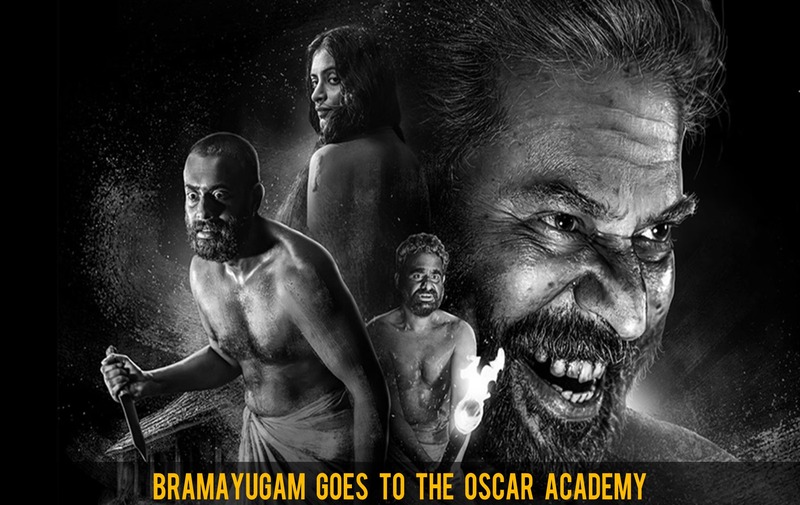
Some films travel beyond theaters and box-office numbers to enter global cultural conversations. Bramayugam, starring Mammootty and directed by Rahul Sadasivan, has now achieved that rare distinction. The black-and-white folk horror film is set to be screened on February 12, 2026, at the Academy Museum of Motion Pictures in Los Angeles, a space closely associated with the Oscars. For Malayalam cinema, this moment is nothing short of historic proof that rooted, regional storytelling can resonate far beyond language and geography.
The screening will take place under the Academy Museum’s curated series “Where the Forest Meets the Sea,” a prestigious program that celebrates folk horror films from across the world. Bramayugam will stand as the only Indian film in the lineup, sharing space with globally celebrated classics such as The Wicker Man, Midsommar, The Witch, Onibaba, and Häxan.
Released on February 15, 2024, Bramayugam arrived quietly but powerfully. Shot entirely in black and white, the film drew audiences into a haunting world inspired by Kerala’s oral folklore, myths, and ancestral fears. Director Rahul Sadasivan has often spoken about how the story emerged from tales he heard growing up—stories that lingered not as entertainment, but as unease, silence, and unanswered questions. That emotional authenticity translated to the screen.
Critics praised the film for its atmospheric cinematography, immersive sound design, unsettling score, and meticulous production design. Audiences, too, responded strongly, turning Bramayugam into a box-office success with collections exceeding ₹85 crore, making it one of the highest-grossing Malayalam films of 2024.
At the heart of Bramayugam is Mammootty’s unforgettable portrayal of Kodumon Potti, a character steeped in menace, mystery, and moral decay. The role demanded restraint rather than spectacle and silence rather than dialogue, and Mammootty delivered with chilling precision. His performance earned him his 7th Kerala State Film Award for Best Actor, further cementing his legacy as one of Indian cinema’s most versatile performers. What makes the performance extraordinary is its humanity beneath the horror.
Set in 17th-century Malabar, Bramayugam follows Thevan, a folk singer who stumbles upon a mysterious mana deep in the forest. What begins as shelter soon turns into psychological imprisonment. Through yakshis, sorcery, forbidden spaces, memory loss, and the terrifying presence of the chathan, the film explores themes of power, identity, inheritance, and human greed.
The narrative unfolds slowly, relying on atmosphere rather than jump scares. As secrets unravel, identities blur, and control shifts, Bramayugam transforms into a meditation on how evil survives not just through supernatural forces but through human desire to dominate and possess. The final act, marked by fire, collapse, and deception, leaves viewers unsettled long after the screen fades to black, reinforcing the film’s place within global folk horror traditions.
Director Rahul Sadasivan announced the Los Angeles screening through an emotional social media post, calling the moment overwhelming. He described Bramayugam as a film born from childhood fears and unspoken silences and expressed gratitude that the story could resonate beyond borders. The Academy Museum’s “Where the Forest Meets the Sea” series runs from January 10 to February 12, bringing together folk horror films rooted in local myths from different cultures.
Bramayugam’s inclusion signals global recognition not just of the film, but of Indian folklore as a cinematic language worthy of international platforms. Standing alongside films like Midsommar, The Witch, and Onibaba, Bramayugam represents Kerala’s myths on a world stage, showing that fear, faith, and folklore are universal human experiences.
Rahul Sadasivan has steadily carved a niche for himself within Indian horror cinema. Following Bramayugam, his film Dies Irae, starring Pranav Mohanlal, explored darker emotional spaces. While it did not reach the same critical heights, it reaffirmed his commitment to atmospheric, idea-driven storytelling rather than formula-driven horror. With Bramayugam, Rahul has not only delivered a cinematic success but has also expanded the global understanding of Indian genre cinema, moving it beyond stereotypes into culturally rich, intellectually engaging territory.
Bramayugam’s Academy Museum screening is not about awards or red carpets. It is about validation. It tells young filmmakers that stories rooted in local soil can travel the farthest. It tells global audiences that Indian cinema is not limited to spectacle; it can whisper, disturb, and linger. For Malayalam cinema, this moment is deeply emotional. A black-and-white folk horror film, spoken in a regional language, inspired by oral traditions, now finds a place among the world’s finest folk horror works. That journey mirrors the film’s own theme: something ancient finding relevance in a modern world. As Bramayugam walks into the Academy Museum, it carries with it not just a film reel but centuries of stories, fears, and forgotten voices from the forests of Malabar finally heard, finally seen.
Romanticizing life and shaping stories from everything I see through my journalistic lens. Also, I love sports on the side.