"Dream, Dream, Dream! Conduct these dreams into thoughts, and then transform them into action."
- Dr. A. P. J. Abdul Kalam
"Dream, Dream, Dream! Conduct these dreams into thoughts, and then transform them into action."
- Dr. A. P. J. Abdul Kalam
11 May 2026
For decades, the Met Gala has represented the pinnacle of global fashion, an extravagant spectacle where celebrities, designers and cultural icons gather under the dazzling lights of New York City.
In 2026, the event witnessed a moment that went far beyond glamour.
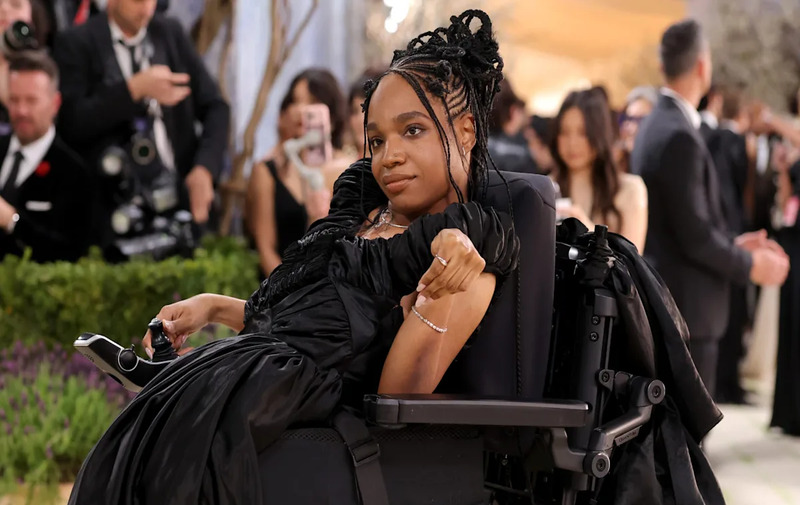
Aariana Rose Philip, an Antiguan American model and musician with quadriplegic cerebral palsy, became the first wheelchair user ever to attend the Met Gala. In doing so, she shattered one of fashion’s most invisible barriers and redefined what representation on the industry’s biggest stage could look like.
For Philip, the moment was deeply emotional.
The model, already a familiar face on New York runways through her long-standing collaboration with Collina Strada, had previously appeared on the cover of British Vogue. This year, she was also featured in Vogue’s May issue and became part of the Metropolitan Museum of Art’s Costume Institute exhibition itself, serving as one of the exhibition mannequins.
But walking, or rather rolling, into the Met Gala carried a significance unlike anything before.
For someone who grew up rarely seeing disabled people represented in high fashion, the idea of attending the Met Gala once felt unimaginable.
Philip’s journey reflects a broader conversation about disability, identity and inclusion in fashion.
For years, disabled individuals in public spaces have often been viewed primarily through the lens of activism. Philip believes that happens because disabled people are constantly forced to advocate for themselves in environments that are rarely designed to accommodate them.
While the fashion industry has made visible strides in conversations around race, gender identity and body diversity, disability representation has remained limited. Philip’s appearance at the Met Gala signalled a powerful shift in that reality.
Working alongside Collina Strada creative director Hillary Taymour, someone Philip considers family after nearly a decade of collaboration, she prepared a look she described as ornate, timeless and deeply personal.
For Philip, fashion has always been a space of transformation. Over the years, she embraced different identities, styles and creative expressions, evolving continuously as a model and artist. But the Met Gala represented something bigger than personal achievement. It felt like an “inauguration” into a world that had historically excluded people like her.
At a time when conversations around inclusion are becoming increasingly urgent worldwide, Philip’s presence at the Met Gala carried enormous cultural significance.
Perhaps the most powerful moment of Philip’s journey came with her reflection on how she wanted people to perceive her mannequin at the Costume Institute exhibition. She did not want audiences to focus on disability first. She wanted them to see beauty, glamour and power. “A supermodel and a legend.”
Her words carried the weight of generations who were told they did not belong in elite spaces. By entering the Met Gala, Aariana Rose Philip did more than attend fashion’s biggest night. She reminded the world that disabled, Black and trans individuals have always deserved visibility, celebration and space at the highest levels of culture.
And in one unforgettable evening, fashion finally made room.
.jpeg)
I have a Masters in Literature and a knack for spotting the silver lining! When I’m not chasing good news, you’ll find me nurturing my farm or lost in a good book.