"Dream, Dream, Dream! Conduct these dreams into thoughts, and then transform them into action."
- Dr. A. P. J. Abdul Kalam
"Dream, Dream, Dream! Conduct these dreams into thoughts, and then transform them into action."
- Dr. A. P. J. Abdul Kalam
15 Dec 2025
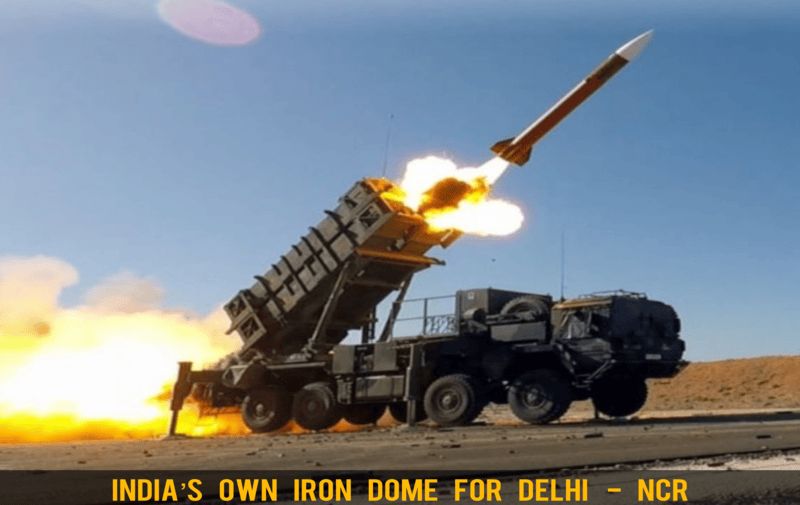
India is preparing to take a major leap in strengthening its national security by deploying a home-grown Integrated Air Defence Weapon System, an advanced and multilayered shield designed to protect the Delhi National Capital Region from hostile aerial threats. For the first time, the country will rely entirely on indigenous missile systems, radars and command networks to secure one of the most sensitive airspaces in South Asia. This development comes at a crucial moment, especially after Pakistan reportedly attempted to target India during Operation Sindoor earlier this year. The decision reflects India’s determination to fortify its skies with systems built by Indian hands, using Indian technology and expertise, ensuring that the capital remains the safest region in the country.
Why Delhi-NCR Needs This Shield
Delhi-NCR is not just the political heart of India; it is home to vital infrastructure, including the Parliament, the Prime Minister’s residence, strategic military installations and key administrative hubs. An attack on this region would have devastating consequences for national stability. Over the past decade, the nature of aerial threats has evolved dramatically, with drones, cruise missiles and high-speed aircraft becoming increasingly accessible to hostile nations and non-state actors. Recognizing this shift, the Indian Air Force has long emphasized the need for a sophisticated, multilayered defence system capable of detecting, tracking and neutralizing threats within seconds. The indigenous IADWS aims to fill this critical gap, creating a security envelope that can respond instantly to any incoming aerial danger.
The Heart of the Indigenous Defence System
The new Integrated Air Defence Weapon System will be built around the Quick Reaction Surface-to-Air Missile (QRSAM) and the Very Short Range Air Defence System (VSHORADS). These missiles are designed to destroy enemy aircraft, missiles and drones at various layers of altitude and distance. QRSAM can rapidly engage multiple targets while on the move, making it ideal for defending dynamic and high-risk zones such as Delhi. VSHORADS, compact and mobile, will neutralize low-flying threats that attempt to slip under radar coverage. Together, these systems form a tightly interwoven shield supported by an extensive network of sensors, radars and real-time data links. At the center of this network lies an advanced command-and-control system that allows rapid decision-making—crucial in high-pressure situations where seconds determine outcomes.
A Major Shift From Foreign Dependence
For years, India considered purchasing the American NASAMS-II system, which protects Washington DC and the White House. Negotiations were in progress, and the plan was seen as a strong option for safeguarding Delhi’s skies. However, the deal came with an unacceptably high price tag, leading India to reconsider. Instead of relying on foreign hardware, India decided to back its own defense ecosystem, a decision that aligns perfectly with the nation’s self-reliance vision. Choosing indigenous systems is not just about saving money; it is about building strategic independence. When a country develops its own defence systems, it controls upgrades, repairs, and deployment strategies without foreign interference. This gives India long-term stability, flexibility and sovereignty over its air defence network.
DRDO’s Leadership and India’s Growing Capability
Central to this project is the Defence Research and Development Organisation (DRDO), which has spent years developing India’s modern air defence arsenal. DRDO has already delivered the QRSAM and Medium Range Surface-to-Air Missile (MRSAM) systems, and it is now working on a Long Range SAM under Project Kusha. These achievements represent the steady rise of India’s defence technology capabilities. DRDO, working together with Indian production agencies, will integrate missiles with surveillance radars, communication links, and central command systems to create a unified defence architecture. For DRDO scientists and engineers, this project is more than a technical challenge; it is a moment of national pride. Their innovations will directly protect millions of people living in Delhi-NCR, bringing a deep sense of purpose to their work.
The Air Force at the Core of National Protection
The Indian Air Force will operate the new air defence shield. For the personnel responsible for monitoring the skies, this development is not just strategic; it is personal. Every officer understands the gravity of defending the nation’s capital. Their readiness, training and dedication form the human backbone of the shield. The new indigenous system will give them faster response capability, more accurate threat assessment and complete control over a versatile network of missiles and sensors. This enhanced system will ensure that the capital remains protected round the clock, offering peace of mind to the citizens who live under its cover.
A Milestone in India’s Self-Reliance Journey
The deployment of the indigenous Integrated Air Defence Weapon System signals a historic chapter in India’s defence evolution. It demonstrates the country’s confidence in its own scientific capabilities and strengthens its resolve to protect its people using technology made in India. As Delhi prepares to be shielded by this new multilayered defence system, the nation takes a powerful step toward a safer, more secure future guided by innovation and a commitment to self-reliance.

Romanticizing life and shaping stories from everything I see through my journalistic lens. Also, I love sports on the side.