"Dream, Dream, Dream! Conduct these dreams into thoughts, and then transform them into action."
- Dr. A. P. J. Abdul Kalam
"Dream, Dream, Dream! Conduct these dreams into thoughts, and then transform them into action."
- Dr. A. P. J. Abdul Kalam
9 Sep 2026
India’s freight story has entered a new phase. The country’s 2,843-km Dedicated Freight Corridor (DFC) has been completed and commissioned, marking a major milestone in India’s infrastructure and logistics journey.
Prime Minister Narendra Modi inaugurated three new sections of the completed Dedicated Freight Corridor. The project was envisioned to take the pressure off some of India’s busiest railway routes. Today, it has emerged as a key part of the country’s modern freight network.
India’s DFC network consists of two major corridors. The Eastern Dedicated Freight Corridor stretches 1,337 km from Ludhiana to Sonnagar, while the Western Dedicated Freight Corridor runs 1,506 km from Dadri to Jawaharlal Nehru Port.
Together, they span 2,843 km. According to the Ministry of Railways, both corridors have now been completed and commissioned, with more than 443 freight trains operating on average every day.
But what makes these corridors so important?
For years, freight and passenger trains largely shared railway infrastructure. Heavy goods traffic on busy routes could reduce available capacity and create bottlenecks. The DFC changes that equation.
With dedicated tracks for freight, goods trains can move with greater speed, reliability and efficiency. At the same time, capacity is freed up on conventional railway routes for passenger and other services. That could mean faster deliveries and more predictable supply chains.
A strong economy needs more than factories. It needs an efficient network connecting raw materials, production centres, warehouses, markets and ports. The Western DFC is particularly significant because of its direct connectivity with Jawaharlal Nehru Port. This can facilitate faster movement of export-import cargo, strengthen industrial connectivity and help reduce logistics costs.
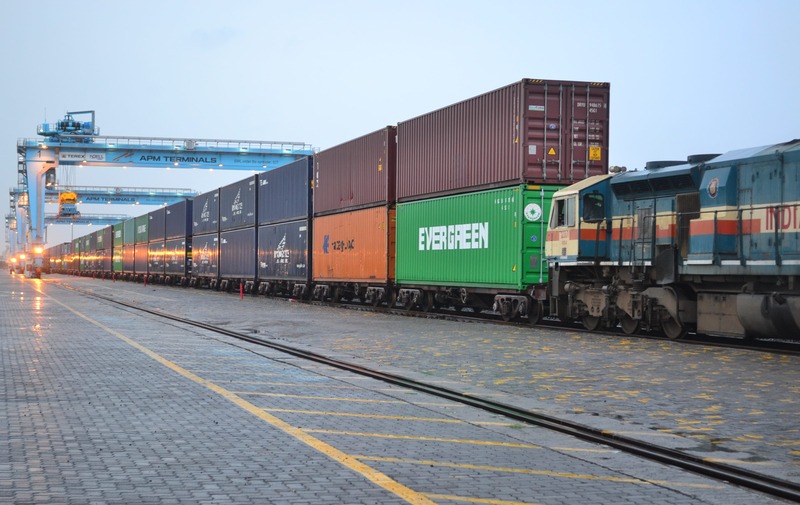
Its ability to handle double-stack container trains is another major advantage, allowing large volumes of cargo to be transported in a single movement.
The benefits are not limited to large industries. Agricultural producers can also benefit from improved freight connectivity. Faster and more reliable transportation can help move farm produce from production centres to distant markets and ports more efficiently. For a country seeking to expand its manufacturing and export capabilities, such connectivity can be a significant competitive advantage.
The DFC also supports India’s push towards greener logistics.
Rail is generally more energy-efficient than road transport when moving large volumes of goods over long distances. The corridors’ electrified infrastructure and high-capacity freight operations can therefore contribute to more sustainable transportation.
The project also complements PM GatiShakti, India’s broader vision of integrating railways, roads, ports, waterways and other modes of transport.
As India moves towards its ambition of becoming a developed economy by 2047, the demand for efficient movement of goods will only grow. The completed Dedicated Freight Corridor provides an important foundation for that future.
Its significance goes beyond railway tracks and freight trains. It represents time saved, costs reduced, markets connected and opportunities created. India’s freight network has taken a major step towards becoming faster, more efficient and better equipped for the economy of tomorrow.
.jpeg)
I have a Masters in Literature and a knack for spotting the silver lining! When I’m not chasing good news, you’ll find me nurturing my farm or lost in a good book.