"Dream, Dream, Dream! Conduct these dreams into thoughts, and then transform them into action."
- Dr. A. P. J. Abdul Kalam
"Dream, Dream, Dream! Conduct these dreams into thoughts, and then transform them into action."
- Dr. A. P. J. Abdul Kalam
30 Sep 2026
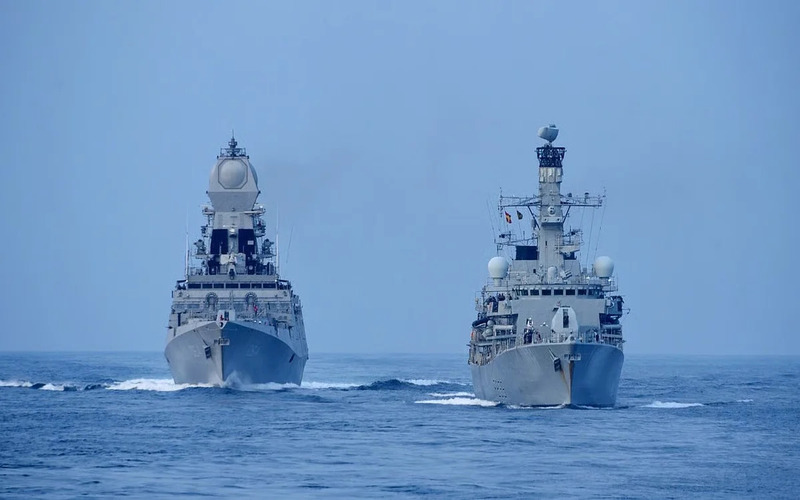
India’s naval fleet is set for a major expansion in 2026. Defence Minister Rajnath Singh said the Indian Navy will induct or commission 18 warships this year, calling it the largest single-year addition in the history of the service.
Speaking at the second Indian Navy Commanders’ Conference of 2026 in New Delhi, Singh described the year as a historic one for the Navy. He linked the expansion to the growing capabilities of India’s domestic shipbuilding industry.
There is another significant shift. Recently commissioned warships contain more than 75% Indian-made content, according to the minister.
The growing share of indigenous content reflects the increasing role of Indian shipyards in meeting the Navy’s requirements. Singh said India should now look beyond building warships for its own fleet and work towards exporting warships to friendly countries.
The focus on domestic manufacturing comes as India seeks to strengthen its maritime capabilities while developing a larger defence manufacturing ecosystem.
The Navy’s expanding role is not limited to fleet modernisation. The force is also carrying a significant operational responsibility in the Strait of Hormuz, one of the world’s most important energy corridors. Singh said the Navy has been escorting Indian-flagged merchant vessels, particularly liquefied petroleum gas tankers, under Operation Urja Suraksha, or energy security.
The mission has become particularly important amid disruptions to commercial shipping in the region. India depends heavily on maritime routes for its energy supplies. Singh said the country imports around 85–90% of its crude oil and about half of its natural gas by sea, making the safety of shipping lanes closely linked to the country’s energy security.
The minister also highlighted the Navy’s growing presence across distant maritime regions. Indian warships are operating in areas including the South China Sea, Mediterranean and Atlantic, demonstrating what is known as blue-water capability—the ability to sustain naval operations far from home ports.
Singh said the maritime environment is becoming increasingly complex, with heavier traffic, deception and grey-zone activities requiring stronger surveillance and response systems. He called for India’s maritime surveillance architecture to be significantly upgraded.
The Navy’s transformation also includes a growing role for women officers. Singh highlighted the Navy’s “All Ranks, All Roles” approach, under which women officers are serving on frontline warships and aircraft. Women have also participated in missions such as Navika Sagar Parikrama, the circumnavigation of the globe.
The Navy’s sail training ship INS Sudarshini has also embarked on Lokayan-26, sailing through the United States, Atlantic and Mediterranean.
From new warships and indigenous shipbuilding to distant deployments and energy security, 2026 is shaping up to be a significant year for India’s maritime force.
.jpeg)
I have a Masters in Literature and a knack for spotting the silver lining! When I’m not chasing good news, you’ll find me nurturing my farm or lost in a good book.