"Dream, Dream, Dream! Conduct these dreams into thoughts, and then transform them into action."
- Dr. A. P. J. Abdul Kalam
"Dream, Dream, Dream! Conduct these dreams into thoughts, and then transform them into action."
- Dr. A. P. J. Abdul Kalam
1 Sep 2026
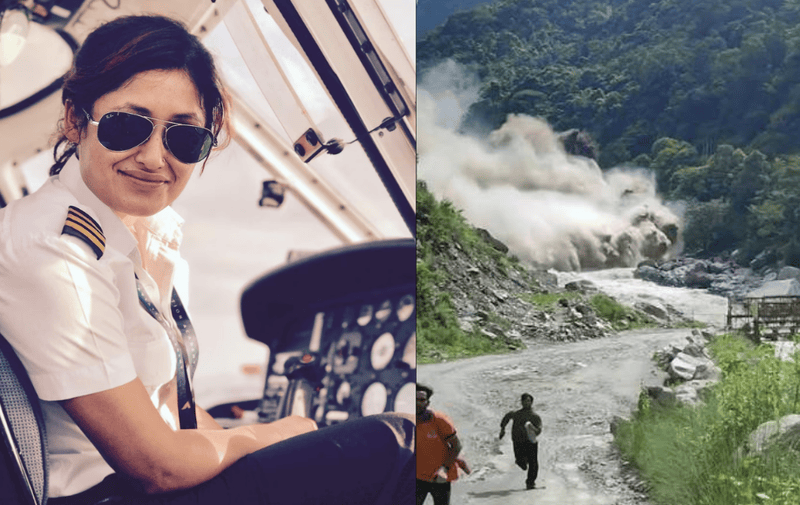
While many were trying to escape Nepal’s devastating floods and landslides, Priya Adhikari was flying towards them. The 40-year-old became Nepal’s first woman helicopter captain and has now taken on one of the most demanding missions of her career—flying repeatedly into flood-hit areas near the Nepal-Tibet border.
In just six days, Adhikari has flown around 100 rescue missions, helping evacuate survivors from some of the worst-affected areas, including Timure in Rasuwa district. The operation has been relentless.
At times, five or six helicopters have had to land in the same area, with pilots constantly communicating over the radio to coordinate evacuations.
The rescue missions are far from routine. Thick mud has made many landing zones unstable, forcing pilots to remain on power rather than safely shutting down their helicopters. Damaged infrastructure and difficult Himalayan terrain add to the challenge.
And then there is what lies below. Adhikari recalled seeing bodies scattered across Timure after the flash floods. Yet amid the destruction, she says the sight of survivors gives her strength. Each time she lands and sees people waving, she tells them: “You survived.”
More than 200 people were evacuated from the area during the first two days of the operation, with multiple helicopters involved in the effort. For Adhikari, the people she rescues may be strangers. But witnessing their survival has made every mission deeply emotional.
Adhikari’s journey to the cockpit was far from conventional. She studied environmental science and initially worked as cabin crew. A helicopter joyride, however, sparked an unexpected fascination with flying and changed the direction of her life.
She eventually travelled to the Philippines for helicopter training, built the flying hours needed to qualify and became a full-time helicopter pilot in 2017.
Over the years, she developed expertise in high-altitude rescue operations, flying missions at altitudes of around 6,200 metres and taking part in Himalayan rescues, including missions involving injured climbers on Mount Everest.
Becoming Nepal’s first woman helicopter captain also meant entering a career where women were traditionally underrepresented.
Even with years of high-altitude rescue experience, Adhikari says the current disaster has tested her in ways she had never experienced before. She has compared the scale of the devastation to Nepal’s catastrophic 2015 earthquake, saying the floods were even greater in scale.
Exhaustion is inevitable after flying mission after mission. But the helicopters keep returning to the danger zone. And so does Priya Adhikari. For her, every flight is more than a rescue mission. It is a race against time—and another chance to tell someone stranded below: you made it.
.jpeg)
I have a Masters in Literature and a knack for spotting the silver lining! When I’m not chasing good news, you’ll find me nurturing my farm or lost in a good book.